Growing Superhot Peppers: A Complete Profile
By Growing Home Greens Team · July 18, 2026
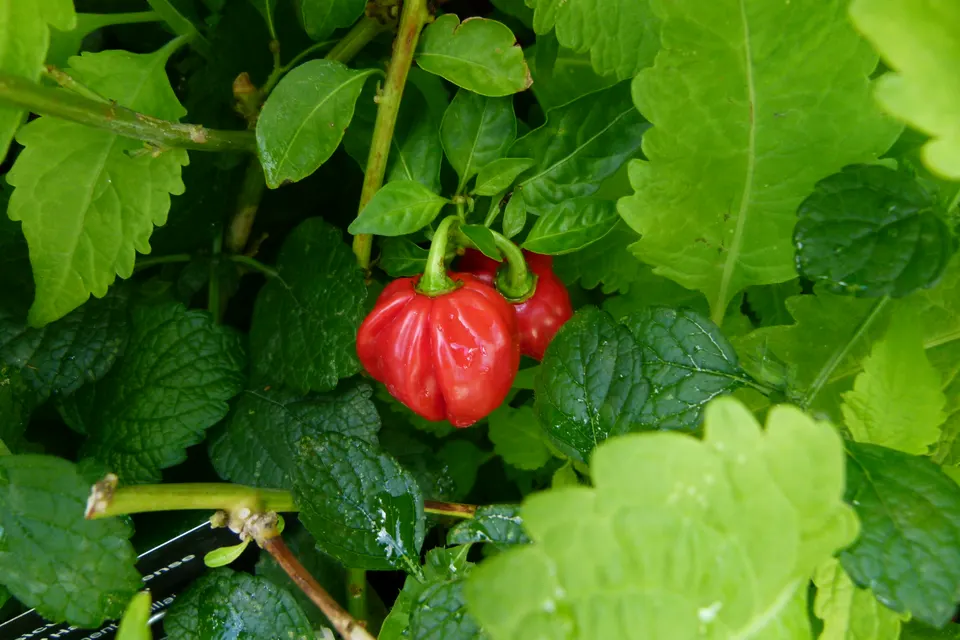
Superhot peppers (Ghost, Reaper, Scorpion, and their relatives) are a different commitment than a standard pepper plant. Days to maturity commonly runs 120-150+ days versus roughly 75-100 for a regular hot pepper, and germination itself is slower and far less consistent, sometimes taking 2-6 weeks instead of the usual week or so. Start these far earlier than you’d think to.
This profile covers the care every superhot shares. The individual varieties each have their own profile with heat, timing and plant size: Carolina Reaper, Ghost, Trinidad Moruga Scorpion, Butch T, 7 Pot Primo, 7 Pot Douglah, Naga Viper, Dorset Naga and Komodo Dragon.
A ten to twelve week head start
Get seed starting trays going indoors 10-12 weeks before your last frost, a couple weeks earlier than a standard pepper, since these varieties need every extra day they can get. Bottom heat helps a lot with the slow, uneven germination. Beyond that, treat them like any other pepper: warm, not soggy, and slow to establish after transplant.
Starting too late is the most common mistake
The most common mistake is starting too late and running out of season before the peppers fully ripen and develop their heat, a superhot picked green is a fraction as hot as one left to mature to full color. If germination seems to be dragging past two or three weeks, that’s normal for these varieties; don’t assume the seed failed and give up early. A seedling heat mat set to 80-85°F under the trays does more for germination speed here than for a standard pepper, since these varieties are slower to sprout even under ideal conditions.
Flowers that drop without setting fruit are usually a heat or stress response rather than a pollination problem. Superhots are still Capsicum, and prolonged temperatures above the mid-90s°F can cause blossom drop the same way they do on any pepper, just alongside the plant’s already-long season. Consistent watering during flowering matters more than feeding; a stressed plant aborts flowers before it aborts leaf growth.
Harvest timing and heat
Color, not size, is the ripeness signal, and heat keeps climbing as a superhot pod finishes coloring up. A green or partially colored pod is milder than the same pod left another one to two weeks to reach its full color, whether that’s red, yellow, chocolate, or peach depending on variety. If the goal is maximum heat rather than an earlier harvest, patience past the point where the pod looks “done” is worth it.
Capsaicin concentrates in the internal pith (the white ribs the seeds are attached to), not the seeds themselves, though seeds sitting against the pith pick some up. Wear disposable gloves when cutting or seeding these, capsaicin binds to skin oils and doesn’t rinse off with water alone, and a hand that touched a superhot pod can transfer serious burning to eyes or other sensitive skin hours later even after washing. Work in a ventilated space; cutting into a fully ripe superhot can aerosolize enough capsaicin to irritate eyes and airways, especially indoors.
Same footprint as a standard pepper, different calendar
Superhots share the same companions as regular peppers. Basil and onion are reputed to help, see the full companion guide for superhot peppers. They take up the same one-plant-per-square-foot footprint as a standard pepper in the Garden Designer, so the planning difference is timing your seed-starting calendar further back, not finding extra space.
Superhot peppers are perennial in their native tropical range and can be overwintered indoors in a pot rather than restarted from seed every year, useful given how slow and unreliable germination can be. Cut the plant back by half before nights turn cold, bring it in before the first frost, and keep it on a sunny windowsill or under a grow light through winter; growth slows dramatically but the plant survives to resume producing, often earlier and larger the second year, once it goes back outside after the last frost.
In zone 10 the long maturity time inverts the usual calendar: a spring transplant ripens into summer heat that stops fruit set, so the low-desert window here is an August or September transplant for a late-fall harvest, and the plant can then stay in the ground for years. See timing superhot peppers in zone 10a for the full reasoning.
Companion planting guide for Superhot Pepper (Ghost, Reaper, Scorpion) · Find your planting dates
Typically viable in USDA zones 3-11. Not sure your zone? Look it up by ZIP code.
Mature height: 2-3 ft
Method: Start indoors: Start indoors from seed, then transplant outside. It needs a head start most zones can't give it by direct-sowing alone.
When to plant superhot pepper (Ghost, Reaper, Scorpion), by zone
Every zone superhot pepper (Ghost, Reaper, Scorpion) grows in. Pick your zone in the header and it will be highlighted here. Each zone links to its full page.
| Zone | Start indoors | Sow or plant out | Harvest |
|---|---|---|---|
| 3a & 3b | Mar 14–Mar 21 | Jun 13–Jun 20 | Oct 26–Nov 2 |
| 4a & 4b | Feb 27–Mar 6 | May 29–Jun 5 | Oct 11–Oct 18 |
| 5a & 5b | Feb 22–Mar 1 | May 24–May 31 | Oct 6–Oct 13 |
| 6a & 6b | Feb 7–Feb 14 | May 9–May 16 | Sep 21–Sep 28 |
| 7a & 7b | Jan 23–Jan 30 | Apr 24–May 1 | Sep 6–Sep 13 |
| 8a & 8b | Jan 7–Jan 14 | Apr 8–Apr 15 | Aug 21–Aug 28 |
| 9a & 9b | Nov 30–Dec 7 | Mar 1–Mar 8 | Jul 14–Jul 21 |
| 10a & 10bSummer window | May–Jul | Aug–Sep | ~135 days after transplanting |
| 11a & 11bSummer window | May–Nov | Aug–Feb | ~135 days after transplanting |
Harvest dates are about 135 days after the sow or plant-out date, not after starting seeds indoors.
See exact start-indoors, direct-sow, and harvest dates for your zone →
How many Superhot Pepper (Ghost, Reaper, Scorpion) plants fit per square foot?
Spacing: 1 per square foot (square-foot-gardening spacing). Mature height: 2-3 ft.
Good companions for superhot pepper (Ghost, Reaper, Scorpion)
- Basil: Reputed to repel aphids and improve pepper growth nearby, but a controlled garden trial testing this same claim on a related crop found no pest-reduction benefit from basil, and found higher pest counts on the basil-companioned plants: treat this pairing as unproven, not as a working pest deterrent.
- Onion: Reputed to deter many common pepper pests, though this specific pairing hasn't been tested the way onion/carrot pest-masking has: treat it as garden tradition.
Full companion guide, including what to keep away from superhot pepper (Ghost, Reaper, Scorpion) →
Varieties worth considering
- Trinidad Scorpion Yellow (CARDI): Listed by the seed company at 100 days to maturity, notably faster than the 120-150+ days common to most superhot varieties, worth considering if your season is on the short side. (source)
- Carolina Reaper: A former Guinness-record holder, rated around 1.5-2.2 million Scoville units depending on the source cited, with wrinkled 2.5 inch pods and a distinctive tail. Sandia Seed lists it at 90 days from transplant, faster than the standard 120-150+ day superhot range, but still slower than Trinidad Scorpion Yellow. (source)
- Bhut Jolokia (Ghost Pepper): The variety that started the modern superhot craze, rated just over 1 million Scoville units by Sandia Seed, at 110 days from transplant, squarely in the standard 120-150+ day range Reaper and Trinidad Scorpion Yellow are both faster than. A reasonable default if you want the original rather than a newer, hotter breed. (source) Buy seeds: Botanical Interests · True Leaf Market
Why each variety is listed comes from the source shown next to it. We haven't grown these ourselves yet, so treat this as a research-backed starting point, not a personal endorsement. The buy links are separate from those sources: they go to seed suppliers that sell that exact variety, and we may earn a commission on some of them.
Where to buy superhot pepper seeds
The varieties we recommend above each have their own buy links, for the suppliers that sell that exact variety.
As an Amazon Associate we earn from qualifying purchases. Some links on this page also go to other retailers we may earn a commission from as an affiliate, at no extra cost to you. We only recommend products with a clear consensus of positive, independent reviews, or ones we bought and use ourselves. Each item on our gear page says which.
See it growing
Search YouTube for "growing superhot pepper (Ghost, Reaper, Scorpion)" videos → (a live search, not a hand-picked video; results vary and aren't vetted by us)
%3A%20Ghost%2C%20Reaper%2C%20and%20Scorpion%20peppers%20need%20a%20ten%20to%20twelve%20week%20indoor%20start%2C%20and%20a%20late%20start%20is%20the%20usual%20reason%20they%20never%20fully%20ripen.)
Pin this for later
Growing Superhot Pepper (Ghost, Reaper, Scorpion): Ghost, Reaper, and Scorpion peppers need a ten to twelve week indoor start, and a late start is the usual reason they never fully ripen.
Save to Pinterest