Growing Basil: A Complete Profile
By Growing Home Greens Team · July 16, 2026
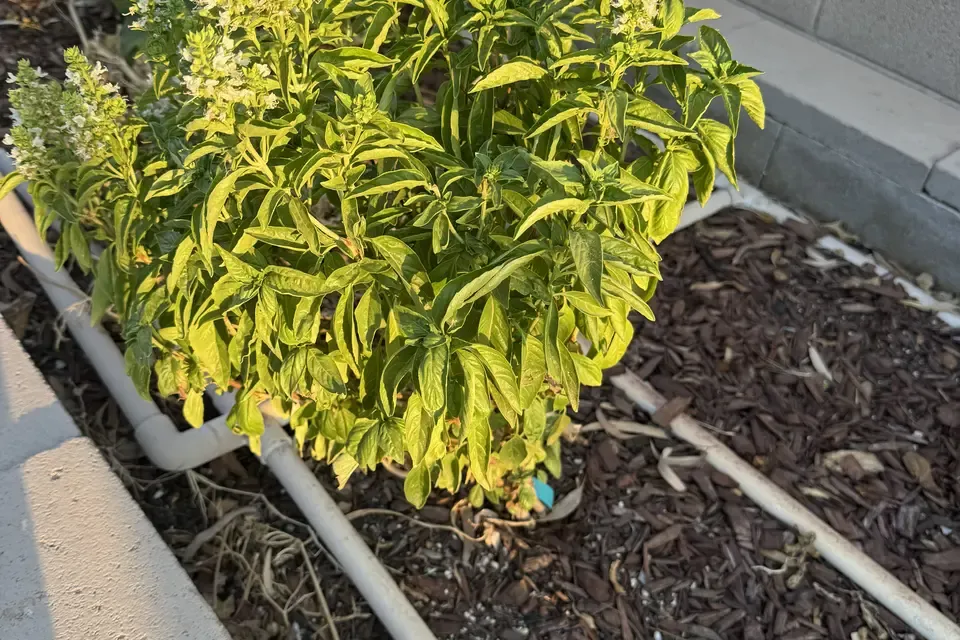
Basil is arguably the best value crop in a home garden: a single plant produces far more than the tiny, expensive plastic clamshells at the grocery store, and fresh-cut basil’s flavor fades within days of harvest, so growing your own is a genuine upgrade over what a grocery-store clamshell gets you, well beyond the money saved.
Keeping it bushy, not leggy
Basil is entirely warm-season and frost-tender, even a light chill will blacken the leaves. It rewards frequent harvesting: pinching off the top set of leaves regularly (before it flowers) keeps the plant bushy and productive instead of leggy and quick to bolt.
When it flowers and when it just looks tired
Basil that’s flowering and going bitter is past its prime. Pinch off flower spikes as soon as you see them to extend the harvest. Yellowing lower leaves are usually just the plant naturally shedding older growth, not a nutrient problem, unless it’s widespread.
Tomato’s oldest companion
Basil’s reputation as tomato’s companion is one of the most well-known pairings in gardening. See the full companion guide for basil. It’s dense enough (4 per square foot) to tuck into gaps around larger plants in the Garden Designer rather than needing its own dedicated bed space.
Companion planting guide for Basil · Find your planting dates
Typically viable in USDA zones 3-11. Not sure your zone? Look it up by ZIP code.
Mature height: 1-2 ft
Method: Start indoors: Start indoors from seed, then transplant outside. It needs a head start most zones can't give it by direct-sowing alone.
When to plant basil, by zone
Every zone basil grows in. Pick your zone in the header and it will be highlighted here. Each zone links to its full page.
| Zone | Start indoors | Sow or plant out | Harvest |
|---|---|---|---|
| 3a & 3b | Apr 18–Apr 25 | Jun 13–Jun 20 | Aug 12–Aug 19 |
| 4a & 4b | Apr 3–Apr 10 | May 29–Jun 5 | Jul 28–Aug 4 |
| 5a & 5b | Mar 29–Apr 5 | May 24–May 31 | Jul 23–Jul 30 |
| 6a & 6b | Mar 14–Mar 21 | May 9–May 16 | Jul 8–Jul 15 |
| 7a & 7b | Feb 27–Mar 6 | Apr 24–May 1 | Jun 23–Jun 30 |
| 8a & 8b | Feb 11–Feb 18 | Apr 8–Apr 15 | Jun 7–Jun 14 |
| 9a & 9b | Jan 4–Jan 11 | Mar 1–Mar 8 | Apr 30–May 7 |
| 10a & 10bSpring window | Jan–Jul | Feb–Aug | ~60 days after transplanting |
| 11a & 11b | Nov 20–Nov 27 | Jan 15–Jan 22 | Mar 16–Mar 23 |
Harvest dates are about 60 days after the sow or plant-out date, not after starting seeds indoors.
See exact start-indoors, direct-sow, and harvest dates for your zone →
How many Basil plants fit per square foot?
Spacing: 4 per square foot (square-foot-gardening spacing). Mature height: 1-2 ft.
Good companions for basil
- Tomato: Reputed to improve tomato flavor and repel pests, but a multi-year, garden-scale controlled trial found no consistent taste preference in blind tests, and no pest-reduction benefit: treat this as one of companion planting's least-supported popular claims.
- Bell Pepper: Reputed to repel aphids and improve growth nearby, but the same controlled trial that tested basil's tomato pairing found no pest-reduction benefit on a related crop, and even higher pest counts in one case: treat this as unproven.
Full companion guide, including what to keep away from basil →
Varieties worth considering
- Prospera Compact DMR (PL4): Bred for resistance to downy mildew and Fusarium, worth considering if you garden in a humid climate where basil downy mildew is a recurring problem. (source)
- Amazel: A University of Florida release that Cornell's Long Island vegetable pathology program found showed no downy mildew symptoms in its 2018 trial and very few in the two years after, one of the more consistently clean resistant varieties across multiple seasons of testing rather than just one good year. (source)
- Rutgers Devotion DMR: One of the first Rutgers-bred downy mildew resistant releases. Cornell's ongoing trial data notes that by 2020-2021 mildew had started developing earlier and more severely on the Rutgers DMR line than in its first seasons, worth knowing before you rely on any resistant variety as a permanent fix rather than one that needs watching. (source) Buy seeds: High Mowing Organic Seeds
- 'Genovese' (best for: classic pesto flavor): Johnny's describes large, 3-inch dark green leaves with authentic Italian flavor on a tall, relatively slow-to-bolt plant, the standard culinary type all three disease-resistant varieties above are ultimately bred to match in flavor. Open-pollinated, so it does show some variability in leaf shape from plant to plant, unlike the uniform hybrids above. (source) Buy seeds: Botanical Interests · True Leaf Market · Burpee · High Mowing Organic Seeds
- Sweet Thai (best for: Asian cooking, ornamental stems): Johnny's lists purple stems and blooms against green leaves, with a spicy anise-clove flavor entirely different from Genovese's sweet Italian profile, at 64 days. Grow it specifically for Thai and Vietnamese dishes, or for the ornamental purple stem contrast in a mixed herb bed. (source) Buy seeds: Botanical Interests · High Mowing Organic Seeds
Why each variety is listed comes from the source shown next to it. We haven't grown these ourselves yet, so treat this as a research-backed starting point, not a personal endorsement. The buy links are separate from those sources: they go to seed suppliers that sell that exact variety, and we may earn a commission on some of them.
Where to buy basil seeds
Botanical Interests · True Leaf Market · Burpee · High Mowing Organic Seeds (each supplier's basil seeds)
The varieties we recommend above each have their own buy links, for the suppliers that sell that exact variety.
As an Amazon Associate we earn from qualifying purchases. Some links on this page also go to other retailers we may earn a commission from as an affiliate, at no extra cost to you. We only recommend products with a clear consensus of positive, independent reviews, or ones we bought and use ourselves. Each item on our gear page says which.
See it growing
Search YouTube for "growing basil" videos → (a live search, not a hand-picked video; results vary and aren't vetted by us)

Pin this for later
Growing Basil: Tomato's classic companion, and the herb most worth growing yourself instead of buying at the store.
Save to Pinterest