Growing Collard Greens: A Complete Profile
By Growing Home Greens Team · July 18, 2026
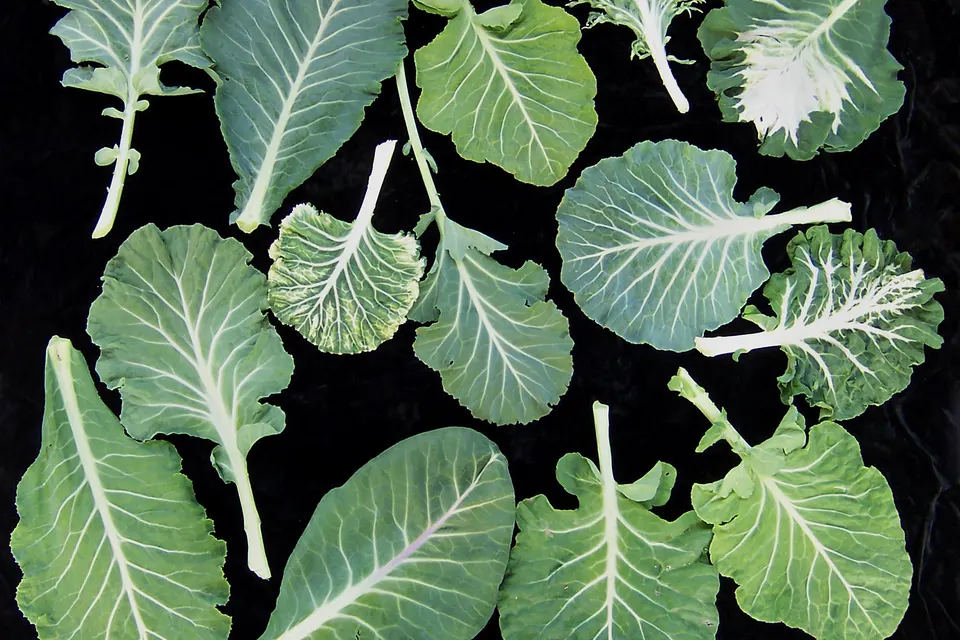
Collard greens are a Southern staple for a reason: they’re tough, cold-hardy, and keep producing edible leaves through conditions that would end most other greens for the season. The tradeoff is that they take space and time. This isn’t a quick, tuck-it-anywhere crop.
Starting it, and giving it the room it needs
Collards can be started indoors seven weeks before last frost or direct-sown a few weeks before it, and at 70 days to maturity, they’re a slower-growing brassica than mustard or bok choy. The plant grows fairly tall and broad-leaved, and at only one plant per square foot, it needs room. Crowd it and it will shade out shorter neighbors. Frost improves the flavor of collard leaves, sweetening them, which is part of why they’re often left in the ground well into cold weather.
A two-month tenant, so space is the real constraint
Because collards occupy a square foot for over two months, the main planning problem is usually space rather than plant health, giving them too little room stunts both the collards and whatever’s growing nearby. Keep them away from tomatoes and peppers, both commonly reported as poor neighbors for collards.
Tall enough to shade its neighbors
Onion scent may help deter common collard pests, and dill nearby attracts beneficial predatory wasps that protect brassicas generally. See the full companion guide for collard-greens. Because collards are tall and only one per square foot, a dense planting can shade out shorter neighbors as it sizes up. Give it the north or back edge of a bed in the Garden Designer so its shade falls away from shorter crops instead of over them.
Companion planting guide for Collard Greens · Find your planting dates
Typically viable in USDA zones 3-11. Not sure your zone? Look it up by ZIP code.
Mature height: 2-3 ft
Method: Either: Start indoors for an earlier harvest, or direct-sow outside for less fuss. Either works.
When to plant collard greens, by zone
Every zone collard greens grow in. Pick your zone in the header and it will be highlighted here. Each zone links to its full page.
| Zone | Start indoors | Sow or plant out | Harvest |
|---|---|---|---|
| 3a & 3b | Apr 11–Apr 18 | May 9–May 16 | Jul 18–Jul 25 |
| 4a & 4b | Mar 27–Apr 3 | Apr 24–May 1 | Jul 3–Jul 10 |
| 5a & 5bSpring window | Mar 22–Mar 29 | Apr 19–Apr 26 | Jun 28–Jul 5 |
| Fall window | Not usually | Jul 13–Jul 27 | Sep 21–Oct 5 |
| 6a & 6bSpring window | Mar 7–Mar 14 | Apr 4–Apr 11 | Jun 13–Jun 20 |
| Fall window | Not usually | Jul 23–Aug 6 | Oct 1–Oct 15 |
| 7a & 7bSpring window | Feb 20–Feb 27 | Mar 20–Mar 27 | May 29–Jun 5 |
| Fall window | Not usually | Aug 2–Aug 16 | Oct 11–Oct 25 |
| 8a & 8bSpring window | Feb 4–Feb 11 | Mar 4–Mar 11 | May 13–May 20 |
| Fall window | Not usually | Aug 18–Sep 1 | Oct 27–Nov 10 |
| 9a & 9bSpring window | Dec 28–Jan 4 | Jan 25–Feb 1 | Apr 5–Apr 12 |
| Fall window | Not usually | Sep 12–Sep 26 | Nov 21–Dec 5 |
| 10a & 10bSpring window | Dec 12–Dec 19 | Jan 9–Jan 16 | Mar 20–Mar 27 |
| Fall window | Not usually | Sep 27–Oct 11 | Dec 6–Dec 20 |
| 11a & 11bFall window | Not usually | Sep–Jan | ~70 days after planting |
Harvest dates are about 70 days after the sow or plant-out date, not after starting seeds indoors.
See exact start-indoors, direct-sow, and harvest dates for your zone →
How many Collard Greens plants fit per square foot?
Spacing: 1 per square foot (square-foot-gardening spacing). Mature height: 2-3 ft.
Good companions for collard greens
- Onion: Onion scent may help deter common collard pests.
- Dill: Attracts beneficial predatory wasps that help protect brassicas.
Full companion guide, including what to keep away from collard greens →
Varieties worth considering
- Georgia Southern (Creole): NC State Extension identifies Georgia Southern, along with Vates, Carolina Improved Heading (Morris), Blue Max, and Heavi Crop, as varieties that have consistently done well in North Carolina. Georgia Southern is the larger, more productive of the two most common choices, while Vates is milder and slower to bolt. (source) Buy seeds: Botanical Interests
- Vates: The other of NC State's two most common choices, milder in flavor and slower to bolt than Georgia Southern. The pick if you want a longer harvest window over Georgia Southern's larger yield. (source)
- Blue Max: Also on NC State's list of North Carolina-tested performers. Worth trying as a third option if neither of the two most common choices above has done well in your particular soil and climate. (source)
Why each variety is listed comes from the source shown next to it. We haven't grown these ourselves yet, so treat this as a research-backed starting point, not a personal endorsement. The buy links are separate from those sources: they go to seed suppliers that sell that exact variety, and we may earn a commission on some of them.
Where to buy collard greens seeds
The varieties we recommend above each have their own buy links, for the suppliers that sell that exact variety.
As an Amazon Associate we earn from qualifying purchases. Some links on this page also go to other retailers we may earn a commission from as an affiliate, at no extra cost to you. We only recommend products with a clear consensus of positive, independent reviews, or ones we bought and use ourselves. Each item on our gear page says which.
See it growing
Search YouTube for "growing collard greens" videos → (a live search, not a hand-picked video; results vary and aren't vetted by us)

Pin this for later
Growing Collard Greens: A tall, broad-leaved brassica that shrugs off frost and keeps producing long after more delicate greens have quit.
Save to Pinterest