Growing Dill: A Complete Profile
By Growing Home Greens Team · July 18, 2026
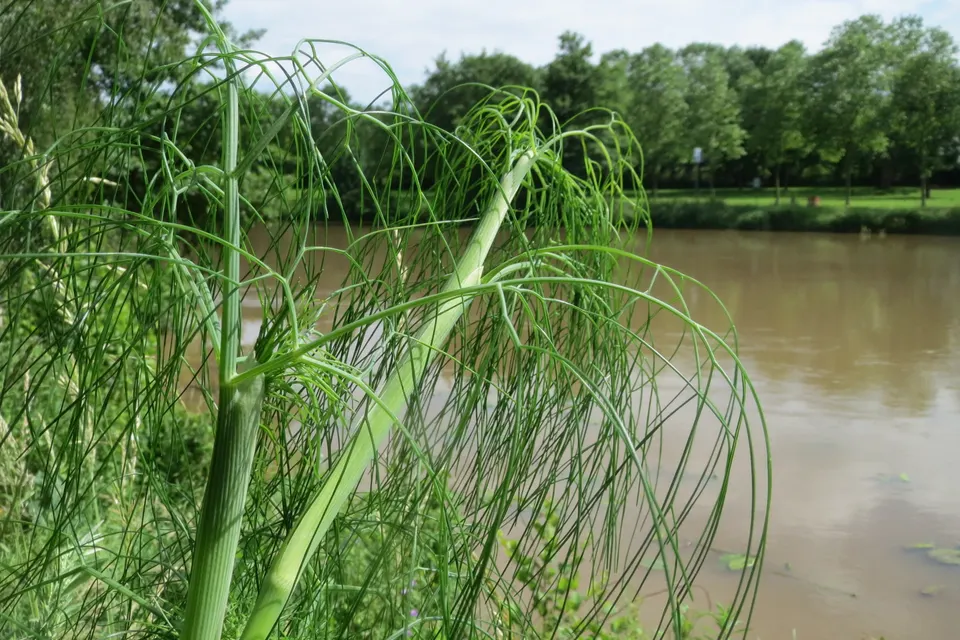
Dill is an easy, low-maintenance herb that mostly takes care of itself once it’s in the ground, the main thing to get right is where you plant it, since mature dill doesn’t get along with one of the garden’s most common root crops.
Sowing a taproot that resents disturbance
Direct-sow seed about 1/4 inch deep roughly a week before your last frost. Dill doesn’t transplant well, thanks to a taproot that resents disturbance. At 4 plants per square foot, it grows quickly, reaching usable size in under two months. Left alone, dill will flower, set seed, and often self-sow for next year, which is a feature if you want a returning patch and a nuisance if you don’t.
Bolting is a heat response, not a mistake
Dill that bolts almost as soon as it’s established is usually a heat response, like cilantro, dill is a cool-season herb at heart, and hot weather pushes it to flower early at the expense of leaf production. Choosing a slower-to-bolt variety helps but doesn’t eliminate this. Yellowing on lower leaves that spreads upward can be a sign of overly wet soil rather than a nutrient issue.
Keep it well away from the carrots
Dill attracts beneficial predatory insects that help protect nearby brassicas like cabbage. See the full companion guide for dill. Keep it well away from carrots: mature, flowering dill can inhibit carrot root development and cross-attract shared pests. In the Garden Designer, its self-seeding habit is worth accounting for, a dill patch left to flower will likely come back on its own the following year in the same spot.
Companion planting guide for Dill · Find your planting dates
Typically viable in USDA zones 2-10. Not sure your zone? Look it up by ZIP code.
Mature height: 2-3 ft
Method: Direct sow: Direct-sow outside. It doesn't transplant well, or doesn't need the extra time indoors.
When to plant dill, by zone
Every zone dill grows in. Pick your zone in the header and it will be highlighted here. Each zone links to its full page.
| Zone | Start indoors | Sow or plant out | Harvest |
|---|---|---|---|
| 2a & 2b | Not usually | May 13–May 20 | Jul 7–Jul 14 |
| 3a & 3b | Not usually | May 23–May 30 | Jul 17–Jul 24 |
| 4a & 4b | Not usually | May 8–May 15 | Jul 2–Jul 9 |
| 5a & 5b | Not usually | May 3–May 10 | Jun 27–Jul 4 |
| 6a & 6b | Not usually | Apr 18–Apr 25 | Jun 12–Jun 19 |
| 7a & 7b | Not usually | Apr 3–Apr 10 | May 28–Jun 4 |
| 8a & 8b | Not usually | Mar 18–Mar 25 | May 12–May 19 |
| 9a & 9b | Not usually | Feb 8–Feb 15 | Apr 4–Apr 11 |
| 10a & 10bFall window | Aug–Nov | Oct–Jan | ~55 days after transplanting |
Harvest dates are about 55 days after the sow or plant-out date.
Zone 2 sows before zone 3 here, which looks wrong and is not. USDA zones rank winter cold, not season length, and zone 2 is mostly interior Alaska, where hard winters come with warm summers. More on what a zone measures.
See exact start-indoors, direct-sow, and harvest dates for your zone →
How many Dill plants fit per square foot?
Spacing: 4 per square foot (square-foot-gardening spacing). Mature height: 2-3 ft.
Good companions for dill
- Cabbage: Attracts beneficial predatory insects that protect brassicas.
Full companion guide, including what to keep away from dill →
Varieties worth considering
- Dukat (also sold as SuperDukat): Wisconsin Horticulture Extension notes Dukat and SuperDukat have strong flavor and high oil content and are slow to bolt, a better pick than standard dill if you're growing mainly for leaves (dill weed) rather than seed heads. (source) Buy seeds: True Leaf Market
- Bouquet: Wisconsin Extension notes this is the variety bred for seed production, 2-3 feet tall with abundant seed heads. The one to grow if the goal is dill seed for pickling, not just the leaves. (source) Buy seeds: Botanical Interests · Burpee · High Mowing Organic Seeds
- Fernleaf: A compact type, only about 18 inches, slow to bolt and bred for containers per Wisconsin Extension, delaying flowering by 10-14 days compared to Bouquet. The pick for a small bed or a pot rather than a dedicated row. (source) Buy seeds: Burpee
Why each variety is listed comes from the source shown next to it. We haven't grown these ourselves yet, so treat this as a research-backed starting point, not a personal endorsement. The buy links are separate from those sources: they go to seed suppliers that sell that exact variety, and we may earn a commission on some of them.
Where to buy dill seeds
Botanical Interests · True Leaf Market · Burpee · High Mowing Organic Seeds (each supplier's dill seeds)
The varieties we recommend above each have their own buy links, for the suppliers that sell that exact variety.
As an Amazon Associate we earn from qualifying purchases. Some links on this page also go to other retailers we may earn a commission from as an affiliate, at no extra cost to you. We only recommend products with a clear consensus of positive, independent reviews, or ones we bought and use ourselves. Each item on our gear page says which.
See it growing
Search YouTube for "growing dill" videos → (a live search, not a hand-picked video; results vary and aren't vetted by us)

Pin this for later
Growing Dill: An easy, self-seeding herb best planted away from carrots, where mature dill can work against them.
Save to Pinterest