Growing Zinnias: A Complete Profile
By Growing Home Greens Team · July 18, 2026
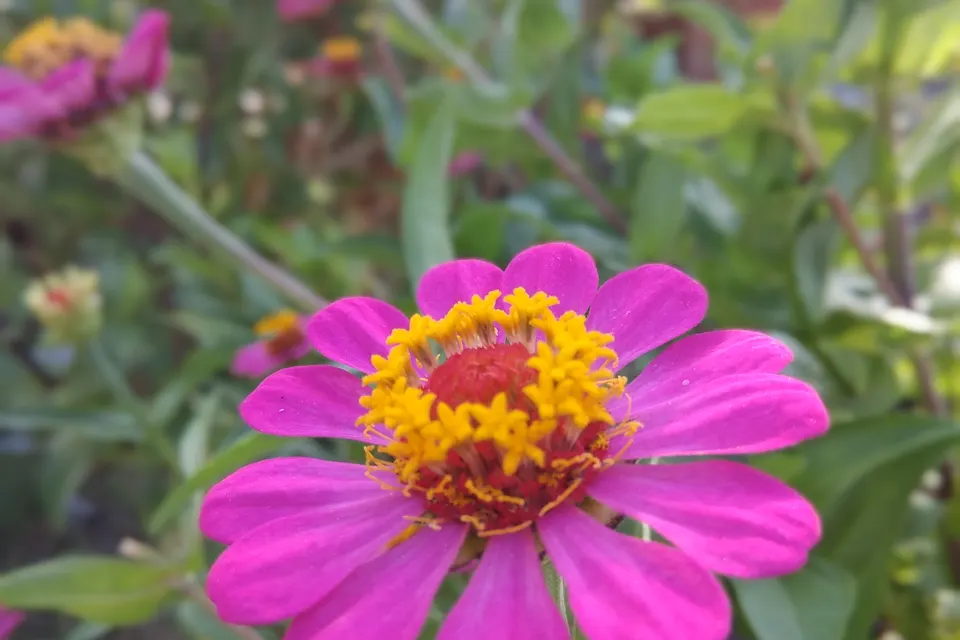
Zinnias are about as forgiving as annual flowers get: direct-sow them after frost, give them sun, and they bloom fast and heavily with almost no fuss, throwing up daisy or dahlia-form flowers in almost every color except true blue on plants anywhere from 1 to 4 feet tall. They’ve also earned their spot in a vegetable garden on merit. They’re one of the better-documented pollinator draws for nearby crops, beyond their good looks as a border filler.
Sowing and keeping them blooming
Zinnias can go in either as seed or transplant, about 4 weeks before last frost if starting indoors or direct-sown around a week after. At 65 days to maturity and one plant per square foot, they fit into a bed the same way a pepper or a smaller vegetable would, not a filler crop, a full square-foot resident. Once they start flowering, regular cutting (deadheading spent blooms) keeps them producing for months instead of tapering off after one flush.
Powdery mildew is the one to watch
Powdery mildew (a white, dusty coating on the leaves) is the most common zinnia problem, especially in humid climates or when plants are watered overhead late in the day. Good air circulation between plants (don’t crowd them tighter than a square foot each) and watering at the soil line instead of the leaves go a long way. Established mildew won’t kill the plant outright, but it does reduce vigor and bloom count. If mildew is a recurring fight in your garden, a resistant series like Oklahoma, Benary’s Giant or Profusion saves you the trouble rather than fighting it every August.
A magnet for the bugs that eat your aphids
Zinnias are a documented draw for pollinators and hoverflies around tomatoes and cucumbers, the hoverflies in particular help control aphids while also improving fruit set. See the full companion guide for zinnias. In the Garden Designer, treat them as a genuine square-foot occupant next to the vegetables they’re supporting, not an afterthought tucked into leftover space.
Companion planting guide for Zinnia · Find your planting dates
Typically viable in USDA zones 2-11. Not sure your zone? Look it up by ZIP code.
Mature height: 1-4 ft
Method: Either: Start indoors for an earlier harvest, or direct-sow outside for less fuss. Either works.
When to plant zinnia, by zone
Every zone zinnia grows in. Pick your zone in the header and it will be highlighted here. Each zone links to its full page.
| Zone | Start indoors | Sow or plant out | Bloom |
|---|---|---|---|
| 2a & 2b | Apr 22–Apr 29 | May 27–Jun 3 | Jul 31–Aug 7 |
| 3a & 3b | May 2–May 9 | Jun 6–Jun 13 | Aug 10–Aug 17 |
| 4a & 4b | Apr 17–Apr 24 | May 22–May 29 | Jul 26–Aug 2 |
| 5a & 5b | Apr 12–Apr 19 | May 17–May 24 | Jul 21–Jul 28 |
| 6a & 6b | Mar 28–Apr 4 | May 2–May 9 | Jul 6–Jul 13 |
| 7a & 7b | Mar 13–Mar 20 | Apr 17–Apr 24 | Jun 21–Jun 28 |
| 8a & 8b | Feb 25–Mar 4 | Apr 1–Apr 8 | Jun 5–Jun 12 |
| 9a & 9b | Jan 18–Jan 25 | Feb 22–Mar 1 | Apr 28–May 5 |
| 10a & 10bSpring window | Feb–May | Mar–Jul | ~65 days after transplanting |
| 11a & 11b | Dec 4–Dec 11 | Jan 8–Jan 15 | Mar 14–Mar 21 |
Bloom dates are about 65 days after the sow or plant-out date, not after starting seeds indoors.
Zone 2 sows before zone 3 here, which looks wrong and is not. USDA zones rank winter cold, not season length, and zone 2 is mostly interior Alaska, where hard winters come with warm summers. More on what a zone measures.
See exact start-indoors, direct-sow, and harvest dates for your zone →
How many Zinnia plants fit per square foot?
Spacing: 1 per square foot (square-foot-gardening spacing). Mature height: 1-4 ft.
Good companions for zinnia
- Tomato: Attracts pollinators and hoverflies that improve fruit set and help control aphids.
- Cucumber: Attracts pollinators that improve fruit set.
Full companion guide, including what to keep away from zinnia →
Varieties worth considering
- 'Oklahoma' series: University of Wisconsin-Madison Extension notes this series grows to 3 feet with good resistance to powdery mildew, worth choosing over an unnamed mix if your garden gets humid, sticky summers where mildew is a recurring problem. (source)
- 'Benary's Giant' series: The cut-flower grower's default: 36-42 inches tall with large double flowers on strong stems, bred to stand up to heat, drought and rain rather than just tolerate them. Pick this one over a mix if you're cutting for the house, not just filling a border. (source)
- 'Profusion' series: A different species cross (Zinnia marylandica), 12 inches tall and 20-24 inches wide, that University of Wisconsin-Madison Extension notes for strong heat, drought and disease tolerance. The one to choose for a low bedding mound instead of a tall cutting stem. (source) Buy seeds: True Leaf Market
- Queeny Lime with Blush (best for: cut-flower color): Johnny's grows this Queeny series pick to 30-40 inches with mostly double, 2- to 3.5-inch blooms in a lime-green-and-blush color combination unlike any of the three series above. Pick it specifically for a color a standard red, orange or pink mix doesn't cover. (source) Buy seeds: Burpee
- Double Zahara Salmon (best for: containers, powdery mildew): Johnny's Zahara series stays compact at 12-20 inches with a low, mounding habit and is specifically bred for powdery mildew resistance, the disease this profile flags as zinnia's main problem. The shortest of the varieties here, better suited to a container or bed edge than a cutting row. (source) Buy seeds: Burpee
Why each variety is listed comes from the source shown next to it. We haven't grown these ourselves yet, so treat this as a research-backed starting point, not a personal endorsement. The buy links are separate from those sources: they go to seed suppliers that sell that exact variety, and we may earn a commission on some of them.
Where to buy zinnia seeds
Botanical Interests · True Leaf Market · Burpee · High Mowing Organic Seeds (each supplier's zinnia seeds)
The varieties we recommend above each have their own buy links, for the suppliers that sell that exact variety.
As an Amazon Associate we earn from qualifying purchases. Some links on this page also go to other retailers we may earn a commission from as an affiliate, at no extra cost to you. We only recommend products with a clear consensus of positive, independent reviews, or ones we bought and use ourselves. Each item on our gear page says which.
See it growing
Search YouTube for "growing zinnia" videos → (a live search, not a hand-picked video; results vary and aren't vetted by us)

Pin this for later
Growing Zinnia: A fast, easy annual that pulls pollinators and hoverflies into the vegetable beds it's planted next to.
Save to Pinterest