Growing Tomatoes: A Complete Profile
By Growing Home Greens Team · July 16, 2026
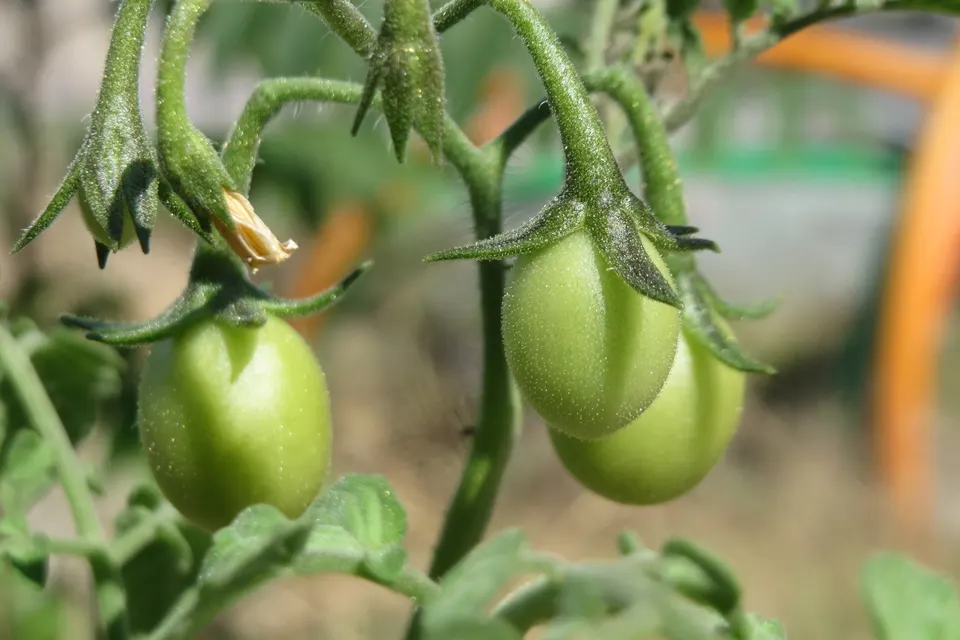
Tomatoes are the crop most people plant first, and for good reason: a single well-tended plant can produce for months, and the taste difference between a homegrown and store-bought tomato is the single biggest “why do I garden” argument there is.
Staking, types, and getting the transplant deep
Determinate tomatoes grow to a fixed size and ripen most of their fruit in a short window, then they’re done, good for canning, not for a steady trickle all summer. Indeterminate tomatoes keep growing and setting fruit until frost kills them, which is what most people want, but they need real support: a tall cage or trellis, not the flimsy wire cone from the garden center. Tomatoes need staking or caging almost universally, even a determinate variety benefits from support once loaded with fruit, and the cage or stake goes in at transplant time, not weeks later; driving stakes in around a plant that’s already spread out risks the roots. They’re heavy feeders, so a spot amended with compost, rather than bare topsoil, makes a noticeable difference.
Beyond determinate vs. indeterminate, the type matters for what you’re using them for: beefsteak and slicing types for sandwiches, paste and roma types for sauce (less water, cooks down faster), cherry and grape types the easiest and fastest to grow, a good first pick for a beginner. Heirlooms usually win on flavor; hybrids are usually bred for disease resistance, which matters if blight has wrecked plants before.
Plant the transplant deeper than it sat in its pot. Pinch off the lower leaves and bury most of the stem. Tomatoes root anywhere the stem touches soil, so a deep-planted seedling ends up with a bigger root system than one planted at its original soil line.
Blossom end rot is a watering problem
Blossom end rot (a dark, sunken patch on the fruit’s bottom) is almost always inconsistent watering, not a disease. Keep the soil evenly moist rather than alternating between bone-dry and soaked. Cracking is the same root cause after a heavy rain following a dry spell.
Pairing it well
Check our companion planting guide for tomatoes before you place one. Basil and marigolds are classic, reputed pairings, while corn and cabbage are worth keeping some distance from. Use the planting calendar for exact dates in your zone, or lay it out visually in the Garden Designer.
Companion planting guide for Tomato · Find your planting dates
Typically viable in USDA zones 3-11. Not sure your zone? Look it up by ZIP code.
Mature height: 3-6 ft
Method: Start indoors: Start indoors from seed, then transplant outside. It needs a head start most zones can't give it by direct-sowing alone.
When to plant tomato, by zone
Every zone tomato grows in. Pick your zone in the header and it will be highlighted here. Each zone links to its full page.
| Zone | Start indoors | Sow or plant out | Harvest |
|---|---|---|---|
| 3a & 3b | Apr 18–Apr 25 | Jun 13–Jun 20 | Aug 22–Aug 29 |
| 4a & 4b | Apr 3–Apr 10 | May 29–Jun 5 | Aug 7–Aug 14 |
| 5a & 5b | Mar 29–Apr 5 | May 24–May 31 | Aug 2–Aug 9 |
| 6a & 6b | Mar 14–Mar 21 | May 9–May 16 | Jul 18–Jul 25 |
| 7a & 7b | Feb 27–Mar 6 | Apr 24–May 1 | Jul 3–Jul 10 |
| 8a & 8b | Feb 11–Feb 18 | Apr 8–Apr 15 | Jun 17–Jun 24 |
| 9a & 9b | Jan 4–Jan 11 | Mar 1–Mar 8 | May 10–May 17 |
| 10a & 10bSpring window | Dec–Feb | Feb–Apr | ~70 days after transplanting |
| Summer window | May–Jul | Jul–Sep | ~70 days after transplanting |
| 11a & 11bSummer window | Jun–Dec | Aug–Feb | ~70 days after transplanting |
Harvest dates are about 70 days after the sow or plant-out date, not after starting seeds indoors.
See exact start-indoors, direct-sow, and harvest dates for your zone →
How many Tomato plants fit per square foot?
Spacing: 1 per square foot (square-foot-gardening spacing). Mature height: 3-6 ft.
Soil & water: pH 6-6.5. Needs well-drained soil. Amend with lime if soil pH falls below 6.
Good companions for tomato
- Basil: Widely reputed to improve tomato flavor and repel pests, but a multi-year, garden-scale controlled trial found no consistent taste preference in blind tests, and no evidence basil reduced pest pressure: treat this as one of companion planting's least-supported popular claims.
- Marigold: UF/IFAS Extension confirms French marigold is effective against a wide range of root-knot nematode species: a real, documented effect, not folklore. The insect-pest-deterrent half of this claim is less well documented.
- Carrot: Loosens soil for tomato roots without competing for space above ground.
Full companion guide, including what to keep away from tomato →
Varieties worth considering
- Jolene (F1): Bred with strong resistance to Tomato Yellow Leaf Curl Virus and reported to keep setting fruit in heat that stalls other varieties, a standout pick for hot climates like the Deep South. (source)
- Firebird (F1): Described by the breeder as adaptable and productive with excellent fruit set in heat, while also suited to Northern growing, a widely-adapted heat-tolerant option. (source)
- Iron Lady: Carries the Ph2 + Ph3 resistance genes for strong resistance to late blight plus early blight and Septoria leaf spot, worth considering in disease-prone, humid climates. (source) Buy seeds: High Mowing Organic Seeds
- Sweet 100 (Super Sweet 100): Mississippi State University Extension's Southern Gardening series lists Super Sweet 100 among the earliest tomatoes, ripening in as few as 50 days from transplant, a prolific cherry type useful where you want fruit before summer heat stalls set. (source) Buy seeds: Burpee
- 'Cherokee Purple' (best for: heirloom flavor): Bonnie Plants lists 10-12 ounce fruit with dusky pink skin and deep red interior, 80-90 days, and vigorous indeterminate vines needing strong staking. An heirloom pick over the hybrids above if flavor matters more to you than disease resistance. (source) Buy seeds: Botanical Interests · True Leaf Market · Burpee · High Mowing Organic Seeds
- 'San Marzano' (best for: sauce and canning): An Italian paste type, 70-90 days, oblong 3-4 inch fruit with thick flesh and few seeds, bred to cook down into sauce rather than eaten fresh like the beefsteak varieties above. The one to grow specifically if canning or sauce-making is the goal. (source) Buy seeds: Botanical Interests · Burpee
- 'Celebrity' (F1) (best for: broad disease resistance): Cornell's disease-resistant variety guide lists Celebrity with resistance to Fusarium wilt, Verticillium wilt, tobacco and tomato mosaic virus, root-knot nematode, gray leaf spot and Alternaria stem canker, a broader resistance package than any single variety above. A dependable all-purpose slicer where disease pressure is the main concern. (source) Buy seeds: True Leaf Market · Burpee
Why each variety is listed comes from the source shown next to it. We haven't grown these ourselves yet, so treat this as a research-backed starting point, not a personal endorsement. The buy links are separate from those sources: they go to seed suppliers that sell that exact variety, and we may earn a commission on some of them.
Where to buy tomato seeds
Botanical Interests · True Leaf Market · Burpee · High Mowing Organic Seeds (each supplier's tomato seeds)
The varieties we recommend above each have their own buy links, for the suppliers that sell that exact variety.
As an Amazon Associate we earn from qualifying purchases. Some links on this page also go to other retailers we may earn a commission from as an affiliate, at no extra cost to you. We only recommend products with a clear consensus of positive, independent reviews, or ones we bought and use ourselves. Each item on our gear page says which.
See it growing
Search YouTube for "growing tomato" videos → (a live search, not a hand-picked video; results vary and aren't vetted by us)

Pin this for later
Growing Tomato: Everything beyond the calendar date: spacing, staking, and why tomatoes are the crop most beginners start with.
Save to Pinterest