Growing Cucumbers: A Complete Profile
By Growing Home Greens Team · July 16, 2026
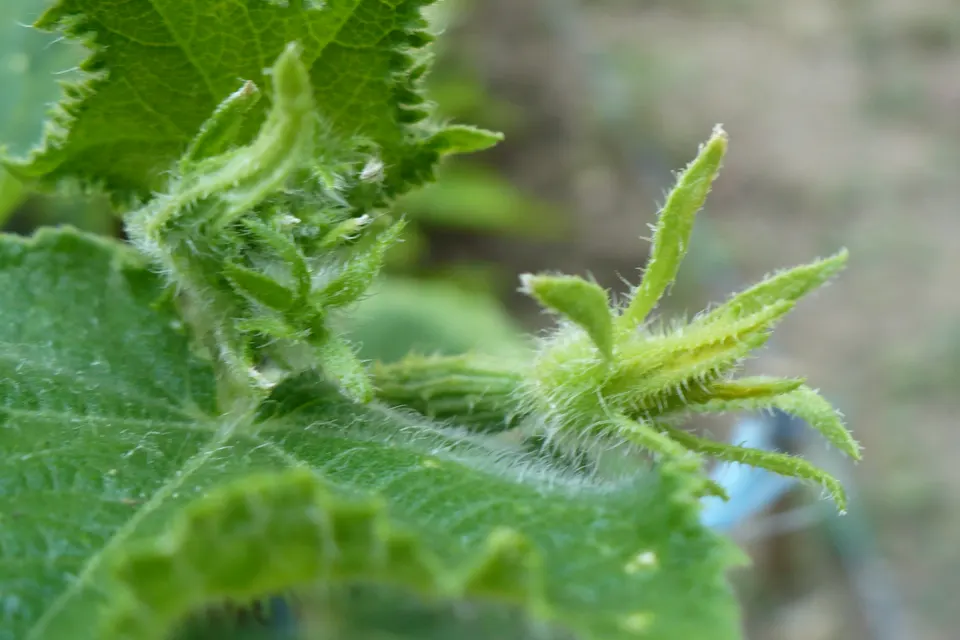
Cucumbers are vigorous vines, and the single best decision you can make for them is giving them something to climb. A trellised cucumber uses a fraction of the ground space of one left to sprawl, gets better airflow (which means fewer fungal problems), and tends to grow straighter fruit since it isn’t resting on the ground.
Heavy drinkers, and the bitterness that comes from skipping a watering
Cucumbers are heavy drinkers. Inconsistent watering is the most common cause of bitter-tasting fruit. Keep the soil evenly moist, especially once vines start setting fruit. They’re also fast: from transplant to first harvest is often under two months, so a mid-season planting can still produce before your first frost in many zones.
Misshapen fruit is usually a pollination problem
Bitterness at the stem end almost always traces back to water stress, not variety. Misshapen fruit (bulbous at one end, thin at the other) usually means uneven pollination, more of an issue in a small garden with few pollinators around, which is where companion flowers can help.
Give it a trellis, not the ground
Give cucumbers a trellis or cage. Our Garden Designer flags this directly on the plant and in the auto-placement tool. Radishes make a documented trap crop for cucumber beetles; see the full companion guide for cucumbers for the reasoning behind each pairing.
Companion planting guide for Cucumber · Find your planting dates
Typically viable in USDA zones 3-11. Not sure your zone? Look it up by ZIP code.
Mature height: 5-6 ft
Method: Either: Start indoors for an earlier harvest, or direct-sow outside for less fuss. Either works.
When to plant cucumber, by zone
Every zone cucumber grows in. Pick your zone in the header and it will be highlighted here. Each zone links to its full page.
| Zone | Start indoors | Sow or plant out | Harvest |
|---|---|---|---|
| 3a & 3b | May 9–May 16 | Jun 6–Jun 13 | Jul 31–Aug 7 |
| 4a & 4b | Apr 24–May 1 | May 22–May 29 | Jul 16–Jul 23 |
| 5a & 5b | Apr 19–Apr 26 | May 17–May 24 | Jul 11–Jul 18 |
| 6a & 6b | Apr 4–Apr 11 | May 2–May 9 | Jun 26–Jul 3 |
| 7a & 7b | Mar 20–Mar 27 | Apr 17–Apr 24 | Jun 11–Jun 18 |
| 8a & 8b | Mar 4–Mar 11 | Apr 1–Apr 8 | May 26–Jun 2 |
| 9a & 9b | Jan 25–Feb 1 | Feb 22–Mar 1 | Apr 18–Apr 25 |
| 10a & 10bSpring window | Jan–Mar | Feb–Apr | ~55 days after transplanting |
| Summer window | Jul–Aug | Aug–Sep | ~55 days after transplanting |
| 11a & 11bFall window | Not usually | Sep–Feb | ~55 days after planting |
Harvest dates are about 55 days after the sow or plant-out date, not after starting seeds indoors.
See exact start-indoors, direct-sow, and harvest dates for your zone →
How many Cucumber plants fit per square foot?
Spacing: 2 per square foot (square-foot-gardening spacing). Mature height: 5-6 ft.
Soil & water: pH 6-6.5. Needs well-drained soil. Amend with lime if soil pH falls below 6.
Good companions for cucumber
- Bush Beans: Beans fix nitrogen that heavy-feeding cucumbers use.
- Radish: Reputed as a trap crop for cucumber beetles, but the documented trap-crop research for cucumber beetles points to Blue Hubbard squash specifically, not radish. Radish IS a real, documented trap crop, but for flea beetles on brassica crops: a different pest and crop pairing than this one. Treat this specific pairing as garden tradition, not measured evidence.
Full companion guide, including what to keep away from cucumber →
Varieties worth considering
- DMR 401 (best for: downy mildew resistance): The standout in Cornell's 2017 downy mildew trial at the Long Island Horticultural Research and Extension Center: 75% control of the disease and more than twice the marketable fruit of the next-best variety, 2.79 fruits per plant against 1.01. Cornell's plant pathologists called it far and away the most successful variety in the experiment. The one to grow where downy mildew is a regular problem. (source) Buy seeds: High Mowing Organic Seeds
- Marketmore 76: Bred at Cornell in 1976 and still a standard slicing cucumber: open-pollinated, so you can save true-to-type seed, with resistance across powdery mildew, downy mildew, scab and cucumber mosaic virus. A 2013 Fruition Seeds trial had it producing from early June to early October off one direct seeding. (source) Buy seeds: Burpee · High Mowing Organic Seeds
- Diva (F1): A seedless, thin-skinned burpless slicer, parthenocarpic so it sets fruit without pollinators, with moderate resistance to scab, powdery mildew and cucumber mosaic virus. Johnny's lists it as bitter-free by nature, not just by good watering, which sets it apart from the standard slicing types above. (source)
- 'Suyo Long' (best for: hot climates, salads): Johnny's lists this Chinese type at up to 15 inches, ribbed, sweet-flavored and bitter-free by nature, widely adapted and reported to grow well and set fruit even in hot weather that stresses standard slicers. A different shape and use case from the other three varieties here, worth it for a hot-summer garden. (source) Buy seeds: Burpee · High Mowing Organic Seeds
Why each variety is listed comes from the source shown next to it. We haven't grown these ourselves yet, so treat this as a research-backed starting point, not a personal endorsement. The buy links are separate from those sources: they go to seed suppliers that sell that exact variety, and we may earn a commission on some of them.
Where to buy cucumber seeds
Botanical Interests · True Leaf Market · Burpee · High Mowing Organic Seeds (each supplier's cucumber seeds)
The varieties we recommend above each have their own buy links, for the suppliers that sell that exact variety.
As an Amazon Associate we earn from qualifying purchases. Some links on this page also go to other retailers we may earn a commission from as an affiliate, at no extra cost to you. We only recommend products with a clear consensus of positive, independent reviews, or ones we bought and use ourselves. Each item on our gear page says which.
See it growing
Search YouTube for "growing cucumber" videos → (a live search, not a hand-picked video; results vary and aren't vetted by us)

Pin this for later
Growing Cucumber: A vining crop that rewards a trellis, more fruit, straighter cucumbers, and far less space used.
Save to Pinterest