Growing Vinca (Madagascar Periwinkle): A Complete Profile
By Growing Home Greens Team · July 18, 2026
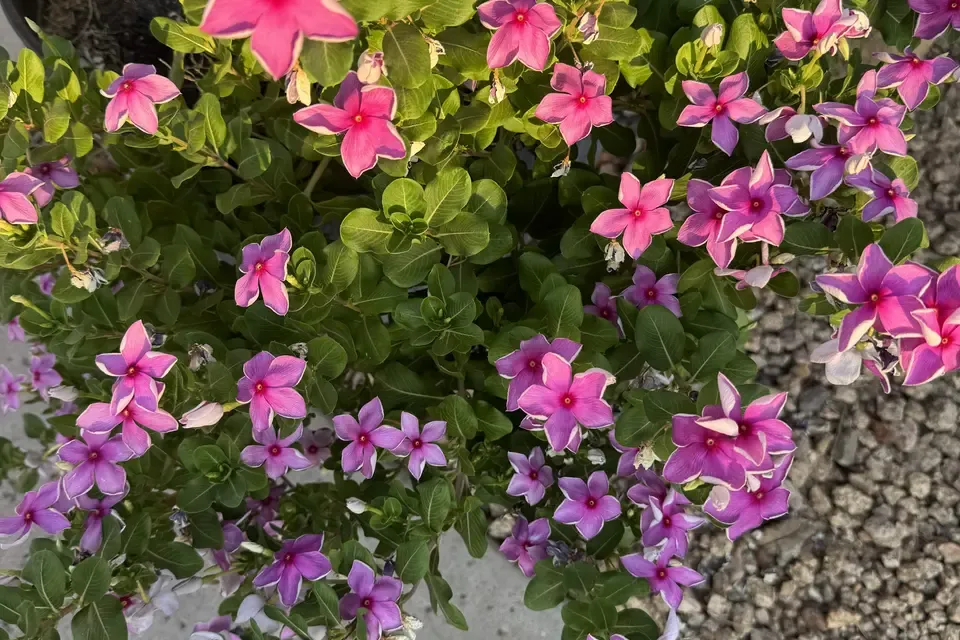
Vinca (Madagascar periwinkle, botanically Catharanthus roseus) is built for heat that stops other flowers cold. Growing In The Garden describes it as synonymous with hot weather in the low desert, blooming through Phoenix summers with little fuss once it’s established, a low, 12- to 18-inch mound of flat, five-petaled pink, white, or red flowers, often with a contrasting eye at the center.
Indoor-start only, and a heat mat that isn’t optional
Vinca is started indoors only, about 10 weeks before your last frost, with transplants going out 2 weeks after. This is not a plant that tolerates cold soil or a late frost. Seed needs darkness to germinate and soil temperatures around 78-80°F, which is warmer than most seed-starting setups run by default; a heat mat isn’t optional here, it’s close to required. At a full plant per square foot, expect steady, unhurried growth once the weather is hot.
Seeds that never come up are a temperature problem
Seeds that never come up are almost always a temperature problem. Check that soil is staying in the high 70s to 80°F range and that the germination tray isn’t getting light, since vinca needs darkness to sprout. Once established, vinca is prone to root and stem rot in cool, wet, or poorly drained soil; overwatering is a more common cause of failure than underwatering.
The hottest, sunniest square in the layout
Vinca has no well-established companion pairings, and nothing it needs to be kept away from. At 1 per square foot, it’s an easy standard-density fit in the Garden Designer for the hottest, sunniest squares in the layout.
Companion planting guide for Vinca (Madagascar Periwinkle) · Find your planting dates
Typically viable in USDA zones 2-11. Not sure your zone? Look it up by ZIP code.
Mature height: 1-1.5 ft
Method: Start indoors: Start indoors from seed, then transplant outside. It needs a head start most zones can't give it by direct-sowing alone.
When to plant vinca (Madagascar periwinkle), by zone
Every zone vinca (Madagascar periwinkle) grows in. Pick your zone in the header and it will be highlighted here. Each zone links to its full page.
| Zone | Start indoors | Sow or plant out | Bloom |
|---|---|---|---|
| 2a & 2b | Mar 11–Mar 18 | Jun 3–Jun 10 | Aug 22–Aug 29 |
| 3a & 3b | Mar 21–Mar 28 | Jun 13–Jun 20 | Sep 1–Sep 8 |
| 4a & 4b | Mar 6–Mar 13 | May 29–Jun 5 | Aug 17–Aug 24 |
| 5a & 5b | Mar 1–Mar 8 | May 24–May 31 | Aug 12–Aug 19 |
| 6a & 6b | Feb 14–Feb 21 | May 9–May 16 | Jul 28–Aug 4 |
| 7a & 7b | Jan 30–Feb 6 | Apr 24–May 1 | Jul 13–Jul 20 |
| 8a & 8b | Jan 14–Jan 21 | Apr 8–Apr 15 | Jun 27–Jul 4 |
| 9a & 9b | Dec 7–Dec 14 | Mar 1–Mar 8 | May 20–May 27 |
| 10a & 10bSpring window | Jan–May | Mar–Jul | ~80 days after transplanting |
| 11a & 11b | Oct 23–Oct 30 | Jan 15–Jan 22 | Apr 5–Apr 12 |
Bloom dates are about 80 days after the sow or plant-out date, not after starting seeds indoors.
Zone 2 sows before zone 3 here, which looks wrong and is not. USDA zones rank winter cold, not season length, and zone 2 is mostly interior Alaska, where hard winters come with warm summers. More on what a zone measures.
See exact start-indoors, direct-sow, and harvest dates for your zone →
How many Vinca (Madagascar Periwinkle) plants fit per square foot?
Spacing: 1 per square foot (square-foot-gardening spacing). Mature height: 1-1.5 ft.
Varieties worth considering
- Cora series: Texas A&M AgriLife's Texas Superstar program highlights Cora as the first vinca series bred with resistance to aerial Phytophthora fungus, a disease that previously limited how widely vinca could be used in hot, humid Texas landscapes, worth seeking out if that's been a problem for you before. (source)
- Nirvana series: Shares Cora's Phytophthora-resistant breeding but is propagated vegetatively from cuttings rather than grown from seed, per PLANTanswers (Texas A&M), and offers the largest flowers on the market among the resistant lines. Choose this over Cora if you're buying started plants rather than sowing your own. (source)
- Pacifica series: Clemson HGIC lists it with large 2-inch flowers and a broad color range including Pacifica Red, the first true red vinca, but doesn't credit it with the Phytophthora resistance called out for Cora XDR. Choose it for the color range, not as a substitute for a resistant line where that disease has been a problem. (source)
Why each variety is listed comes from the source shown next to it. We haven't grown these ourselves yet, so treat this as a research-backed starting point, not a personal endorsement. The buy links are separate from those sources: they go to seed suppliers that sell that exact variety, and we may earn a commission on some of them.
Where to buy vinca seeds
True Leaf Market · Burpee (each supplier's vinca seeds)
As an Amazon Associate we earn from qualifying purchases. Some links on this page also go to other retailers we may earn a commission from as an affiliate, at no extra cost to you. We only recommend products with a clear consensus of positive, independent reviews, or ones we bought and use ourselves. Each item on our gear page says which.
See it growing
Search YouTube for "growing vinca (Madagascar periwinkle)" videos → (a live search, not a hand-picked video; results vary and aren't vetted by us)
%3A%20A%20genuine%20hot-weather%20specialist%20that%20needs%20warm%20soil%20just%20to%20sprout%2C%20then%20shrugs%20off%20the%20heat%20that%20follows.)
Pin this for later
Growing Vinca (Madagascar Periwinkle): A genuine hot-weather specialist that needs warm soil just to sprout, then shrugs off the heat that follows.
Save to Pinterest