Growing Tart Cherry: A Complete Profile
By Growing Home Greens Team · August 11, 2026
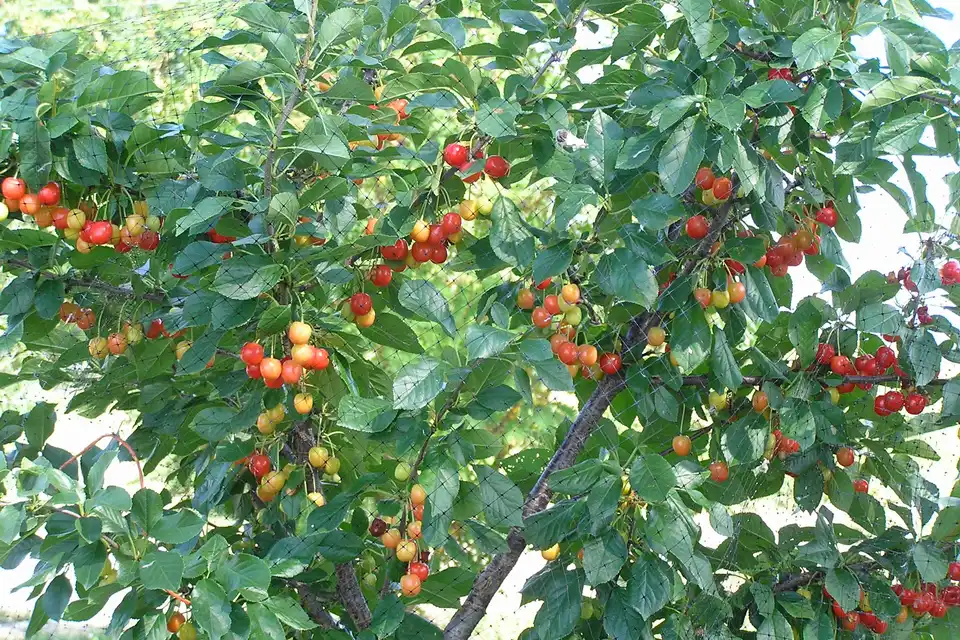
Tart cherry (Prunus cerasus), also called sour or pie cherry, is a separate species from sweet cherry and a distinctly different growing experience: self-fertile, more cold-hardy, and more compact, grown almost entirely for cooking rather than fresh eating since the fruit is tart straight off the tree.
No partner needed
A single tart cherry tree sets a full crop alone, no second variety required, which makes it a simpler choice than most sweet cherry varieties for a yard with room for only one fruit tree.
More cold-hardy and more compact than sweet cherry
Tart cherry tolerates colder winters and a wider range of soils than sweet cherry, and stays smaller at maturity, which makes it the better fit for a marginal-zone yard or a smaller space where sweet cherry’s size and pickier siting requirements are a real constraint.
Still worth netting
Birds go after tart cherry just as readily as sweet cherry once fruit colors up, even though the fruit itself is sour. Net the tree at that point rather than assuming the tartness will deter birds; it doesn’t.
Tart cherry has no well-established companion pairings, and nothing it needs to be kept away from. See the full profile for sweet cherry for the pollination-dependent cherry this one is deliberately easier than.
Source: Growing Cherries in the Home Garden, Iowa State University Extension.
Companion planting guide for Tart Cherry · Find your planting dates
Typically viable in USDA zones 4-8. Not sure your zone? Look it up by ZIP code.
Mature height: 12-16 ft
Method: Buy as a start: Buy as a nursery start and transplant outside. It's slow or unreliable from seed, so most gardeners skip seed-starting it entirely.
When to plant tart cherry, by zone
Every zone tart cherry grows in. Pick your zone in the header and it will be highlighted here. Each zone links to its full page.
| Zone | Start indoors | Sow or plant out | Harvest |
|---|---|---|---|
| 4a & 4b | Buy as a start | May 1–May 8 | First real harvest in year 4 |
| 5a & 5b | Buy as a start | Apr 26–May 3 | First real harvest in year 4 |
| 6a & 6b | Buy as a start | Apr 11–Apr 18 | First real harvest in year 4 |
| 7a & 7b | Buy as a start | Mar 27–Apr 3 | First real harvest in year 4 |
| 8a & 8b | Buy as a start | Mar 11–Mar 18 | First real harvest in year 4 |
See exact start-indoors, direct-sow, and harvest dates for your zone →
How many Tart Cherry plants fit per square foot?
Spacing: about 50 square feet per plant (square-foot-gardening spacing). Mature height: 12-16 ft.
Varieties worth considering
- 'Montmorency' tart cherry (best for: the standard pie cherry): The standard self-fertile tart cherry variety grown across the US, reliably productive alone with no second variety needed, and the variety most home bakers mean when they say pie cherry. (source)
- 'Meteor' tart cherry (best for: small yards, compact size): Stark Bro's Nursery describes this University of Minnesota introduction (1952) as a naturally dwarf, cold-hardy, self-pollinating sour cherry, more space-efficient than Montmorency and usable anywhere Montmorency would be, a better fit where yard space is the limiting factor. (source)
Why each variety is listed comes from the source shown next to it. We haven't grown these ourselves yet, so treat this as a research-backed starting point, not a personal endorsement. The buy links are separate from those sources: they go to seed suppliers that sell that exact variety, and we may earn a commission on some of them.
Where to buy tart cherry starts
Tart cherry is almost always bought as a nursery start rather than seeded. Check a local nursery or garden center; we haven't vetted online start/plant suppliers yet.
As an Amazon Associate we earn from qualifying purchases. Some links on this page also go to other retailers we may earn a commission from as an affiliate, at no extra cost to you. We only recommend products with a clear consensus of positive, independent reviews, or ones we bought and use ourselves. Each item on our gear page says which.
See it growing
Search YouTube for "growing tart cherry" videos → (a live search, not a hand-picked video; results vary and aren't vetted by us)

Pin this for later
Growing Tart Cherry: The self-fertile, cold-hardy cherry grown for pie and preserves rather than fresh eating, and the easiest cherry for a first-time fruit tree grower.
Save to Pinterest