Growing Swiss Chard: A Complete Profile
By Growing Home Greens Team · July 18, 2026
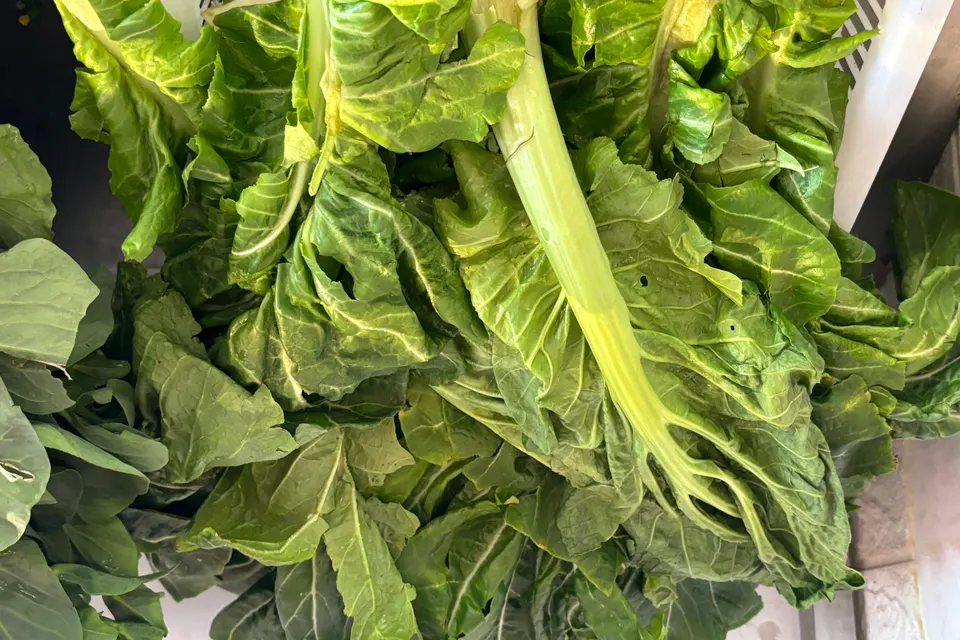
Swiss chard does what spinach and lettuce can’t: keep producing through the heat of summer without bolting. It can be started indoors or direct-seeded, and a single planting will often keep giving cut-and-come-again harvests for months.
Starting it early, either way
Start indoors four weeks before your last frost, or direct-seed as early as two weeks before. At 55 days to maturity and four plants per square foot, it fills a bed faster than kale but still gives you a long harvest window. Cut outer leaves as needed and the plant keeps regrowing from the center.
Tough leaves are just older growth
Leaves that go tough and bitter are usually just older growth. Regular harvesting of outer leaves keeps the plant productive and the new growth tender. Chard is generally easygoing, but leaf miners can tunnel through leaves in patches; picking off and destroying affected leaves is usually enough to keep it in check.
A bed that keeps producing without replanting
Beans are a documented companion, fixing nitrogen that chard uses heavily. See the full companion guide for Swiss chard. Its upright, colorful stalks (in red, gold, and white varieties) also work well as a border planting along a bed’s edge, and its tolerance for both heat and cold means it can fill a slot that would otherwise sit empty between a spring and fall crop. Its dense spacing and long harvest window make it a solid choice in the Garden Designer for a bed you want producing continuously through summer without replanting.
Companion planting guide for Swiss Chard · Find your planting dates
Typically viable in USDA zones 3-10. Not sure your zone? Look it up by ZIP code.
Mature height: 1-2 ft
Method: Either: Start indoors for an earlier harvest, or direct-sow outside for less fuss. Either works.
When to plant Swiss chard, by zone
Every zone Swiss chard grows in. Pick your zone in the header and it will be highlighted here. Each zone links to its full page.
| Zone | Start indoors | Sow or plant out | Harvest |
|---|---|---|---|
| 3a & 3b | May 2–May 9 | May 16–May 23 | Jul 10–Jul 17 |
| 4a & 4bSpring window | Apr 17–Apr 24 | May 1–May 8 | Jun 25–Jul 2 |
| Fall window | Not usually | Jul 13–Jul 27 | Sep 6–Sep 20 |
| 5a & 5bSpring window | Apr 12–Apr 19 | Apr 26–May 3 | Jun 20–Jun 27 |
| Fall window | Not usually | Jul 28–Aug 11 | Sep 21–Oct 5 |
| 6a & 6bSpring window | Mar 28–Apr 4 | Apr 11–Apr 18 | Jun 5–Jun 12 |
| Fall window | Not usually | Aug 7–Aug 21 | Oct 1–Oct 15 |
| 7a & 7bSpring window | Mar 13–Mar 20 | Mar 27–Apr 3 | May 21–May 28 |
| Fall window | Not usually | Aug 17–Aug 31 | Oct 11–Oct 25 |
| 8a & 8bSpring window | Feb 25–Mar 4 | Mar 11–Mar 18 | May 5–May 12 |
| Fall window | Not usually | Sep 2–Sep 16 | Oct 27–Nov 10 |
| 9a & 9bSpring window | Jan 18–Jan 25 | Feb 1–Feb 8 | Mar 28–Apr 4 |
| Fall window | Not usually | Sep 27–Oct 11 | Nov 21–Dec 5 |
| 10a & 10bFall window | Aug–Jan | Sep–Feb | ~55 days after transplanting |
Harvest dates are about 55 days after the sow or plant-out date, not after starting seeds indoors.
See exact start-indoors, direct-sow, and harvest dates for your zone →
How many Swiss Chard plants fit per square foot?
Spacing: 4 per square foot (square-foot-gardening spacing). Mature height: 1-2 ft.
Good companions for Swiss chard
- Bush Beans: Beans fix nitrogen chard uses heavily.
Full companion guide, including what to keep away from Swiss chard →
Varieties worth considering
- Charbell (F1): Described by the seed company as very bolt resistant, with good bolt resistance and wide petioles noted specifically as an improvement over traditional chard varieties. (source)
- Bright Lights: The gold-standard rainbow chard, an AAS winner at 55 days with savoyed leaves and stems in gold, pink, orange, red and white on the same planting. Milder flavor than a standard green chard, and the reason most "rainbow chard" you see is either this variety or a mix trying to copy it. (source) Buy seeds: True Leaf Market · Burpee
- Fordhook Giant: The traditional white-stemmed, green-leaf standard Johnny's rates as a strong, heat-tolerant performer at about 50 days. A safer default than Bright Lights if you want reliable production over a garnish-worthy stem color. (source) Buy seeds: Botanical Interests · True Leaf Market · Burpee · High Mowing Organic Seeds
Why each variety is listed comes from the source shown next to it. We haven't grown these ourselves yet, so treat this as a research-backed starting point, not a personal endorsement. The buy links are separate from those sources: they go to seed suppliers that sell that exact variety, and we may earn a commission on some of them.
Where to buy Swiss chard seeds
Botanical Interests · Burpee (each supplier's Swiss chard seeds)
The varieties we recommend above each have their own buy links, for the suppliers that sell that exact variety.
As an Amazon Associate we earn from qualifying purchases. Some links on this page also go to other retailers we may earn a commission from as an affiliate, at no extra cost to you. We only recommend products with a clear consensus of positive, independent reviews, or ones we bought and use ourselves. Each item on our gear page says which.
See it growing
Search YouTube for "growing Swiss chard" videos → (a live search, not a hand-picked video; results vary and aren't vetted by us)

Pin this for later
Growing Swiss Chard: A heat-tolerant green that keeps producing all season, long after spinach and lettuce have bolted.
Save to Pinterest