Growing Bush Beans: A Complete Profile
By Growing Home Greens Team · July 18, 2026
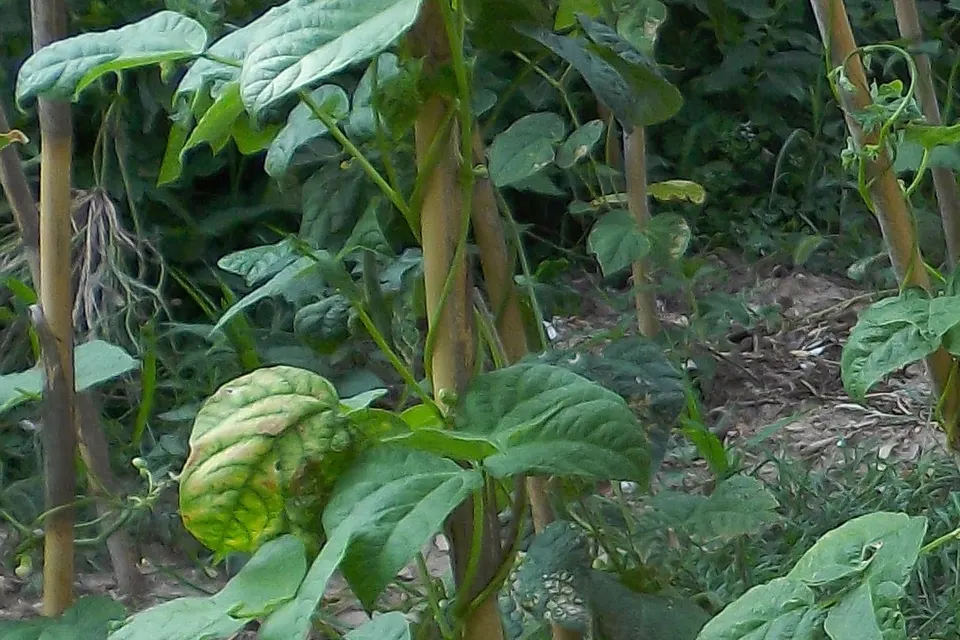
Bush beans are about as low-effort as vegetable gardening gets: direct-sow the seed after your last frost, skip the trellis entirely, and harvest in under two months. They’re a good crop to fill a bed with while slower plants like peppers and tomatoes are still getting established.
Sowing it an inch deep, no head start needed
Sow seeds directly outdoors about a week after your last frost, an inch deep. Bush beans don’t transplant well, so there’s no advantage to starting them indoors. At 9 plants per square foot, they fill in a bed fast and stay low and self-supporting, unlike pole varieties that need something to climb.
Patchy germination is a soil-temperature problem
Beans that come up patchy or rot in the ground are usually a soil-temperature problem. Seed sown into cold, wet soil right after frost is slow to germinate and prone to rotting before it sprouts. Waiting for the soil to warm, rather than going by the calendar date alone, solves most of this. Powdery, tan-colored coating on leaves later in the season is powdery mildew, which is more common on beans grown crowded or with poor air movement.
Half of the three sisters, if you keep the alliums away
Beans are one half of the classic “three sisters” planting alongside corn. See the full companion planting guide for beans. Keep them away from onions and garlic in the same bed; alliums inhibit the nitrogen-fixing bacteria on bean roots that make beans a good neighbor for heavy feeders in the first place. In the Garden Designer, their dense, low, self-supporting habit makes them an easy filler crop that doesn’t compete for light with taller plants nearby.
Companion planting guide for Bush Beans · Find your planting dates
Typically viable in USDA zones 3-11. Not sure your zone? Look it up by ZIP code.
Mature height: 1-2 ft
Method: Direct sow: Direct-sow outside. It doesn't transplant well, or doesn't need the extra time indoors.
When to plant bush beans, by zone
Every zone bush beans grow in. Pick your zone in the header and it will be highlighted here. Each zone links to its full page.
| Zone | Start indoors | Sow or plant out | Harvest |
|---|---|---|---|
| 3a & 3b | Not usually | Jun 6–Jun 13 | Jul 31–Aug 7 |
| 4a & 4b | Not usually | May 22–May 29 | Jul 16–Jul 23 |
| 5a & 5bSpring window | Not usually | May 17–May 24 | Jul 11–Jul 18 |
| Fall window | Not usually | Jul 28–Aug 11 | Sep 21–Oct 5 |
| 6a & 6bSpring window | Not usually | May 2–May 9 | Jun 26–Jul 3 |
| Fall window | Not usually | Aug 7–Aug 21 | Oct 1–Oct 15 |
| 7a & 7bSpring window | Not usually | Apr 17–Apr 24 | Jun 11–Jun 18 |
| Fall window | Not usually | Aug 17–Aug 31 | Oct 11–Oct 25 |
| 8a & 8bSpring window | Not usually | Apr 1–Apr 8 | May 26–Jun 2 |
| Fall window | Not usually | Sep 2–Sep 16 | Oct 27–Nov 10 |
| 9a & 9bSpring window | Not usually | Feb 22–Mar 1 | Apr 18–Apr 25 |
| Fall window | Not usually | Sep 27–Oct 11 | Nov 21–Dec 5 |
| 10a & 10bSpring window | Not usually | Mar–Apr | ~55 days after direct-sowing |
| Summer window | Not usually | Aug–Sep | ~55 days after direct-sowing |
| 11a & 11bFall window | Not usually | Sep–Apr | ~55 days after direct-sowing |
Harvest dates are about 55 days after the sow or plant-out date.
See exact start-indoors, direct-sow, and harvest dates for your zone →
How many Bush Beans plants fit per square foot?
Spacing: 9 per square foot (square-foot-gardening spacing). Mature height: 1-2 ft.
Soil & water: pH 6-6.2. Needs well-drained soil. Amend with lime if soil pH falls below 6.
Good companions for bush beans
- Sweet Corn: The classic 'three sisters' pairing. WSU Extension confirms the real mechanism: corn stalks give beans something to climb, beans fix nitrogen the corn uses, and squash (the third sister) shades the soil to suppress weeds.
- Cucumber: Beans fix nitrogen that heavy-feeding cucumbers use.
Full companion guide, including what to keep away from bush beans →
Varieties worth considering
- Provider: Johnny's Selected Seeds notes Provider tolerates cool soils and can be planted earlier than other bush beans, with high resistance to Bean Common Mosaic Virus and powdery mildew, a solid, forgiving choice for a first bean planting. (source) Buy seeds: Botanical Interests · True Leaf Market · Burpee · High Mowing Organic Seeds
- Jade (F1): Johnny's calls it arguably their best-tasting bush bean, with 6-7 inch slender pods and high yields even under heat or cold stress. Resistant to Bean Common Mosaic Virus strains 1 and NY15 and tolerant of curly top virus and rust, a broader disease profile than Provider covers. (source) Buy seeds: Botanical Interests · True Leaf Market · High Mowing Organic Seeds
- Affirmed: Straight, glossy 5-6 inch pods at 56 days, per Johnny's, with resistance to anthracnose, halo blight and bean mosaic viruses. Bred for a more concentrated, uniform set than Provider or Jade, useful if you want most of the harvest ready in one or two pickings rather than trickling in. (source)
Why each variety is listed comes from the source shown next to it. We haven't grown these ourselves yet, so treat this as a research-backed starting point, not a personal endorsement. The buy links are separate from those sources: they go to seed suppliers that sell that exact variety, and we may earn a commission on some of them.
Where to buy bush bean seeds
True Leaf Market (each supplier's bush bean seeds)
The varieties we recommend above each have their own buy links, for the suppliers that sell that exact variety.
As an Amazon Associate we earn from qualifying purchases. Some links on this page also go to other retailers we may earn a commission from as an affiliate, at no extra cost to you. We only recommend products with a clear consensus of positive, independent reviews, or ones we bought and use ourselves. Each item on our gear page says which.
See it growing
Search YouTube for "growing bush beans" videos → (a live search, not a hand-picked video; results vary and aren't vetted by us)

Pin this for later
Growing Bush Beans: The fastest, lowest-maintenance way to fill a bed: no trellis, no fuss, harvest in under two months.
Save to Pinterest