Growing Sunflowers: A Complete Profile
By Growing Home Greens Team · July 18, 2026
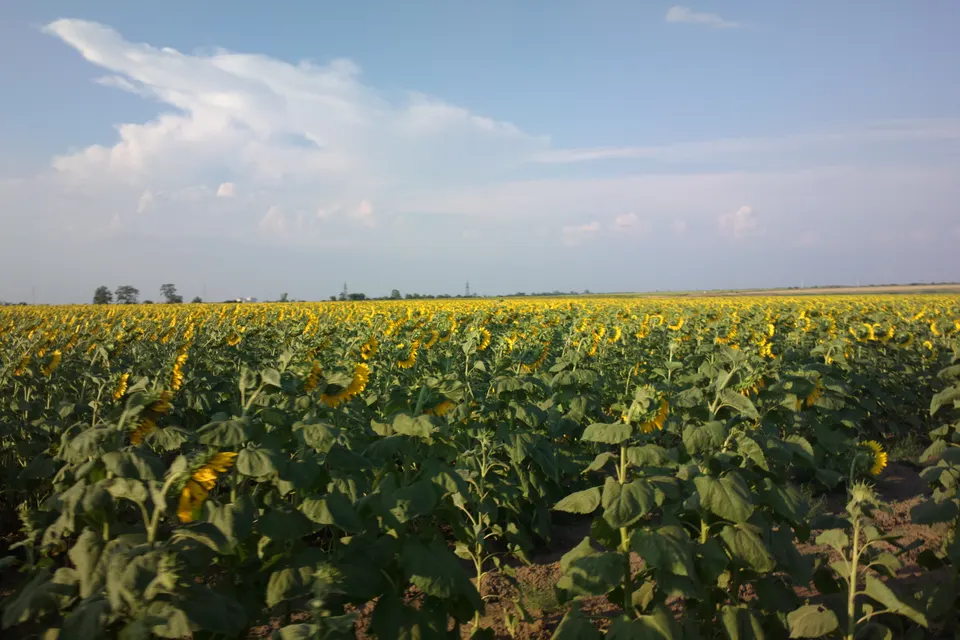
Sunflowers are one of the few flowers in a vegetable garden that does actual structural work: a single or branching stalk anywhere from 3 to 12-plus feet tall, topped with big daisy-form heads (yellow petals ringing a dark brown center, though some varieties run red or bronze), can serve as a living trellis for pole beans or climbing cucumbers, instead of building one out of stakes and twine.
Direct-sowing at your last frost date
Direct-sow sunflowers right around your last frost date. They don’t transplant well and don’t need the head start. At 80 days to maturity and a generous half square foot per plant, they take up room, and because they grow tall and cast shade, they belong on the north edge of a bed where they won’t block sun from shorter neighbors. If you’re using one as a trellis, let it get well established first. Pole beans that grip the stem too early or too tightly can girdle and kill it.
A stalk that falls over is wind, not disease
A sunflower that falls over mid-season is usually a wind or root problem, not a disease. Tall single-stem varieties in particular benefit from a somewhat sheltered spot or a stake once they’re carrying a heavy head. Birds and squirrels finding the seeds before you do is less a problem to solve than a tradeoff to expect, especially with the bigger-headed varieties.
A living trellis, if you pick the right variety
Sunflower’s sturdy stalk is a documented support for pole beans and climbing cucumbers once established. See the full companion guide for sunflowers. In the Garden Designer, place it on the bed’s north edge to account for its height and shade, and don’t let climbing companions grip the bare stem directly.
Companion planting guide for Sunflower · Find your planting dates
Typically viable in USDA zones 2-11. Not sure your zone? Look it up by ZIP code.
Mature height: 3-12 ft
Method: Direct sow: Direct-sow outside. It doesn't transplant well, or doesn't need the extra time indoors.
When to plant sunflower, by zone
Every zone sunflower grows in. Pick your zone in the header and it will be highlighted here. Each zone links to its full page.
| Zone | Start indoors | Sow or plant out | Bloom |
|---|---|---|---|
| 2a & 2b | Not usually | May 20–May 27 | Aug 8–Aug 15 |
| 3a & 3b | Not usually | May 30–Jun 6 | Aug 18–Aug 25 |
| 4a & 4b | Not usually | May 15–May 22 | Aug 3–Aug 10 |
| 5a & 5b | Not usually | May 10–May 17 | Jul 29–Aug 5 |
| 6a & 6b | Not usually | Apr 25–May 2 | Jul 14–Jul 21 |
| 7a & 7b | Not usually | Apr 10–Apr 17 | Jun 29–Jul 6 |
| 8a & 8b | Not usually | Mar 25–Apr 1 | Jun 13–Jun 20 |
| 9a & 9b | Not usually | Feb 15–Feb 22 | May 6–May 13 |
| 10a & 10bSpring window | Not usually | Feb–Aug | ~80 days after direct-sowing |
| 11a & 11b | Not usually | Jan 1–Jan 8 | Mar 22–Mar 29 |
Bloom dates are about 80 days after the sow or plant-out date.
Zone 2 sows before zone 3 here, which looks wrong and is not. USDA zones rank winter cold, not season length, and zone 2 is mostly interior Alaska, where hard winters come with warm summers. More on what a zone measures.
See exact start-indoors, direct-sow, and harvest dates for your zone →
How many Sunflower plants fit per square foot?
Spacing: about 2 square feet per plant (square-foot-gardening spacing). Mature height: 3-12 ft.
Good companions for sunflower
- Bush Beans: Sturdy stalk can serve as a living trellis for pole beans once well established.
- Cucumber: Sturdy stalk can serve as a living trellis for climbing cucumbers.
Full companion guide, including what to keep away from sunflower →
Varieties worth considering
- 'Mammoth Russian' (single-stem, tall): Virginia Cooperative Extension describes this classic variety as reaching up to 12 feet with large heads, the type most capable of supporting climbing beans or cucumbers, though its height means it needs to go on the shaded north edge of a bed, exactly as this site's spacing data recommends. (source)
- 'Autumn Beauty' (branching): Virginia Cooperative Extension lists this as a branching type, producing multiple blooms per plant over a long period rather than Mammoth Russian's single head. Not sturdy enough to trellis beans, but a better pick if you want a long cut-flower harvest instead of a support structure. (source) Buy seeds: True Leaf Market · Burpee · High Mowing Organic Seeds
- 'Teddy Bear' (dwarf): Listed by Virginia Cooperative Extension as a dwarf type, under 3 feet, producing one oversized head on a short stem. Useful for a container or the front of a bed where the tall types would overwhelm the space, but it won't do any trellising work. (source) Buy seeds: Botanical Interests · True Leaf Market · Burpee · High Mowing Organic Seeds
- ProCut series (pollenless, single-stem) (best for: cut flowers, indoors): Johnny's ProCut series is bred pollenless specifically so it doesn't shed pollen on furniture and tablecloths once cut, on strong single stems with 4-6 inch blooms in a range of colors. None of the three varieties above are bred pollenless, so this is the one to grow if the flowers are headed indoors, not just admired in the bed. (source)
Why each variety is listed comes from the source shown next to it. We haven't grown these ourselves yet, so treat this as a research-backed starting point, not a personal endorsement. The buy links are separate from those sources: they go to seed suppliers that sell that exact variety, and we may earn a commission on some of them.
Where to buy sunflower seeds
Botanical Interests · True Leaf Market · Burpee · High Mowing Organic Seeds (each supplier's sunflower seeds)
The varieties we recommend above each have their own buy links, for the suppliers that sell that exact variety.
As an Amazon Associate we earn from qualifying purchases. Some links on this page also go to other retailers we may earn a commission from as an affiliate, at no extra cost to you. We only recommend products with a clear consensus of positive, independent reviews, or ones we bought and use ourselves. Each item on our gear page says which.
See it growing
Search YouTube for "growing sunflower" videos → (a live search, not a hand-picked video; results vary and aren't vetted by us)

Pin this for later
Growing Sunflower: A living trellis for pole beans and cucumbers, if you're willing to give it the north edge of the bed and keep the vines off the stalk.
Save to Pinterest