Growing Potatoes: A Complete Profile
By Growing Home Greens Team · July 18, 2026
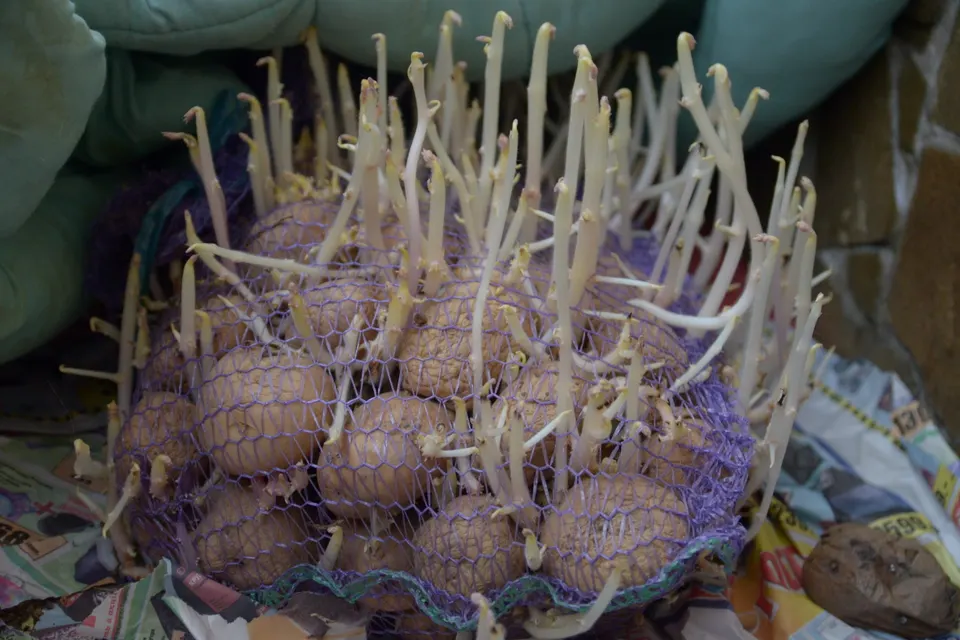
Potatoes aren’t grown from true seed in the home garden. They’re grown from seed potatoes, small tubers (or cut pieces of larger ones) planted directly in a furrow, each one sending up a plant that produces a new cluster of tubers underground.
Hilling the soil, repeatedly
Plant seed pieces a couple of inches deep in a furrow a few weeks before your last frost. As the plant grows, hill soil up around the stem repeatedly through the season. This is not optional busywork, it’s what keeps developing tubers covered and out of sunlight, which turns exposed potato skin green and inedible (and mildly toxic). Beans planted nearby help by fixing nitrogen that heavy-feeding potato plants use.
Green skin means light exposure, not disease
Green-tinged skin means tubers were exposed to light at some point during development, usually a hilling gap, and those portions should be cut away and discarded rather than eaten. Rough, scabby patches on the skin (common scab) don’t usually ruin the potato for eating but do hurt storage life and appearance; it’s worse in alkaline soil and after periods of drought stress during tuber formation.
Keep it away from the tomatoes
Keep potatoes away from tomatoes. Both are nightshades that share pests and blight susceptibility, so planting them in the same bed compounds disease risk. See the full companion guide for potato. At one plant per square foot but needing room to hill soil up around each stem, the Garden Designer is worth checking before you commit a bed layout, since hilling effectively needs a wider footprint than the planting spacing alone suggests.
Companion planting guide for Potato · Find your planting dates
Typically viable in USDA zones 3-10. Not sure your zone? Look it up by ZIP code.
Mature height: 1.5-2 ft
Method: Direct sow: Direct-sow outside. It doesn't transplant well, or doesn't need the extra time indoors.
When to plant potato, by zone
Every zone potato grows in. Pick your zone in the header and it will be highlighted here. Each zone links to its full page.
| Zone | Start indoors | Sow or plant out | Harvest |
|---|---|---|---|
| 3a & 3b | Not usually | May 16–May 23 | Aug 14–Aug 21 |
| 4a & 4b | Not usually | May 1–May 8 | Jul 30–Aug 6 |
| 5a & 5b | Not usually | Apr 26–May 3 | Jul 25–Aug 1 |
| 6a & 6b | Not usually | Apr 11–Apr 18 | Jul 10–Jul 17 |
| 7a & 7b | Not usually | Mar 27–Apr 3 | Jun 25–Jul 2 |
| 8a & 8b | Not usually | Mar 11–Mar 18 | Jun 9–Jun 16 |
| 9a & 9b | Not usually | Feb 1–Feb 8 | May 2–May 9 |
| 10a & 10bFall window | Aug–Dec | Sep–Jan | ~90 days after transplanting |
Harvest dates are about 90 days after the sow or plant-out date.
See exact start-indoors, direct-sow, and harvest dates for your zone →
How many Potato plants fit per square foot?
Spacing: 1 per square foot (square-foot-gardening spacing). Mature height: 1.5-2 ft.
Soil & water: pH 5-6.2. Needs well-drained soil. Amend with lime if soil pH falls below 5.
Good companions for potato
- Bush Beans: Beans fix nitrogen that heavy-feeding potatoes use.
Full companion guide, including what to keep away from potato →
Varieties worth considering
- Superior: Cornell Cooperative Extension identifies Superior as the standard for common scab resistance in the Northeast, with Keuka Gold, Lehigh, Pike, and Marcy also listed as resistant options, useful if your soil has a scab history. (source)
- Red Norland: Recommended by the LSU AgCenter for Louisiana home gardens as an early-maturing red variety, useful in warm zones like 9b where you're racing to finish tubers before summer heat shuts down bulking. (source)
- Yukon Gold: Rated 3.9 stars in Cornell's Vegetable Varieties for Gardeners database, with a standout 4.2-star taste rating for its buttery flavor, at 60-75 days. Resistant to mild mosaic and two potato viruses, though still susceptible to common scab, unlike Superior above. (source) Buy seeds: True Leaf Market · High Mowing Organic Seeds
Why each variety is listed comes from the source shown next to it. We haven't grown these ourselves yet, so treat this as a research-backed starting point, not a personal endorsement. The buy links are separate from those sources: they go to seed suppliers that sell that exact variety, and we may earn a commission on some of them.
Where to buy potato seeds
High Mowing Organic Seeds (each supplier's potato seeds)
The varieties we recommend above each have their own buy links, for the suppliers that sell that exact variety.
As an Amazon Associate we earn from qualifying purchases. Some links on this page also go to other retailers we may earn a commission from as an affiliate, at no extra cost to you. We only recommend products with a clear consensus of positive, independent reviews, or ones we bought and use ourselves. Each item on our gear page says which.
See it growing
Search YouTube for "growing potato" videos → (a live search, not a hand-picked video; results vary and aren't vetted by us)

Pin this for later
Growing Potato: Grown from cut seed pieces, not seed, and hilled repeatedly through the season to keep developing tubers covered.
Save to Pinterest