Growing Marigolds: A Complete Profile
By Growing Home Greens Team · July 18, 2026
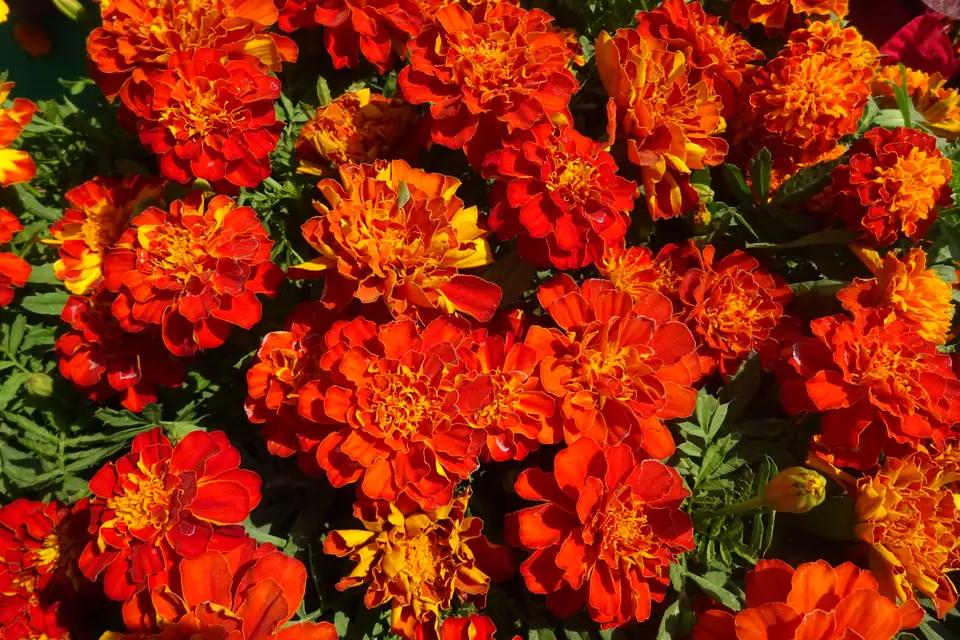
Marigolds earn their place in a vegetable garden on function more than looks, though the looks aren’t bad either: compact mounded plants under a foot tall, covered in ruffled gold, orange, or bicolor blooms from early summer to frost. They’re grown here as a companion planting tool for pest suppression, not as something you’ll harvest and eat.
Types of marigolds: French, African, and signet
French marigolds (Tagetes patula) are the compact, 6-to-12-inch type most people picture, and they’re the ones with documented research behind their nematode-suppressing reputation. University extension trials point specifically to French cultivars, not marigolds in general, so if root-knot nematodes are the actual problem, this is the type to plant. African marigolds, sometimes sold as American marigolds (Tagetes erecta), grow much bigger, up to three feet, with large pom-pom blooms that work well as a cut flower but take up considerable bed space, a different plant for a different job than the border-filling French types. Signet marigolds (Tagetes tenuifolia) are smaller and less common, with finer, lacy foliage and a lighter flower than either French or African types, and their petals are edible, which neither of the other two are marketed for. A cross between French and African types, usually sold as triploid or “mule” marigolds, is sterile and doesn’t set seed, so it keeps blooming instead of putting energy into seed production, and tends to hold up better in peak summer heat than either parent type.
Flexible on start method
Marigolds are flexible on start method: sow indoors about 6 weeks before your last frost, or direct-sow about a week after it. At 4 plants per square foot, they’re dense enough to tuck along bed borders or between vegetable rows rather than needing dedicated space of their own. They reach flowering size in around 50 days, quick enough to fill in early while slower vegetables are still getting established.
Leggy plants mean too little sun
Leggy, sparse plants with few flowers are usually a light problem. Marigolds want a sunny spot, and shade from taller neighbors weakens both their bloom and their pest-deterrent value. Spider mites showing up on marigolds themselves in hot, dry weather are common and usually cosmetic, not worth treating aggressively.
A working pest-deterrent, not just a border flower
Marigolds are reputed to deter root-knot nematodes and several insect pests around tomatoes and squash. See the full companion guide for marigold. Their compact, border-friendly habit makes them an easy edge planting in the Garden Designer, worked in around the vegetables they’re meant to protect rather than planted as a standalone bed.
Companion planting guide for Marigold · Find your planting dates
Typically viable in USDA zones 2-11. Not sure your zone? Look it up by ZIP code.
Mature height: 0.5-1 ft
Method: Either: Start indoors for an earlier harvest, or direct-sow outside for less fuss. Either works.
When to plant marigold, by zone
Every zone marigold grows in. Pick your zone in the header and it will be highlighted here. Each zone links to its full page.
| Zone | Start indoors | Sow or plant out | Bloom |
|---|---|---|---|
| 2a & 2b | Apr 8–Apr 15 | May 27–Jun 3 | Jul 16–Jul 23 |
| 3a & 3b | Apr 18–Apr 25 | Jun 6–Jun 13 | Jul 26–Aug 2 |
| 4a & 4b | Apr 3–Apr 10 | May 22–May 29 | Jul 11–Jul 18 |
| 5a & 5b | Mar 29–Apr 5 | May 17–May 24 | Jul 6–Jul 13 |
| 6a & 6b | Mar 14–Mar 21 | May 2–May 9 | Jun 21–Jun 28 |
| 7a & 7b | Feb 27–Mar 6 | Apr 17–Apr 24 | Jun 6–Jun 13 |
| 8a & 8b | Feb 11–Feb 18 | Apr 1–Apr 8 | May 21–May 28 |
| 9a & 9b | Jan 4–Jan 11 | Feb 22–Mar 1 | Apr 13–Apr 20 |
| 10a & 10bSpring window | Jan–Apr | Feb–May | ~50 days after transplanting |
| Fall window | Aug–Sep | Sep–Oct | ~50 days after transplanting |
| 11a & 11b | Nov 20–Nov 27 | Jan 8–Jan 15 | Feb 27–Mar 6 |
Bloom dates are about 50 days after the sow or plant-out date, not after starting seeds indoors.
Zone 2 sows before zone 3 here, which looks wrong and is not. USDA zones rank winter cold, not season length, and zone 2 is mostly interior Alaska, where hard winters come with warm summers. More on what a zone measures.
See exact start-indoors, direct-sow, and harvest dates for your zone →
How many Marigold plants fit per square foot?
Spacing: 4 per square foot (square-foot-gardening spacing). Mature height: 0.5-1 ft.
Good companions for marigold
- Tomato: UF/IFAS Extension confirms French marigold is effective against a wide range of root-knot nematode species: a real, documented effect, not folklore. The insect-pest-deterrent half of this claim is less well documented.
- Zucchini: An Iowa State study found marigold (alongside nasturtium) reduced squash bug and cucumber beetle damage when planted near squash, a real trap-crop/deterrent effect rather than folklore.
Full companion guide, including what to keep away from marigold →
Varieties worth considering
- French marigold (Tagetes patula), e.g. 'Single Gold' or 'Tangerine': University of Florida IFAS Extension names 'Single Gold' and 'Tangerine' among French marigold cultivars with documented effectiveness against root-knot nematodes, noting French marigolds appear most effective against the widest range of nematode species, a more specific pick than a generic marigold if nematodes are your actual target pest. (source)
- 'Antigua Orange' (African marigold): NC State Extension's Plant Toolbox credits this African (Tagetes erecta) cultivar with good resistance to fusarium wilt, on the taller, larger-flowered plants African marigolds are known for. Grown for cut-flower size rather than the nematode suppression French types are picked for. (source)
- 'Antigua Yellow' (African marigold): Also on NC State's list, with excellent resistance to phytophthora specifically, a different disease target than Antigua Orange's fusarium resistance. Worth picking based on which disease has been a problem in your soil. (source)
- 'Lemon Gem' (Signet marigold) (best for: edible flowers, containers): Johnny's describes petite, bite-size flowers with citrus-spice flavor on 10-18 inch plants with lacy, edible foliage, a third distinct type alongside the French and African marigolds above. Grow it specifically for garnish use, since the French and African types aren't marketed as edible the same way. (source)
Why each variety is listed comes from the source shown next to it. We haven't grown these ourselves yet, so treat this as a research-backed starting point, not a personal endorsement. The buy links are separate from those sources: they go to seed suppliers that sell that exact variety, and we may earn a commission on some of them.
Where to buy marigold seeds
Botanical Interests · True Leaf Market · Burpee · High Mowing Organic Seeds (each supplier's marigold seeds)
As an Amazon Associate we earn from qualifying purchases. Some links on this page also go to other retailers we may earn a commission from as an affiliate, at no extra cost to you. We only recommend products with a clear consensus of positive, independent reviews, or ones we bought and use ourselves. Each item on our gear page says which.
See it growing
Search YouTube for "growing marigold" videos → (a live search, not a hand-picked video; results vary and aren't vetted by us)

Pin this for later
Growing Marigold: Not a food crop, a working pest-deterrent flower that earns its spot in the vegetable bed.
Save to Pinterest