Growing Hollyhock: A Complete Profile
By Growing Home Greens Team · July 18, 2026
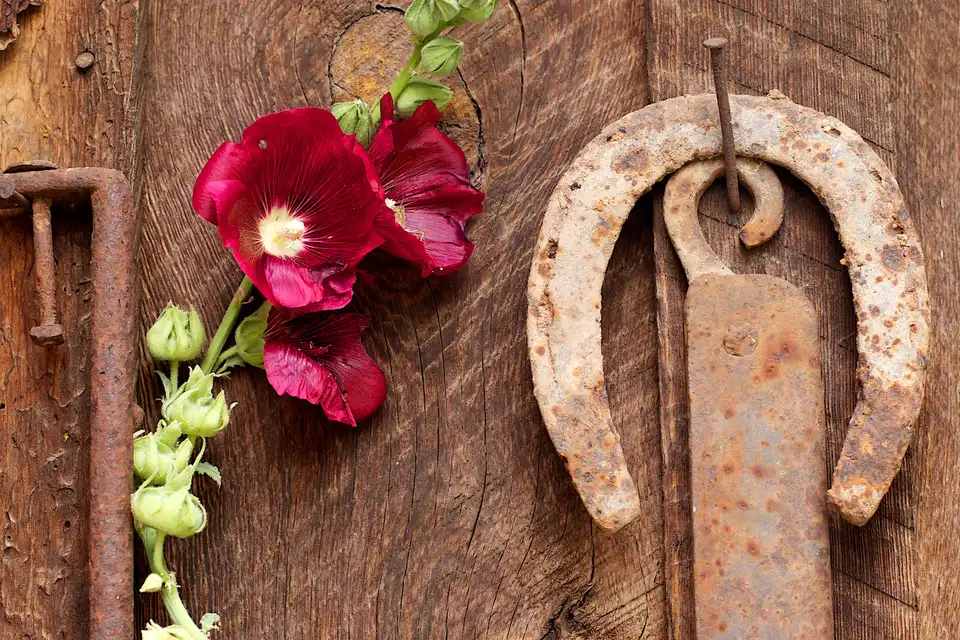
Hollyhock is a garden fixture that asks for patience and plenty of vertical space. It’s a biennial in most climates, meaning it spends its first year just building a rosette of leaves and doesn’t bloom until the second, and by the time it does, it can tower up to 9 feet.
Direct-sowing, with no indoor-start option
Direct-sow seed about 2 weeks before your last frost, at 1/4 to 1/2 inch deep. There’s no indoor-start option listed for this one. Budget generously on space (only 0.2 plants per square foot, so roughly 5 square feet per plant) and plan for support: at full height it needs a wall or fence to lean on, or staking, or it will topple in wind. In most zones it won’t bloom until its second year from seed; gardeners in warmer regions with a defined cool season can get bloom the same year by starting in late summer for a fall-through-winter growing window instead. If you want flowers the same season you plant regardless of zone, buying a nursery start instead of seed skips that first-year wait entirely.
Rust is the plant’s signature problem
Orange-brown pustules on the undersides of leaves are hollyhock rust, the plant’s signature problem. It’s common enough that it’s almost expected on common hollyhock (Alcea rosea), and while it rarely kills the plant outright, it does make the lower leaves look ragged by midsummer. Removing and destroying infected leaves as they appear, keeping plants well spaced for airflow, and watering at the soil line instead of overhead all help slow it down, though no common hollyhock variety is fully immune.
A tall backdrop that needs a wall to lean on
Nasturtium and garlic planted at hollyhock’s base are reputed to help suppress the rust spores that commonly affect it, via root secretions with some antifungal reputation. See the full companion guide for hollyhock. Given its height and need for support, place it against a wall or fence in the Garden Designer rather than in the open middle of a bed where it would shade shorter crops.
Companion planting guide for Hollyhock · Find your planting dates
Typically viable in USDA zones 3-10. Not sure your zone? Look it up by ZIP code.
Mature height: 5-9 ft
Method: Direct sow: Direct-sow outside. It doesn't transplant well, or doesn't need the extra time indoors.
When to plant hollyhock, by zone
Every zone hollyhock grows in. Pick your zone in the header and it will be highlighted here. Each zone links to its full page.
| Zone | Start indoors | Sow or plant out | Bloom |
|---|---|---|---|
| 3a & 3b | Not usually | May 16–May 23 | Nov 12–Nov 19 |
| 4a & 4b | Not usually | May 1–May 8 | Oct 28–Nov 4 |
| 5a & 5b | Not usually | Apr 26–May 3 | Oct 23–Oct 30 |
| 6a & 6b | Not usually | Apr 11–Apr 18 | Oct 8–Oct 15 |
| 7a & 7b | Not usually | Mar 27–Apr 3 | Sep 23–Sep 30 |
| 8a & 8b | Not usually | Mar 11–Mar 18 | Sep 7–Sep 14 |
| 9a & 9b | Not usually | Feb 1–Feb 8 | Jul 31–Aug 7 |
| 10a & 10bFall window | Aug–Jan | Oct–Mar | ~180 days after transplanting |
Bloom dates are about 180 days after the sow or plant-out date.
See exact start-indoors, direct-sow, and harvest dates for your zone →
How many Hollyhock plants fit per square foot?
Spacing: about 5 square feet per plant (square-foot-gardening spacing). Mature height: 5-9 ft.
Good companions for hollyhock
- Nasturtium: Planted at hollyhock's base, reputed to help suppress hollyhock rust, but no research or extension source was found testing this specific pairing: treat it as garden tradition, not measured evidence.
- Garlic: Planted at hollyhock's base, reputed to help suppress rust via antifungal root secretions, but no research or extension source was found testing this specific pairing: treat it as garden tradition, not measured evidence.
Full companion guide, including what to keep away from hollyhock →
Varieties worth considering
- Alcea rugosa (Russian hollyhock): Missouri Botanical Garden's Plant Finder notes that while hollyhocks in general are prone to rust, leaf spot, and anthracnose, A. rugosa 'reportedly has good resistance to rust', a related species worth considering instead of common hollyhock (Alcea rosea) if rust has been a recurring problem in your garden. The hedge ('reportedly') is the source's own wording, not full immunity. (source)
- Alcea rosea 'Nigra': Missouri Botanical Garden describes deep maroon blooms that look almost black, on rigid 5-8 foot spikes that typically don't need staking. Ordinary Alcea rosea, so it carries the same rust susceptibility as the species, just in a striking color rugosa doesn't offer. (source) Buy seeds: True Leaf Market
- Alcea rosea (single, straight species): Missouri Botanical Garden's baseline entry: huge 4-5 inch single flowers in reds, pinks, whites and light yellows on 6-8 foot spikes, the widest color range of the three here. Same rust, leaf spot and anthracnose susceptibility the genus is known for. (source)
Why each variety is listed comes from the source shown next to it. We haven't grown these ourselves yet, so treat this as a research-backed starting point, not a personal endorsement. The buy links are separate from those sources: they go to seed suppliers that sell that exact variety, and we may earn a commission on some of them.
Where to buy hollyhock seeds
Botanical Interests · True Leaf Market · Burpee (each supplier's hollyhock seeds)
The varieties we recommend above each have their own buy links, for the suppliers that sell that exact variety.
As an Amazon Associate we earn from qualifying purchases. Some links on this page also go to other retailers we may earn a commission from as an affiliate, at no extra cost to you. We only recommend products with a clear consensus of positive, independent reviews, or ones we bought and use ourselves. Each item on our gear page says which.
See it growing
Search YouTube for "growing hollyhock" videos → (a live search, not a hand-picked video; results vary and aren't vetted by us)

Pin this for later
Growing Hollyhock: A tall, old-fashioned biennial that needs a fence to lean on and a full year of patience before it blooms.
Save to Pinterest