Growing Garlic: A Complete Profile
By Growing Home Greens Team · July 16, 2026
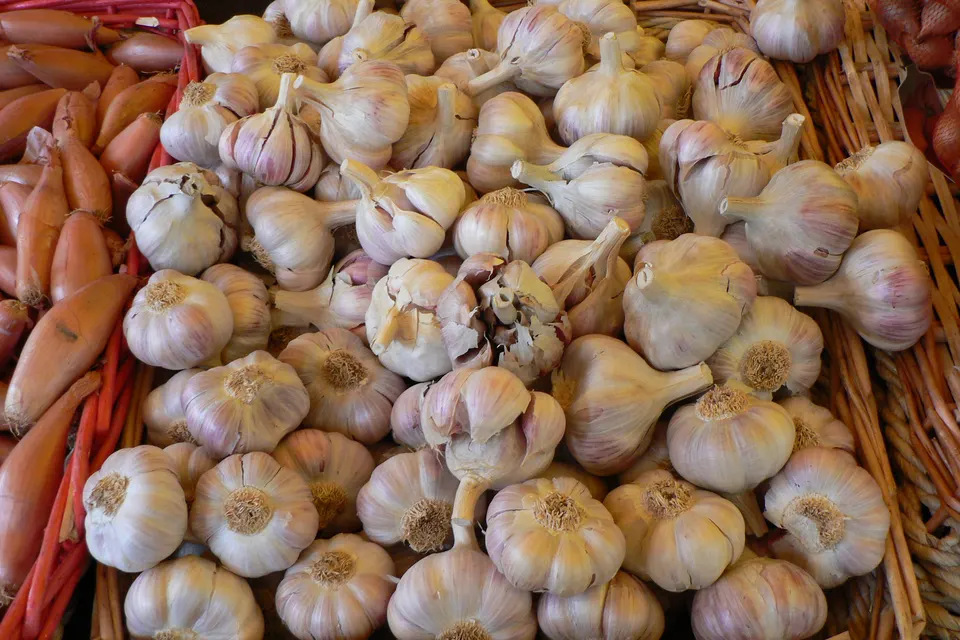
Garlic breaks the usual planting pattern entirely: it goes in the ground in fall, sits through winter, and isn’t harvested until the following summer, around eight months later. It’s the most patience-testing crop in a home garden, and also one of the most hands-off once it’s in the ground.
Planting the cloves
Plant individual cloves (pointy end up) rather than whole bulbs, each becoming its own new bulb by harvest, about 2 inches deep if the bed is mulched, 3 to 4 inches deep if it isn’t. A layer of mulch after planting protects against hard freezes and suppresses weeds through the dormant winter months when the garlic isn’t actively growing. Come late spring, hardneck varieties send up a curling flower stalk called a scape. Cutting it off (and the scapes are edible, worth cooking with) redirects the plant’s energy into bulb size instead of seed production.
Small bulbs and other letdowns
Small bulbs at harvest usually trace back to either late planting (garlic needs a sustained cold period to form properly) or leaving scapes uncut on hardneck varieties. Harvest timing matters more than people expect: pull too early and bulbs are undersized, wait too long and the papery wrapper starts to split, hurting storage life. Garlic isn’t ready to eat straight out of the ground the way most vegetables are, either. Bulbs need to cure, dry, undisturbed, and out of direct sun for a few weeks after harvest, before the papery outer skin fully sets. Curing is what gives garlic its long storage life; skipping it leaves bulbs prone to rotting within weeks instead of lasting months.
Where it helps, and where it doesn’t
Garlic’s sulfur compounds are believed to help deter spider mites, a common tomato pest, which is part of why it pairs well nearby. The relationship runs the other way with beans: alliums like garlic release compounds that inhibit the nitrogen-fixing bacteria in bean root nodules, undercutting the reason beans are usually planted near a nitrogen-hungry neighbor in the first place. Keep them in separate beds, or at least several feet of distance within a large one. See the full companion guide for garlic for the full picture. Because it occupies a bed for most of the year, plan its spot in the Garden Designer around what else needs that same square footage during the growing season.
Companion planting guide for Garlic · Find your planting dates
Typically viable in USDA zones 3-10. Not sure your zone? Look it up by ZIP code.
Mature height: 1-2 ft
Method: Direct sow: Direct-sow outside. It doesn't transplant well, or doesn't need the extra time indoors.
When to plant garlic, by zone
Every zone garlic grows in. Pick your zone in the header and it will be highlighted here. Each zone links to its full page.
| Zone | Start indoors | Sow or plant out | Harvest |
|---|---|---|---|
| 3a & 3bFall window | Not usually | Oct | ~240 days after direct-sowing |
| 4a & 4bFall window | Not usually | Oct | ~240 days after direct-sowing |
| 5a & 5bFall window | Not usually | Oct | ~240 days after direct-sowing |
| 6a & 6bFall window | Not usually | Oct | ~240 days after direct-sowing |
| 7a & 7bFall window | Not usually | Oct–Nov | ~240 days after direct-sowing |
| 8a & 8bFall window | Not usually | Oct–Nov | ~240 days after direct-sowing |
| 9a & 9bFall window | Not usually | Oct–Dec | ~240 days after direct-sowing |
| 10a & 10bFall window | Not usually | Oct–Nov | ~240 days after direct-sowing |
Harvest dates are about 240 days after the sow or plant-out date.
See exact start-indoors, direct-sow, and harvest dates for your zone →
How many Garlic plants fit per square foot?
Spacing: 4 per square foot (square-foot-gardening spacing). Mature height: 1-2 ft.
Good companions for garlic
- Tomato: Garlic's sulfur compounds may deter spider mites on tomatoes.
Full companion guide, including what to keep away from garlic →
Varieties worth considering
- Hardneck types (Porcelain, Rocambole, Purple Stripe): SDSU and UMN Extension note hardneck types grow best in colder climates with a cool, damp spring and need a prolonged cold period to bulb properly, the right choice for northern gardens. (source)
- Softneck types (Artichoke, Silverskin): Need less winter chill than hardneck types, making them the better choice in milder-winter/warm-climate gardens. This half of the claim is better supported by grower/trade sources than a university extension page, flagging it as the weaker half of this recommendation. (source)
- 'Music' (Porcelain hardneck): University of Alaska Cooperative Extension lists Music among the Porcelain-subtype hardnecks it rates "highly recommended" for cold climates, noting the group is "very vigorous in cold climates" once established. A safe first hardneck to plant if you garden somewhere winter really does bite. (source) Buy seeds: High Mowing Organic Seeds
- 'German Extra Hardy' (Porcelain hardneck) (best for: cold climates, easy peeling): Johnny's lists large heads of just 5-8 cloves each, exceptionally cold-tolerant and among the easiest hardnecks to peel because there are so few cloves per bulb. A good default Porcelain type alongside Music if you want fewer, larger cloves rather than many small ones. (source)
- 'Chesnok Red' (Purple Stripe hardneck) (best for: cooking, poor soil): Renee's Garden describes tightly wrapped heads of 6-10 easy-to-peel cranberry-tinted cloves, tolerant of poor soil and rich, buttery when cooked. A different subtype from Music or German Extra Hardy, chosen for cooked flavor over raw heat. (source) Buy seeds: High Mowing Organic Seeds
- 'Inchelium Red' (Artichoke softneck) (best for: storage, mild climates): Hudson Valley Seed lists 4-12 cloves per bulb and 6-9 months of storage, milder and mellower than any hardneck here once cured, with the reliably long shelf life softneck types are chosen for. The pick if storage life matters more than the biggest cloves. (source) Buy seeds: High Mowing Organic Seeds
Why each variety is listed comes from the source shown next to it. We haven't grown these ourselves yet, so treat this as a research-backed starting point, not a personal endorsement. The buy links are separate from those sources: they go to seed suppliers that sell that exact variety, and we may earn a commission on some of them.
Where to buy garlic seeds
High Mowing Organic Seeds (each supplier's garlic seeds)
The varieties we recommend above each have their own buy links, for the suppliers that sell that exact variety.
As an Amazon Associate we earn from qualifying purchases. Some links on this page also go to other retailers we may earn a commission from as an affiliate, at no extra cost to you. We only recommend products with a clear consensus of positive, independent reviews, or ones we bought and use ourselves. Each item on our gear page says which.
See it growing
Search YouTube for "growing garlic" videos → (a live search, not a hand-picked video; results vary and aren't vetted by us)

Pin this for later
Growing Garlic: The one crop planted in fall for a harvest the following summer. Patience is the whole method.
Save to Pinterest