Growing Sweet Corn: A Complete Profile
By Growing Home Greens Team · July 18, 2026
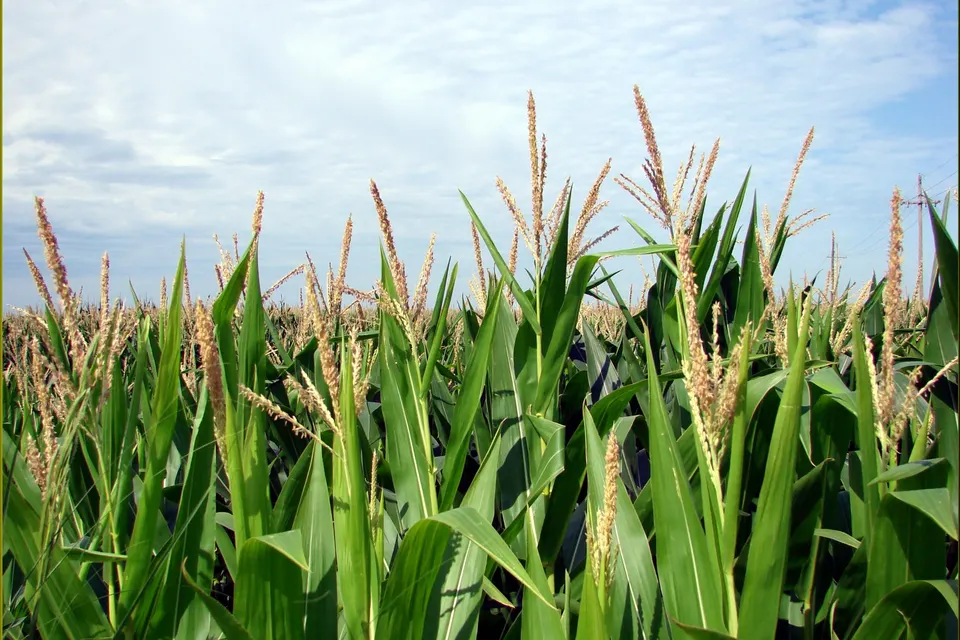
Corn takes up a full square foot per plant and grows tall enough to shade everything around it, so it’s a bigger commitment than most vegetables, and unlike almost everything else in the garden, it needs company. A single row or a lonely handful of stalks is the most common way home gardeners end up with ears full of blank, unpollinated patches.
Direct-sowing into a block, not a row
Direct-sow seed 1-2 inches deep about a week after your last frost. Corn doesn’t transplant well and doesn’t need an indoor head start. Plant it on the north side of the bed so its height doesn’t shade shorter neighbors. The key is pollination: corn is wind-pollinated, and UMN Extension notes that a single thin row often leaves ears with gaps where pollen never landed. Planting a block of at least 4 plants, rather than one long row, lets wind carry pollen between plants from all sides.
Missing kernels trace back to pollination
Ears with scattered missing kernels almost always trace back to pollination, not disease or nutrition, too few plants, or plants spread out in a thin row instead of a block. Corn is also a heavy nitrogen feeder; pale, stunted stalks partway through the season are commonly a nitrogen shortfall rather than a watering problem.
The backbone of the three sisters
Corn is the backbone of the “three sisters” planting with beans and squash. See the full companion guide for corn. Keep it away from tomatoes, since both attract the same earworm and corn’s height shades tomatoes heavily. In the Garden Designer, plan for a block planting rather than a single row, and place it on the bed’s north edge so it doesn’t cast shade over lower crops for the rest of the season.
Companion planting guide for Sweet Corn · Find your planting dates
Typically viable in USDA zones 3-10. Not sure your zone? Look it up by ZIP code.
Mature height: 5-8 ft
Method: Direct sow: Direct-sow outside. It doesn't transplant well, or doesn't need the extra time indoors.
When to plant sweet corn, by zone
Every zone sweet corn grows in. Pick your zone in the header and it will be highlighted here. Each zone links to its full page.
| Zone | Start indoors | Sow or plant out | Harvest |
|---|---|---|---|
| 3a & 3b | Not usually | Jun 6–Jun 13 | Aug 20–Aug 27 |
| 4a & 4b | Not usually | May 22–May 29 | Aug 5–Aug 12 |
| 5a & 5b | Not usually | May 17–May 24 | Jul 31–Aug 7 |
| 6a & 6b | Not usually | May 2–May 9 | Jul 16–Jul 23 |
| 7a & 7b | Not usually | Apr 17–Apr 24 | Jul 1–Jul 8 |
| 8a & 8b | Not usually | Apr 1–Apr 8 | Jun 15–Jun 22 |
| 9a & 9b | Not usually | Feb 22–Mar 1 | May 8–May 15 |
| 10a & 10bSpring window | Not usually | Feb–Mar | ~75 days after direct-sowing |
| Summer window | Not usually | Jul–Aug | ~75 days after direct-sowing |
Harvest dates are about 75 days after the sow or plant-out date.
See exact start-indoors, direct-sow, and harvest dates for your zone →
How many Sweet Corn plants fit per square foot?
Spacing: 1 per square foot (square-foot-gardening spacing). Mature height: 5-8 ft.
Soil & water: pH 6-6.5. Needs well-drained soil. Amend with lime if soil pH falls below 6.
Good companions for sweet corn
- Bush Beans: The classic 'three sisters' pairing. WSU Extension confirms the real mechanism: beans climb corn stalks and fix nitrogen the corn uses.
- Winter Squash: The third 'three sisters' pairing. WSU Extension confirms squash's broad leaves shade the soil, reducing evaporation and suppressing weeds around corn.
Full companion guide, including what to keep away from sweet corn →
Varieties worth considering
- Ambrosia (se): One of UMN Extension's named sugary-enhanced examples, raising sugar levels 30-35% over standard sugary corn and slowing sugar-to-starch conversion after harvest for better fresh-eating quality. (source) Buy seeds: Botanical Interests · Burpee
- Bodacious RM (se): UMN's other named se example. Functionally similar to Ambrosia; worth having a second se option in case one specific hybrid's seed isn't in stock. (source)
- Northern Xtra Sweet (supersweet/sh2): UMN's example of the shrunken (sh2) supersweet type, 40-50% sugar against se's 30-35%, crisper but less traditionally creamy in texture per UMN's own comparison. Must be isolated from se or standard sweet corn during planting, or cross-pollination ruins both. (source) Buy seeds: Burpee
Why each variety is listed comes from the source shown next to it. We haven't grown these ourselves yet, so treat this as a research-backed starting point, not a personal endorsement. The buy links are separate from those sources: they go to seed suppliers that sell that exact variety, and we may earn a commission on some of them.
Where to buy sweet corn seeds
True Leaf Market · High Mowing Organic Seeds (each supplier's sweet corn seeds)
The varieties we recommend above each have their own buy links, for the suppliers that sell that exact variety.
As an Amazon Associate we earn from qualifying purchases. Some links on this page also go to other retailers we may earn a commission from as an affiliate, at no extra cost to you. We only recommend products with a clear consensus of positive, independent reviews, or ones we bought and use ourselves. Each item on our gear page says which.
See it growing
Search YouTube for "growing sweet corn" videos → (a live search, not a hand-picked video; results vary and aren't vetted by us)

Pin this for later
Growing Sweet Corn: The one crop where planting a single row is the most common home-garden mistake, plus block sizing, spacing, and variety picks by type.
Save to Pinterest