Growing Wild Bergamot: A Complete Profile
By Growing Home Greens Team · August 20, 2026
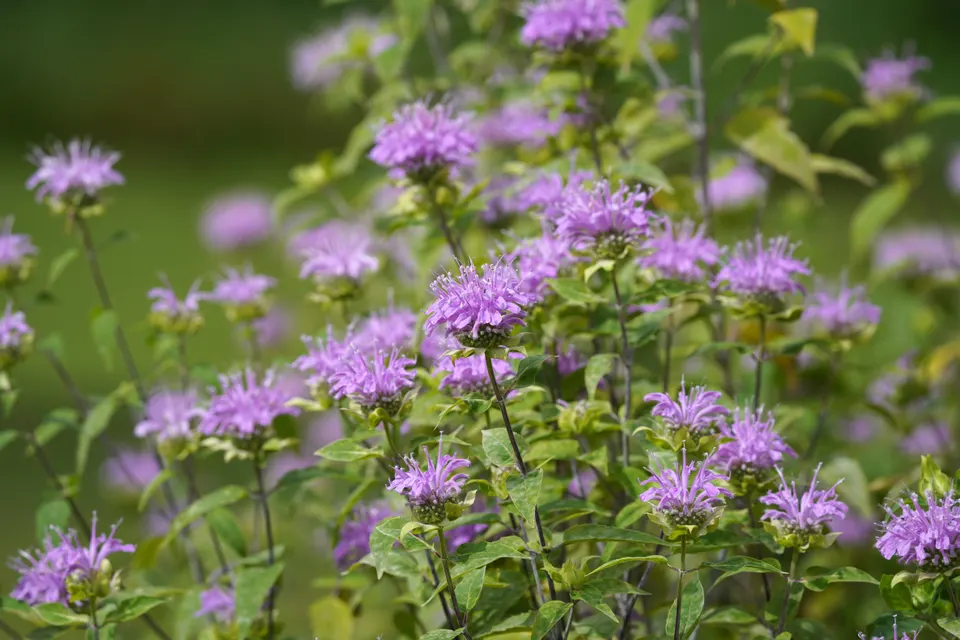
Wild bergamot is the lavender-flowered native Monarda, and it is one of the better pollinator plants to put beside a vegetable bed.
Not the same as bee balm
Our bee balm entry is Monarda didyma, the scarlet one that wants consistent moisture. Monarda fistulosa is lavender, considerably more drought tolerant, and native across most of North America.
It supports a bee that needs it
NC State Extension records it attracting bees, butterflies, hummingbirds and moths, and specifically supporting Dufourea monardae, a specialist bee that depends on the genus. It also notes native bees nesting in the dead hollow stems, so leave them standing over winter rather than cutting the plant to the ground.
Give it air
Powdery mildew is the predictable problem, and it is driven by crowding and still air more than by damp. Two to four feet tall and two to three feet across, so space it accordingly rather than packing it against a fence.
Hardy zones 3 through 9, full sun to partial shade, flowering June through September. Seed benefits from a cold period, so it goes in early.
Source: NC State Extension Gardener Plant Toolbox, Monarda fistulosa.
Companion planting guide for Wild Bergamot · Find your planting dates
Typically viable in USDA zones 3-9. Not sure your zone? Look it up by ZIP code.
Mature height: 2-4 ft
Method: Direct sow: Direct-sow outside. It doesn't transplant well, or doesn't need the extra time indoors.
When to plant wild bergamot, by zone
Every zone wild bergamot grows in. Pick your zone in the header and it will be highlighted here. Each zone links to its full page.
| Zone | Start indoors | Sow or plant out | Harvest |
|---|---|---|---|
| 3a & 3b | Not usually | May 2–May 9 | First real harvest the season after planting |
| 4a & 4b | Not usually | Apr 17–Apr 24 | First real harvest the season after planting |
| 5a & 5b | Not usually | Apr 12–Apr 19 | First real harvest the season after planting |
| 6a & 6b | Not usually | Mar 28–Apr 4 | First real harvest the season after planting |
| 7a & 7b | Not usually | Mar 13–Mar 20 | First real harvest the season after planting |
| 8a & 8b | Not usually | Feb 25–Mar 4 | First real harvest the season after planting |
| 9a & 9b | Not usually | Jan 18–Jan 25 | First real harvest the season after planting |
See exact start-indoors, direct-sow, and harvest dates for your zone →
How many Wild Bergamot plants fit per square foot?
Spacing: about 2 square feet per plant (square-foot-gardening spacing). Mature height: 2-4 ft.
Varieties worth considering
- Claire Grace (best for: mildew resistance): One of the top-rated plants in Mt. Cuba Center's Monarda trial, at 4.5 out of 5. Compared with the straight species it has a sturdier, upright habit, slightly darker purple flowers, glossier leaves and better powdery mildew resistance, and it held near-total flower coverage for three straight weeks in early July. It was also among the most visited by butterflies and moths in the trial. Expect about 50 inches tall. (source)
Why each variety is listed comes from the source shown next to it. We haven't grown these ourselves yet, so treat this as a research-backed starting point, not a personal endorsement. The buy links are separate from those sources: they go to seed suppliers that sell that exact variety, and we may earn a commission on some of them.
Where to buy wild bergamot seeds
Botanical Interests (each supplier's wild bergamot seeds)
As an Amazon Associate we earn from qualifying purchases. Some links on this page also go to other retailers we may earn a commission from as an affiliate, at no extra cost to you. We only recommend products with a clear consensus of positive, independent reviews, or ones we bought and use ourselves. Each item on our gear page says which.
See it growing
Search YouTube for "growing wild bergamot" videos → (a live search, not a hand-picked video; results vary and aren't vetted by us)

Pin this for later
Growing Wild Bergamot: A native Monarda that supports a specialist bee, more drought tolerant than bee balm, and prone to mildew in still air.
Save to Pinterest