Growing Bee Balm (Monarda): A Complete Profile
By Growing Home Greens Team · July 29, 2026
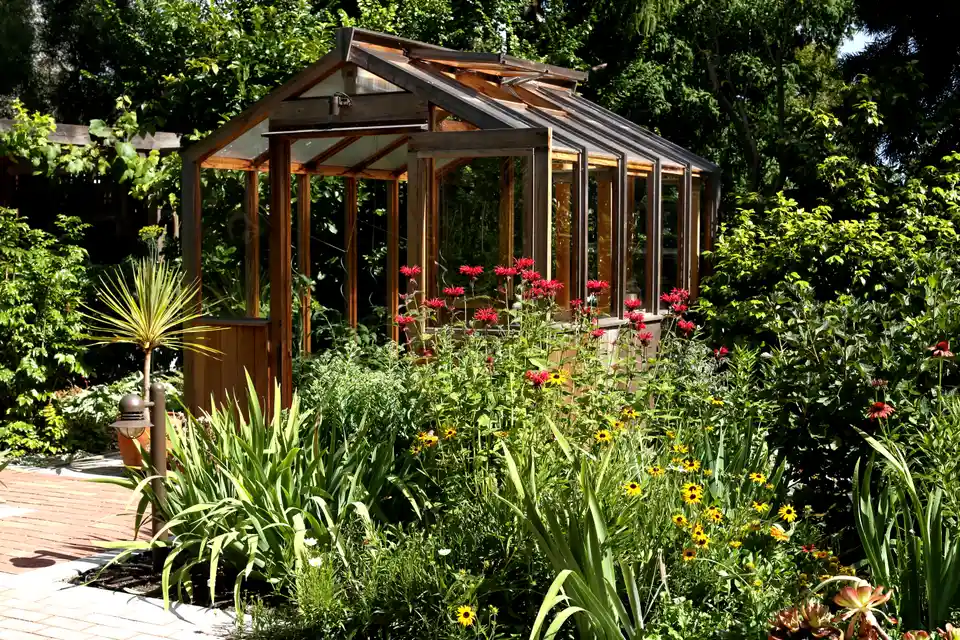
Bee balm earns its name without exaggeration. NC State lists bumblebees, hummingbirds, swallowtail butterflies and specialist native bees among its visitors, and it’s a North American native rather than an import doing an impression of one. The flowers explain the traffic: shaggy, spidery tubular blooms in red, pink, purple, or white, held on upright 2- to 4-foot stems. If you want one plant to make the vegetable garden louder with pollinators, this is a strong candidate.
It has exactly two problems, and both are manageable once you know about them.
Problem one: mildew, and the cultivar decides it
Powdery mildew on bee balm is not bad luck, it’s the default. Standard varieties are susceptible to it and to rust, and by August an untreated plant can be more grey than green.
Two things fix it, in this order:
Buy a resistant cultivar. This does more than everything else combined. The Balmy series is bred for it; ‘Jacob Cline’ and ‘Petite Delight’ have fair downy mildew resistance.
Then give it air. Full spacing, no crowding, and water at the base rather than over the top. Overhead watering in still, humid weather is how it takes hold.
Problem two: it runs
Bee balm spreads by underground stolons, and NC State’s description is “spread rapidly”. A polite clump becomes a colony in three seasons.
This is only a problem if it surprises you. Either give it a bed where spreading is fine, or lift and divide every two or three years, which you want to do anyway since the centre of an old clump dies out and the vigorous growth is around the edge.
Don’t plant it into a mixed annual bed and expect it to stay put.
Growing it
Start from a nursery plant or a division rather than seed. Seed needs cold stratification and germinates slowly and unevenly, and since you’re choosing a named cultivar for mildew resistance anyway, seed would be the wrong route regardless. Cultivars don’t come true from seed.
Set plants out about two weeks after your last frost. Hardy in zones 4a-9b, reaching 2-4 feet tall and 2-3 feet across. Full sun is best, though it takes some shade, and it wants moist, well-drained soil but tolerates clay with decent organic matter in it. Around 100 days to full bloom.
Leave the stems standing over winter
This is the detail most guides skip, and it’s the best reason to grow a native. The dead stems provide nesting sites for stem-nesting bees.
So resist the autumn tidy-up. Cut bee balm back in spring instead, and you get a second season of value out of a plant that has already finished flowering. It also looks decent in frost.
Where to put it
Its own patch near the vegetable beds rather than inside them, where the pollinators it pulls in benefit the crops without the runners competing with them. It has no well-established companion pairings or conflicts, and in the Garden Designer it’s best given dedicated space rather than a square in a shared annual bed.
Source: Monarda didyma, NC State Extension Gardener Plant Toolbox.
Companion planting guide for Bee Balm · Find your planting dates
Typically viable in USDA zones 4-9. Not sure your zone? Look it up by ZIP code.
Mature height: 2-4 ft
Method: Buy as a start: Buy as a nursery start and transplant outside. It's slow or unreliable from seed, so most gardeners skip seed-starting it entirely.
When to plant bee balm, by zone
Every zone bee balm grows in. Pick your zone in the header and it will be highlighted here. Each zone links to its full page.
| Zone | Start indoors | Sow or plant out | Bloom |
|---|---|---|---|
| 4a & 4b | Buy as a start | May 29–Jun 5 | Sep 6–Sep 13 |
| 5a & 5b | Buy as a start | May 24–May 31 | Sep 1–Sep 8 |
| 6a & 6b | Buy as a start | May 9–May 16 | Aug 17–Aug 24 |
| 7a & 7b | Buy as a start | Apr 24–May 1 | Aug 2–Aug 9 |
| 8a & 8b | Buy as a start | Apr 8–Apr 15 | Jul 17–Jul 24 |
| 9a & 9b | Buy as a start | Mar 1–Mar 8 | Jun 9–Jun 16 |
Bloom dates are about 100 days after the sow or plant-out date.
See exact start-indoors, direct-sow, and harvest dates for your zone →
How many Bee Balm plants fit per square foot?
Spacing: 1 per square foot (square-foot-gardening spacing). Mature height: 2-4 ft.
Varieties worth considering
- Balmy series: Compact and bred for powdery mildew resistance, in several flower colours. NC State lists it first for resistance, and mildew is the reason most people give up on bee balm, so this is where to start. (source)
- 'Jacob Cline': Large true-red flowers and the hummingbird magnet of the group, with fair downy mildew resistance. Taller and more of a presence than the compact types. (source)
- 'Marshall's Delight': Hot pink, reaching about 3 feet. A long-standing garden pick for mildew tolerance, and a good middle ground between the compact types and the tall reds. (source)
Why each variety is listed comes from the source shown next to it. We haven't grown these ourselves yet, so treat this as a research-backed starting point, not a personal endorsement. The buy links are separate from those sources: they go to seed suppliers that sell that exact variety, and we may earn a commission on some of them.
Where to buy bee balm starts
Bee balm is almost always bought as a nursery start rather than seeded. Check a local nursery or garden center; we haven't vetted online start/plant suppliers yet.
As an Amazon Associate we earn from qualifying purchases. Some links on this page also go to other retailers we may earn a commission from as an affiliate, at no extra cost to you. We only recommend products with a clear consensus of positive, independent reviews, or ones we bought and use ourselves. Each item on our gear page says which.
See it growing
Search YouTube for "growing bee balm" videos → (a live search, not a hand-picked video; results vary and aren't vetted by us)

Pin this for later
Growing Bee Balm: Bee balm gets powdery mildew and spreads by runners. Both are solvable, and the cultivar you buy decides the first one. Which to plant and why to leave the stems standing.
Save to Pinterest