Growing Watermelon: A Complete Profile
By Growing Home Greens Team · July 18, 2026
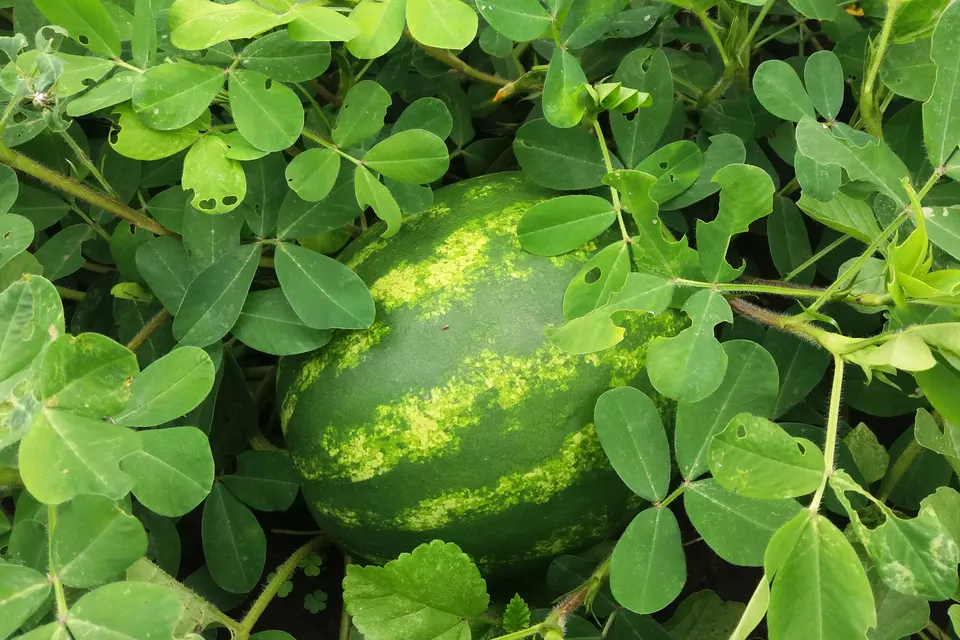
Watermelon asks for more room and more patience than almost anything else in a vegetable garden, at just 0.1 plants per square foot, a single vine can sprawl across a large share of a bed, and it takes most of a summer to deliver fruit.
Sowing it into soil that’s reliably warm
Direct-sow watermelon a couple of weeks after your last frost, once the soil is reliably warm. It doesn’t transplant as easily as some other vine crops and generally does better sown where it will grow. Long vines need serious room, so this is strictly an edge or corner crop. Corn planted nearby can provide some light afternoon shade without heavily competing for space. Unlike cantaloupe, watermelon doesn’t slip from the vine when ripe, so you’ll need other cues, a dried tendril near the stem, a dulling of the skin’s sheen, and a hollow sound when thumped are the common signs.
Unripe fruit doesn’t get sweeter after picking
Fruit that never sweetens up is usually a timing problem, not a growing one. Watermelon does not continue to ripen after harvest, so picking too early is a one-way mistake. Blossom drop without fruit set often comes down to pollination, like other cucurbits, watermelon has separate male and female flowers, and poor pollinator activity means fewer fruit even on a healthy vine.
The largest footprint in the tool
There’s no dedicated companion guide for watermelon yet, though corn’s light shade is a documented pairing that doesn’t compete heavily for space. See the full companion guide for watermelon. At only 0.1 plants per square foot, the Garden Designer treats it as one of the largest-footprint crops in the tool, best placed at a bed edge or corner.
Companion planting guide for Watermelon · Find your planting dates
Typically viable in USDA zones 5-11. Not sure your zone? Look it up by ZIP code.
Mature height: 6-10 in
Method: Direct sow: Direct-sow outside. It doesn't transplant well, or doesn't need the extra time indoors.
When to plant watermelon, by zone
Every zone watermelon grows in. Pick your zone in the header and it will be highlighted here. Each zone links to its full page.
| Zone | Start indoors | Sow or plant out | Harvest |
|---|---|---|---|
| 5a & 5b | Not usually | May 24–May 31 | Aug 17–Aug 24 |
| 6a & 6b | Not usually | May 9–May 16 | Aug 2–Aug 9 |
| 7a & 7b | Not usually | Apr 24–May 1 | Jul 18–Jul 25 |
| 8a & 8b | Not usually | Apr 8–Apr 15 | Jul 2–Jul 9 |
| 9a & 9b | Not usually | Mar 1–Mar 8 | May 25–Jun 1 |
| 10a & 10bSpring window | Not usually | Feb–Jun | ~85 days after direct-sowing |
| 11a & 11bFall window | Not usually | Dec–Mar | ~85 days after direct-sowing |
Harvest dates are about 85 days after the sow or plant-out date.
See exact start-indoors, direct-sow, and harvest dates for your zone →
How many Watermelon plants fit per square foot?
Spacing: about 10 square feet per plant (square-foot-gardening spacing). Mature height: 6-10 in.
Good companions for watermelon
- Sweet Corn: Corn provides light afternoon shade without heavy competition for space.
Full companion guide, including what to keep away from watermelon →
Varieties worth considering
- Crimson Sweet: Listed among Clemson Cooperative Extension's recommended standard seeded watermelon varieties for home gardens, a widely available, dependable classic large-fruited type. (source) Buy seeds: Botanical Interests · True Leaf Market · Burpee · High Mowing Organic Seeds
- Sangria: Also on Clemson's standard-seeded list, a large-fruited type alongside Crimson Sweet. A reasonable alternative if Crimson Sweet seed specifically isn't available. (source) Buy seeds: True Leaf Market
- Liberty: One of Clemson's recommended seedless types, at 85-90 days like most seedless watermelons. Seedless varieties need a seeded pollinator variety like Crimson Sweet planted nearby, since they don't produce viable pollen on their own, worth planning for before you commit to growing only seedless. (source)
Why each variety is listed comes from the source shown next to it. We haven't grown these ourselves yet, so treat this as a research-backed starting point, not a personal endorsement. The buy links are separate from those sources: they go to seed suppliers that sell that exact variety, and we may earn a commission on some of them.
Where to buy watermelon seeds
Botanical Interests · True Leaf Market · Burpee · High Mowing Organic Seeds (each supplier's watermelon seeds)
The varieties we recommend above each have their own buy links, for the suppliers that sell that exact variety.
As an Amazon Associate we earn from qualifying purchases. Some links on this page also go to other retailers we may earn a commission from as an affiliate, at no extra cost to you. We only recommend products with a clear consensus of positive, independent reviews, or ones we bought and use ourselves. Each item on our gear page says which.
See it growing
Search YouTube for "growing watermelon" videos → (a live search, not a hand-picked video; results vary and aren't vetted by us)

Pin this for later
Growing Watermelon: The biggest space commitment in the garden: long vines, a long season, and fruit that won't ripen further once cut.
Save to Pinterest