Growing Valerian: A Complete Profile
By Growing Home Greens Team · August 10, 2026
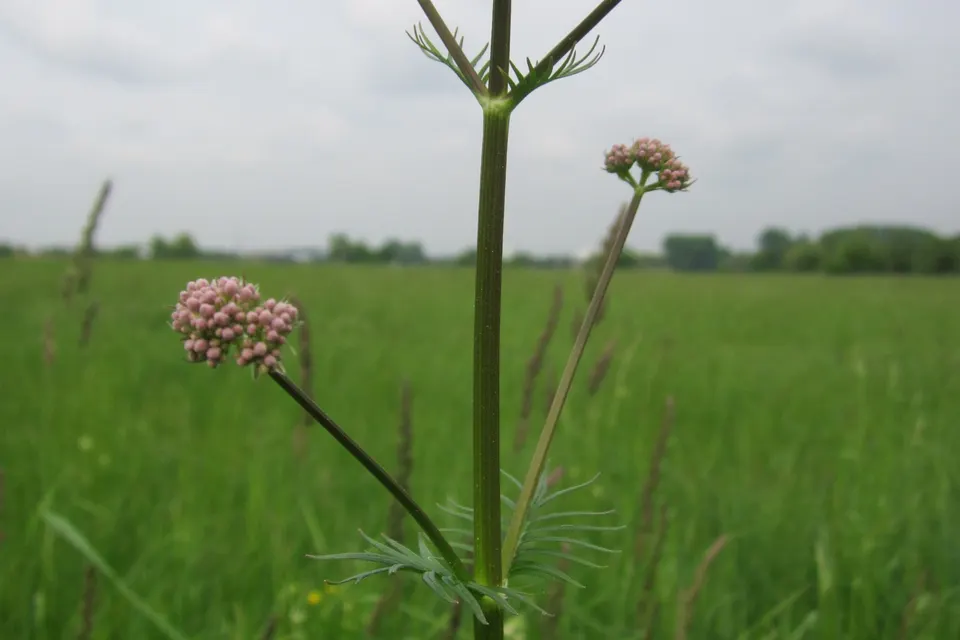
Valerian is a tall perennial grown for its root, historically one of the best-known herbal sedatives, and it takes a full two seasons in the ground before that root is ready to harvest.
Starting it
Transplanting is recommended: sow seed three-eighths of an inch deep, keep temperatures at 65-68°F until germination, then grow at normal conditions until seedlings reach 5 to 6 inches tall before transplanting outside in early spring. Direct-seeding also works, sown in spring or fall three-eighths to a half inch deep, thinned to 12 to 18 inches apart in rows 3 feet apart. It’s hardy in zones 3-9.
A two-year life cycle
The main plant flowers and then dies back in its second year, but smaller daughter plants grow up around its base as it declines. Those daughter plants can be dug and transplanted at the recommended spacing, keeping a patch going indefinitely without starting over from seed each time. Valerian also self-sows readily on its own, so deadhead spent flowers if an expanding patch isn’t the goal.
Harvesting the root
Dig roots in the fall of the second year, once the top growth has yellowed and died back, or in spring before the plant bolts and flowers. Wash the roots and dry them in a warm space, around 100°F.
Valerian has no well-established companion pairings, and nothing it needs to be kept away from. Given its height and two-year cycle, it needs a fixed, undisturbed spot in the Garden Designer rather than a bed that gets replanted every year.
Source: Valerian: Key Growing Information, Johnny’s Selected Seeds.
Companion planting guide for Valerian · Find your planting dates
Typically viable in USDA zones 3-9. Not sure your zone? Look it up by ZIP code.
Mature height: 4-6.5 ft
Method: Start indoors: Start indoors from seed, then transplant outside. It needs a head start most zones can't give it by direct-sowing alone.
When to plant valerian, by zone
Every zone valerian grows in. Pick your zone in the header and it will be highlighted here. Each zone links to its full page.
| Zone | Start indoors | Sow or plant out | Harvest |
|---|---|---|---|
| 3a & 3b | Apr 18–Apr 25 | Jun 6–Jun 13 | About 2 years after planting |
| 4a & 4b | Apr 3–Apr 10 | May 22–May 29 | About 2 years after planting |
| 5a & 5b | Mar 29–Apr 5 | May 17–May 24 | About 2 years after planting |
| 6a & 6b | Mar 14–Mar 21 | May 2–May 9 | About 2 years after planting |
| 7a & 7b | Feb 27–Mar 6 | Apr 17–Apr 24 | About 2 years after planting |
| 8a & 8b | Feb 11–Feb 18 | Apr 1–Apr 8 | About 2 years after planting |
| 9a & 9b | Jan 4–Jan 11 | Feb 22–Mar 1 | About 2 years after planting |
See exact start-indoors, direct-sow, and harvest dates for your zone →
How many Valerian plants fit per square foot?
Spacing: about 2 square feet per plant (square-foot-gardening spacing). Mature height: 4-6.5 ft.
Varieties worth considering
- Common valerian (Valeriana officinalis): Johnny's Selected Seeds sells this straight species, noting it as one of nature's best herbal sedatives; there's no meaningful named-cultivar market for a root crop grown for a single traditional use. (source)
Why each variety is listed comes from the source shown next to it. We haven't grown these ourselves yet, so treat this as a research-backed starting point, not a personal endorsement. The buy links are separate from those sources: they go to seed suppliers that sell that exact variety, and we may earn a commission on some of them.
Where to buy valerian seeds
True Leaf Market (each supplier's valerian seeds)
As an Amazon Associate we earn from qualifying purchases. Some links on this page also go to other retailers we may earn a commission from as an affiliate, at no extra cost to you. We only recommend products with a clear consensus of positive, independent reviews, or ones we bought and use ourselves. Each item on our gear page says which.
See it growing
Search YouTube for "growing valerian" videos → (a live search, not a hand-picked video; results vary and aren't vetted by us)

Pin this for later
Growing Valerian: A tall perennial grown for its root, used as one of the best-known herbal sedatives, dug in the fall of its second year.
Save to Pinterest