Growing Shallots: A Complete Profile
By Growing Home Greens Team · July 24, 2026
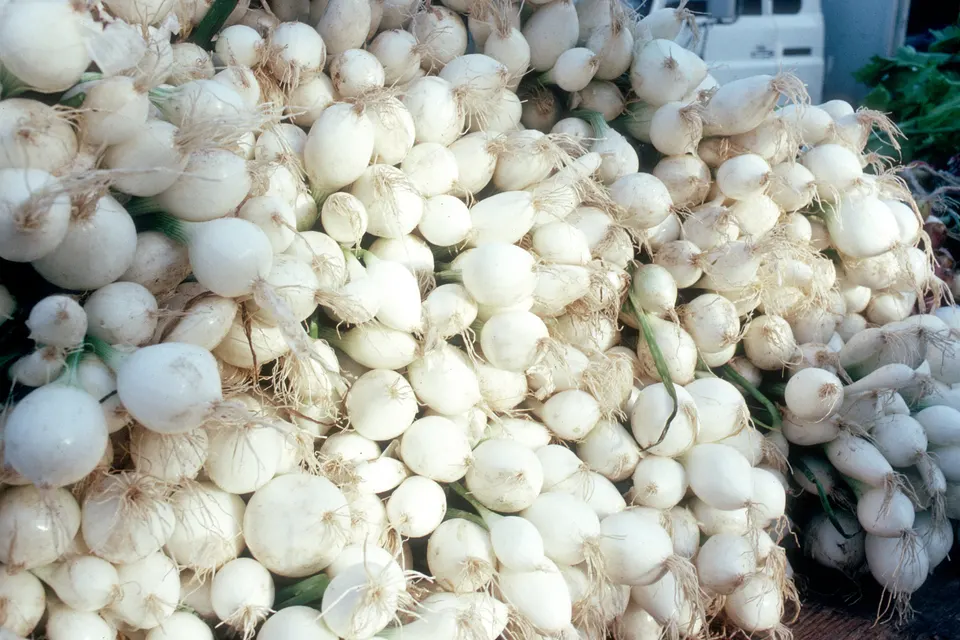
A shallot is an onion that decided to be several onions. Instead of swelling into one bulb it splits into a cluster of small ones, each with a milder, sweeter, more refined flavour than a cooking onion. It’s the allium you want raw in a vinaigrette, where a raw onion would take over.
Sets or seed, and why it rules some varieties out
This is the first decision and it narrows the field more than people expect.
French types rarely flower or set seed. Gray Griselle and its relatives are propagated by replanting last year’s bulbs, so they’re sold as sets and there is no seed packet to buy. If a variety you’ve read about isn’t available as seed, this is usually why.
Dutch types are readily grown from seed. Cheaper, easier to cover a bed with, and Utah State Extension notes that seed emerges in 10-14 days while sets get away faster.
One useful consequence: properly cured shallots can be replanted. Hold back your best bulbs at harvest and you needn’t buy sets again.
Spacing is a choice, not a rule
The thing most guides bury: spacing decides what you harvest.
- Tight (2 inches) gives smaller, mostly single bulbs and the highest total weight.
- Wide (4-6 inches) gives clusters of larger bulbs.
Neither is wrong. Decide which you want before you sow, rather than discovering it in August.
Seed goes ¼–½ inch deep. Sets go 1–2 inches deep, 3–6 inches apart, pointed end up.
Timing
Plant in early spring as soon as the soil can be worked. Shallots, like onions, are day-length sensitive: they want a long cool spell of leaf growth before lengthening days trigger bulbing. Late planting means less leaf, which means smaller bulbs, and there’s no catching up.
In milder zones you can plant sets in autumn after the first frost for a late-spring harvest. In cold zones that works too but wants frost cloth or a mulch over winter.
What goes wrong
Small or split bulbs. Usually crowding, or dry spells while the bulbs were sizing. They want about an inch of water a week through that stretch.
Weeds win. Shallots have narrow upright leaves that shade nothing, so weeds are never suppressed. Early weeding matters more here than in almost any other crop.
They rot in storage. Almost always insufficient curing.
Harvest and storage
For green shallots, pull when the tops are 6-8 inches, around 50-60 days. For mature bulbs, wait until most of the tops have flopped over.
Then cure them properly: leave the lifted bulbs in the garden for one to two weeks until the skins are papery and the necks dry. Store in mesh bags somewhere cool (32-40°F) and dry. Done properly they keep for months, which is the main reason to grow more than you think you need.
Where to put it
Full sun, loose soil, and the same treatment as onions. In the Garden Designer shallots share onion’s companion and antagonist profile, so they can stand in for onion when you’re planning.
Sources: How to Grow Shallots in Your Garden, Utah State University Extension; Shallots, University of Arkansas Cooperative Extension.
Companion planting guide for Shallot · Find your planting dates
Typically viable in USDA zones 3-10. Not sure your zone? Look it up by ZIP code.
Mature height: 1-1.5 ft
Method: Direct sow: Direct-sow outside. It doesn't transplant well, or doesn't need the extra time indoors.
When to plant shallot, by zone
Every zone shallot grows in. Pick your zone in the header and it will be highlighted here. Each zone links to its full page.
| Zone | Start indoors | Sow or plant out | Harvest |
|---|---|---|---|
| 3a & 3b | Not usually | May 9–May 16 | Aug 25–Sep 1 |
| 4a & 4b | Not usually | Apr 24–May 1 | Aug 10–Aug 17 |
| 5a & 5b | Not usually | Apr 19–Apr 26 | Aug 5–Aug 12 |
| 6a & 6b | Not usually | Apr 4–Apr 11 | Jul 21–Jul 28 |
| 7a & 7b | Not usually | Mar 20–Mar 27 | Jul 6–Jul 13 |
| 8a & 8b | Not usually | Mar 4–Mar 11 | Jun 20–Jun 27 |
| 9a & 9b | Not usually | Jan 25–Feb 1 | May 13–May 20 |
| 10a & 10b | Not usually | Jan 9–Jan 16 | Apr 27–May 4 |
Harvest dates are about 108 days after the sow or plant-out date.
See exact start-indoors, direct-sow, and harvest dates for your zone →
How many Shallot plants fit per square foot?
Spacing: 9 per square foot (square-foot-gardening spacing). Mature height: 1-1.5 ft.
Good companions for shallot
- Carrot: A peer-reviewed field study (Uvah & Coaker 1984) found intercropping onion with carrot reduced carrot rust fly damage via scent-masking. Shallot is the same species as onion (Allium cepa, just a different cultivar group), so the result should carry over more reliably than most, but shallot itself wasn't the variety tested, so treat the specific magnitude as unconfirmed even though the mechanism should carry over.
Full companion guide, including what to keep away from shallot →
Varieties worth considering
- French Red: The most widely grown, and the shallot most people picture: coppery skin, purple-tinged flesh, reliably forms clusters. A sensible default if you have no strong preference. (source)
- Gray Griselle (French Grey): Utah State Extension rates it best on flavour, and most cooks agree. The catch is that French types rarely flower or set seed, so this one is sold as sets only. There is no seed packet to buy. (source)
- Dutch Yellow: Stronger and more onion-like than the French types. The practical advantage is that Dutch shallots are readily grown from seed, which is cheaper and covers more ground than buying sets. (source)
Why each variety is listed comes from the source shown next to it. We haven't grown these ourselves yet, so treat this as a research-backed starting point, not a personal endorsement. The buy links are separate from those sources: they go to seed suppliers that sell that exact variety, and we may earn a commission on some of them.
Where to buy shallot seeds
Burpee (each supplier's shallot seeds)
As an Amazon Associate we earn from qualifying purchases. Some links on this page also go to other retailers we may earn a commission from as an affiliate, at no extra cost to you. We only recommend products with a clear consensus of positive, independent reviews, or ones we bought and use ourselves. Each item on our gear page says which.
See it growing
Search YouTube for "growing shallot" videos → (a live search, not a hand-picked video; results vary and aren't vetted by us)

Pin this for later
Growing Shallot: Sets or seed is the first decision and it rules out some varieties entirely. Spacing decides whether you get one bulb or a cluster. Which types to grow and how to store them.
Save to Pinterest