Growing Salvia: A Complete Profile
By Growing Home Greens Team · July 18, 2026
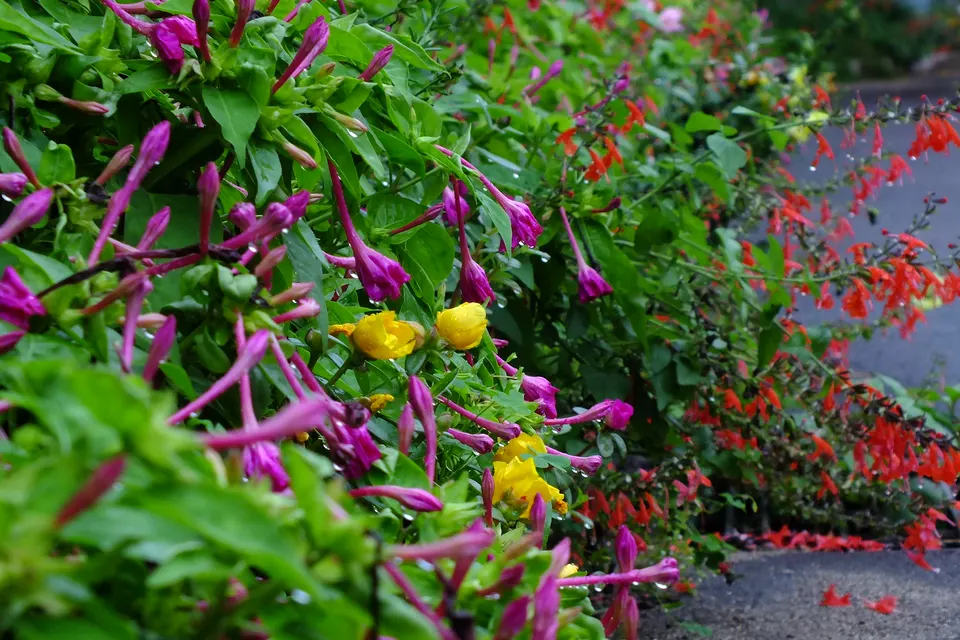
Salvia (scarlet sage) is a long-season bloomer that doesn’t quit. Once established it flowers steadily from late spring until frost, which makes it one of the more reliable season-long pollinator draws in the garden. The flowers themselves are narrow, upright spikes of tubular blooms, usually red, packed onto 1.5- to 3-foot plants.
Indoor-start only, with light-dependent seed
Unlike most flowers on this list, salvia is indoor-start only. There’s no direct-sow option. Start seed about 8 weeks before your last frost, pressing it into the surface since it needs light to germinate, and set transplants out about 2 weeks after that date. It reaches bloom in around 80 days, budgeted at one plant per square foot.
Slow germination, and blooms that need full sun
Slow, uneven germination is the most common early complaint, and it usually traces back to seed that was buried instead of pressed onto the surface, or a seed tray that dried out before germination finished. Once established, leggy or sparse-flowering plants are almost always a light problem. Salvia wants full sun, and it won’t bloom well crowded into shade from taller neighbors.
A hummingbird draw that earns a planned spot
Salvia’s tubular flowers are a well-known draw for hummingbirds and pollinating insects working the beds nearby. See the full companion guide for salvia. At one plant per square foot, it’s sized like a vegetable in the Garden Designer rather than a border accent, so give it a planned spot instead of squeezing it into whatever room is left.
Companion planting guide for Salvia (Scarlet Sage) · Find your planting dates
Typically viable in USDA zones 2-11. Not sure your zone? Look it up by ZIP code.
Mature height: 1-1.5 ft
Method: Start indoors: Start indoors from seed, then transplant outside. It needs a head start most zones can't give it by direct-sowing alone.
When to plant salvia (scarlet sage), by zone
Every zone salvia (scarlet sage) grows in. Pick your zone in the header and it will be highlighted here. Each zone links to its full page.
| Zone | Start indoors | Sow or plant out | Bloom |
|---|---|---|---|
| 2a & 2b | Mar 25–Apr 1 | Jun 3–Jun 10 | Aug 22–Aug 29 |
| 3a & 3b | Apr 4–Apr 11 | Jun 13–Jun 20 | Sep 1–Sep 8 |
| 4a & 4b | Mar 20–Mar 27 | May 29–Jun 5 | Aug 17–Aug 24 |
| 5a & 5b | Mar 15–Mar 22 | May 24–May 31 | Aug 12–Aug 19 |
| 6a & 6b | Feb 28–Mar 7 | May 9–May 16 | Jul 28–Aug 4 |
| 7a & 7b | Feb 13–Feb 20 | Apr 24–May 1 | Jul 13–Jul 20 |
| 8a & 8b | Jan 28–Feb 4 | Apr 8–Apr 15 | Jun 27–Jul 4 |
| 9a & 9b | Dec 21–Dec 28 | Mar 1–Mar 8 | May 20–May 27 |
| 10a & 10bSpring window | Jan–Mar | Mar–May | ~80 days after transplanting |
| Fall window | Jul–Aug | Sep–Oct | ~80 days after transplanting |
| 11a & 11b | Nov 6–Nov 13 | Jan 15–Jan 22 | Apr 5–Apr 12 |
Bloom dates are about 80 days after the sow or plant-out date, not after starting seeds indoors.
Zone 2 sows before zone 3 here, which looks wrong and is not. USDA zones rank winter cold, not season length, and zone 2 is mostly interior Alaska, where hard winters come with warm summers. More on what a zone measures.
See exact start-indoors, direct-sow, and harvest dates for your zone →
How many Salvia (Scarlet Sage) plants fit per square foot?
Spacing: 1 per square foot (square-foot-gardening spacing). Mature height: 1-1.5 ft.
Varieties worth considering
- 'Vista' series: Clemson Cooperative Extension's Home & Garden Information Center lists the Vista series as offering the widest color range of the common Salvia splendens cultivars (lavender, purple, red, rose, salmon, white, and bicolor) on compact plants reaching only about 12 inches, a good match for a square-foot bed where you don't want a tall, leggy flower crowding its neighbors. (source)
- 'Salsa' series: Clemson HGIC notes this series does well in South Carolina's heat specifically, at 12-14 inches in scarlet and mixed colors. Similar size to Vista, worth trying as an alternative if Vista hasn't performed well in your particular heat and humidity. (source)
- 'Bonfire' ('Clara Bedman'): A taller scarlet-spiked type Clemson HGIC lists at a uniform 26 inches, well above Vista and Salsa's 12-14 inch range. The pick if you want salvia as a backdrop plant rather than a front-of-bed filler. (source)
Why each variety is listed comes from the source shown next to it. We haven't grown these ourselves yet, so treat this as a research-backed starting point, not a personal endorsement. The buy links are separate from those sources: they go to seed suppliers that sell that exact variety, and we may earn a commission on some of them.
Where to buy salvia seeds
Botanical Interests · True Leaf Market (each supplier's salvia seeds)
As an Amazon Associate we earn from qualifying purchases. Some links on this page also go to other retailers we may earn a commission from as an affiliate, at no extra cost to you. We only recommend products with a clear consensus of positive, independent reviews, or ones we bought and use ourselves. Each item on our gear page says which.
See it growing
Search YouTube for "growing salvia (scarlet sage)" videos → (a live search, not a hand-picked video; results vary and aren't vetted by us)
%3A%20A%20long-blooming%2C%20indoor-start-only%20annual%20that%20keeps%20pollinators%20visiting%20the%20garden%20from%20late%20spring%20through%20frost.)
Pin this for later
Growing Salvia (Scarlet Sage): A long-blooming, indoor-start-only annual that keeps pollinators visiting the garden from late spring through frost.
Save to Pinterest