Growing Sweet Banana Peppers: A Complete Profile
By Growing Home Greens Team · September 30, 2026
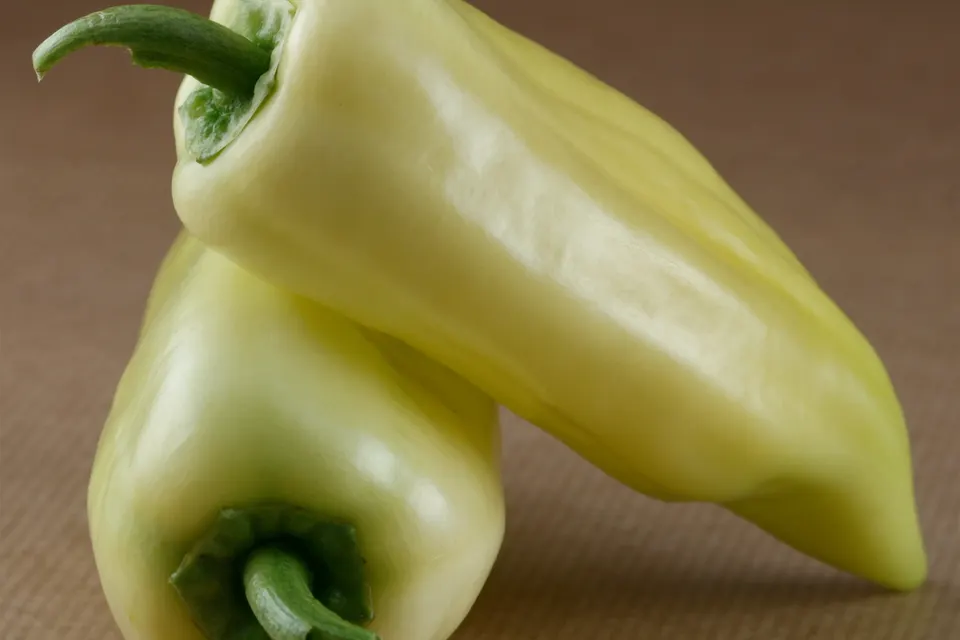
Sweet banana peppers are the pale yellow, banana-shaped peppers sliced into rings for sandwiches and pickles. They ripen from yellow to orange and red, and most people pick them yellow.
Mild, early and productive
Bonnie Plants rates sweet banana at 100 to 500 Scoville units, so there is barely any heat. Burpee lists it at 72 days from transplant and Baker Creek at 60 to 75. Burpee’s fruit runs about 7 inches.
Do not mix it up with the hot banana, sometimes sold as Hungarian wax, which looks almost the same and is far hotter. If you grow both, label the plants: the fruit is hard to tell apart once picked.
A short plant
Bonnie lists sweet banana as a short plant, under 24 inches, and Burpee gives 24 inches, so it sits comfortably at the front of a bed or in a pot. One plant per square foot in the Garden Designer.
Start seed indoors about eight weeks before your last frost. The Bell Pepper profile covers watering and transplanting, and the companion guide lists neighbors.
Hot nights and dropped flowers
Pepper flowers fall off without setting fruit when nights stay above about 75°F, per the University of Delaware’s Weekly Crop Update. In zones 9 and up, expect a midsummer gap in fruiting; our zone pages flag it.
Growing it next to other peppers
Different pepper varieties cross-pollinate easily, hot ones included. NC State Extension notes that when hot and sweet peppers cross, the heat shows up in later generations grown from saved seed, and suggests keeping varieties 20 to 30 feet apart if you plan to save your own. Baker Creek, which grows seed for sale, isolates varieties by at least 500 feet. If you buy fresh seed each year, you can plant sweet and hot peppers side by side.
Sources: Bonnie Plants, Banana Sweet; Burpee, Sweet Banana; Baker Creek, Sweet Banana; NC State Extension, Saving Your Own Seed; University of Delaware Weekly Crop Update.
Companion planting guide for Sweet Banana Pepper · Find your planting dates
Typically viable in USDA zones 3-11. Not sure your zone? Look it up by ZIP code.
Mature height: 1.5-2 ft
Method: Start indoors: Start indoors from seed, then transplant outside. It needs a head start most zones can't give it by direct-sowing alone.
When to plant sweet banana pepper, by zone
Every zone sweet banana pepper grows in. Pick your zone in the header and it will be highlighted here. Each zone links to its full page.
| Zone | Start indoors | Sow or plant out | Harvest |
|---|---|---|---|
| 3a & 3b | Apr 4–Apr 11 | Jun 13–Jun 20 | Aug 22–Aug 29 |
| 4a & 4b | Mar 20–Mar 27 | May 29–Jun 5 | Aug 7–Aug 14 |
| 5a & 5b | Mar 15–Mar 22 | May 24–May 31 | Aug 2–Aug 9 |
| 6a & 6b | Feb 28–Mar 7 | May 9–May 16 | Jul 18–Jul 25 |
| 7a & 7b | Feb 13–Feb 20 | Apr 24–May 1 | Jul 3–Jul 10 |
| 8a & 8b | Jan 28–Feb 4 | Apr 8–Apr 15 | Jun 17–Jun 24 |
| 9a & 9b | Dec 21–Dec 28 | Mar 1–Mar 8 | May 10–May 17 |
| 10a & 10bSpring window | Dec–Feb | Feb–Apr | ~70 days after transplanting |
| Summer window | May–Jul | Jul–Sep | ~70 days after transplanting |
| 11a & 11bSummer window | Jun–Dec | Aug–Feb | ~70 days after transplanting |
Harvest dates are about 70 days after the sow or plant-out date, not after starting seeds indoors.
See exact start-indoors, direct-sow, and harvest dates for your zone →
How many Sweet Banana Pepper plants fit per square foot?
Spacing: 1 per square foot (square-foot-gardening spacing). Mature height: 1.5-2 ft.
Soil & water: pH 6-6.5. Needs well-drained soil. Amend with lime if soil pH falls below 6.
Good companions for sweet banana pepper
- Basil: Reputed to repel aphids and improve pepper growth nearby, but a controlled garden trial testing this same claim on a related crop found no pest-reduction benefit from basil, and found higher pest counts on the basil-companioned plants. Treat this pairing as unproven, not as a working pest deterrent.
- Onion: Reputed to deter many common pepper pests, though this specific pairing hasn't been tested the way onion/carrot pest-masking has. Treat it as garden tradition.
Full companion guide, including what to keep away from sweet banana pepper →
Varieties worth considering
- Sweet Banana: The standard sweet banana pepper, and an All-America Selections winner as far back as 1941. The mild fruit ripens from yellow through orange to red, and AAS describes plants yielding up to 25 to 30 pods each. (source)
- Sweet Sunset (F1) (best for: no staking): A 2015 All-America Selections winner: a compact banana pepper with fruit about 7.5 by 1.5 inches on a bushy, upright plant. AAS judges noted it kept producing through the season without support and won a taste test at one trial site. It's later than Sweet Banana, at 85 to 90 days from transplant. (source)
Why each variety is listed comes from the source shown next to it. We haven't grown these ourselves yet, so treat this as a research-backed starting point, not a personal endorsement. The buy links are separate from those sources: they go to seed suppliers that sell that exact variety, and we may earn a commission on some of them.
Where to buy sweet banana pepper seeds
Botanical Interests · True Leaf Market · Burpee (sweet banana pepper seeds)
As an Amazon Associate we earn from qualifying purchases. Some links on this page also go to other retailers we may earn a commission from as an affiliate, at no extra cost to you. We only recommend products with a clear consensus of positive, independent reviews, or ones we bought and use ourselves. Each item on our gear page says which.
See it growing
Search YouTube for "growing sweet banana pepper" videos → (a live search, not a hand-picked video; results vary and aren't vetted by us)

Pin this for later
Growing Sweet Banana Pepper: Long, waxy yellow sweet peppers that are easy to grow and made for pickling rings.
Save to Pinterest