Growing Parsley: A Complete Profile
By Growing Home Greens Team · July 18, 2026
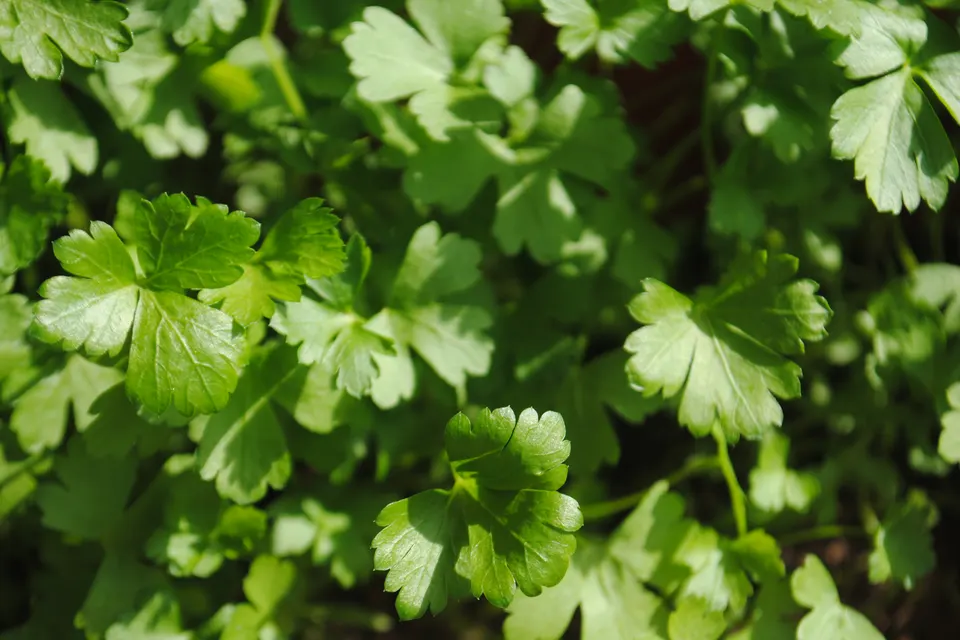
Parsley is technically a biennial, not an annual, though most gardeners never see the second year. It’s usually grown and harvested in its first season, then replaced the following spring rather than left to bolt and flower in year two.
Slow to germinate, not a sign of failure
Parsley can be started indoors or direct-sown, either about 8 weeks before your last frost indoors or a couple weeks before it outdoors. Germination is notoriously slow, two to three weeks is normal, not a sign of failure. In its first year it forms a leafy rosette that’s ready to harvest continuously; if left in the ground over winter in a mild enough zone, it will bolt and flower the following spring as its biennial nature intended, at which point the leaves turn bitter and it’s done for cooking.
Bitter leaves mean it’s already bolted
Bitter-tasting leaves usually mean the plant has bolted into its second-year flowering stage, at that point, pull it and start a fresh batch rather than trying to revive it. Slow or spotty germination is normal for parsley; presoaking seed overnight can speed things up slightly, but patience is still the main requirement.
A tomato companion that tucks in anywhere
Parsley is a classic tomato companion, prized for attracting beneficial insects nearby. See the full companion guide for parsley. At 4 plants per square foot, it’s dense enough to tuck around larger crops in the Garden Designer without needing its own dedicated bed space.
Companion planting guide for Parsley · Find your planting dates
Typically viable in USDA zones 3-10. Not sure your zone? Look it up by ZIP code.
Mature height: 0.5-1 ft
Method: Either: Start indoors for an earlier harvest, or direct-sow outside for less fuss. Either works.
When to plant parsley, by zone
Every zone parsley grows in. Pick your zone in the header and it will be highlighted here. Each zone links to its full page.
| Zone | Start indoors | Sow or plant out | Harvest |
|---|---|---|---|
| 3a & 3b | Apr 4–Apr 11 | May 16–May 23 | Jul 30–Aug 6 |
| 4a & 4b | Mar 20–Mar 27 | May 1–May 8 | Jul 15–Jul 22 |
| 5a & 5b | Mar 15–Mar 22 | Apr 26–May 3 | Jul 10–Jul 17 |
| 6a & 6b | Feb 28–Mar 7 | Apr 11–Apr 18 | Jun 25–Jul 2 |
| 7a & 7b | Feb 13–Feb 20 | Mar 27–Apr 3 | Jun 10–Jun 17 |
| 8a & 8b | Jan 28–Feb 4 | Mar 11–Mar 18 | May 25–Jun 1 |
| 9a & 9b | Dec 21–Dec 28 | Feb 1–Feb 8 | Apr 17–Apr 24 |
| 10a & 10bFall window | Jul–Mar | Oct–Apr | ~75 days after transplanting |
Harvest dates are about 75 days after the sow or plant-out date, not after starting seeds indoors.
See exact start-indoors, direct-sow, and harvest dates for your zone →
How many Parsley plants fit per square foot?
Spacing: 4 per square foot (square-foot-gardening spacing). Mature height: 0.5-1 ft.
Good companions for parsley
- Tomato: Classic pairing. Parsley attracts beneficial insects near tomatoes.
Full companion guide, including what to keep away from parsley →
Varieties worth considering
- Gigante d'Italia (Giant of Italy): The most-reviewed top variety in Cornell's Vegetable Varieties for Gardeners database (4.5 stars, 20 reviews), a flat-leaf Italian type with large, dark green leaves at 70-75 days, closely matching the flavor most cooks want from parsley. (source) Buy seeds: Burpee
- Dark Green Italian: Cornell's database rates it even higher than Gigante d'Italia at 4.8 stars, another flat-leaf type at 78 days. The two are close enough that either is a safe choice if you want flavor over garnish looks. (source) Buy seeds: True Leaf Market · Burpee
- Moss Curled: The curly-leaf type most people picture as a garnish, rated 4.4 stars in Cornell's database with compact plants and finely cut leaves. Milder and less useful for cooking than the flat-leaf types above, but the one to grow if you specifically want the traditional curly look. (source) Buy seeds: Botanical Interests · True Leaf Market
Why each variety is listed comes from the source shown next to it. We haven't grown these ourselves yet, so treat this as a research-backed starting point, not a personal endorsement. The buy links are separate from those sources: they go to seed suppliers that sell that exact variety, and we may earn a commission on some of them.
Where to buy parsley seeds
Botanical Interests · True Leaf Market · Burpee · High Mowing Organic Seeds (each supplier's parsley seeds)
The varieties we recommend above each have their own buy links, for the suppliers that sell that exact variety.
As an Amazon Associate we earn from qualifying purchases. Some links on this page also go to other retailers we may earn a commission from as an affiliate, at no extra cost to you. We only recommend products with a clear consensus of positive, independent reviews, or ones we bought and use ourselves. Each item on our gear page says which.
See it growing
Search YouTube for "growing parsley" videos → (a live search, not a hand-picked video; results vary and aren't vetted by us)

Pin this for later
Growing Parsley: A biennial herb most gardeners grow as an annual: flat-leaf for flavor, curly for looks, and both slower to start than you'd expect.
Save to Pinterest