Growing Mint (Spearmint): A Complete Profile
By Growing Home Greens Team · July 29, 2026
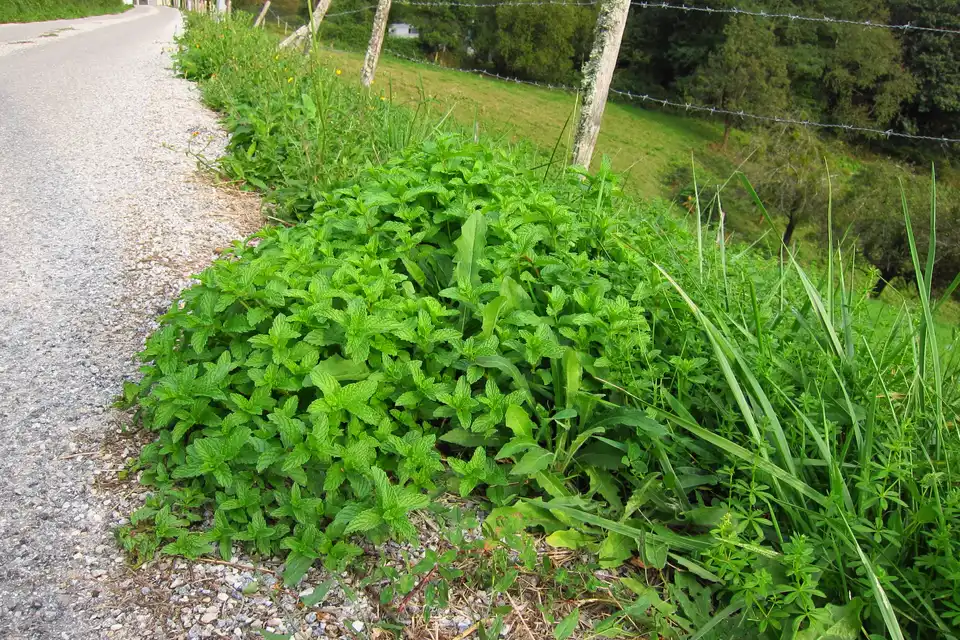
Spearmint is fast, tough, and useful as a companion plant, but it comes with the same warning every mint does: given open soil, it spreads aggressively by rhizome and will take over more of a bed than intended.
Starting it (in a pot)
Mint is almost always grown from a nursery start or a division rather than seed. Set transplants out right around your last frost date, and expect a usable harvest in about 70 days. Growing it in a container (even one sunk into the ground) is strongly recommended over planting it directly in a shared bed, since there’s no reliable way to contain the rhizomes once they’re loose in open garden soil.
Success is the problem
The only “problem” with mint is success, an unconstrained planting spreads fast into neighboring squares, and that’s entirely preventable by containing it from the start rather than trying to pull it back out later.
Placed near what it protects
Mint planted near cabbage is reputed to help deter cabbage moths, and near tomato it’s reputed to repel aphids. See the full companion guide for mint for the reasoning behind each. Even in a container, placing it within the Garden Designer layout next to the crops it’s meant to help keeps its companion benefit close by without risking it spreading into them directly.
Sources: Mentha spicata, NC State Extension Gardener Plant Toolbox.
Companion planting guide for Mint (Spearmint) · Find your planting dates
Typically viable in USDA zones 4-10. Not sure your zone? Look it up by ZIP code.
Mature height: 1-2 ft
Method: Buy as a start: Buy as a nursery start and transplant outside. It's slow or unreliable from seed, so most gardeners skip seed-starting it entirely.
When to plant mint (spearmint), by zone
Every zone mint (spearmint) grows in. Pick your zone in the header and it will be highlighted here. Each zone links to its full page.
| Zone | Start indoors | Sow or plant out | Harvest |
|---|---|---|---|
| 4a & 4b | Buy as a start | May 15–May 22 | Jul 24–Jul 31 |
| 5a & 5b | Buy as a start | May 10–May 17 | Jul 19–Jul 26 |
| 6a & 6b | Buy as a start | Apr 25–May 2 | Jul 4–Jul 11 |
| 7a & 7b | Buy as a start | Apr 10–Apr 17 | Jun 19–Jun 26 |
| 8a & 8b | Buy as a start | Mar 25–Apr 1 | Jun 3–Jun 10 |
| 9a & 9b | Buy as a start | Feb 15–Feb 22 | Apr 26–May 3 |
| 10a & 10bSpring window | Buy as a start | Feb–Apr | ~70 days after transplanting |
| Fall window | Buy as a start | Oct–Nov | ~70 days after transplanting |
Harvest dates are about 70 days after the sow or plant-out date.
See exact start-indoors, direct-sow, and harvest dates for your zone →
How many Mint (Spearmint) plants fit per square foot?
Spacing: 1 per square foot (square-foot-gardening spacing). Mature height: 1-2 ft.
Good companions for mint (spearmint)
- Cabbage: Mint's scent is reputed to deter cabbage moths nearby, though this specific pairing hasn't been tested the way sage, dill, and thyme have: treat it as garden tradition.
- Tomato: Reputed to repel aphids near tomatoes.
Full companion guide, including what to keep away from mint (spearmint) →
Varieties worth considering
- 'Kentucky Colonel' (Mentha spicata): NC State Extension's Plant Toolbox notes 'Kentucky Colonel' for its superior foliage, broader, more ruffled leaves than a generic spearmint start. Since you're growing this for the leaves and the scent, not flowers, a named cultivar with better leaf quality is worth the extra look at the nursery. (source)
- 'Chocolate' (Mentha x piperita f. citrata): Missouri Botanical Garden's Plant Finder describes this peppermint cultivar's fragrance as chocolate rather than the parent species' minty-orange scent, with dark green leaves on a 1 to 2 foot plant. A novelty pick for flavoring, not a substitute for spearmint's culinary use. (source)
- Peppermint (Mentha x piperita): NC State Extension's Plant Toolbox lists peppermint as a distinct cross (spearmint x watermint) from the spearmint this profile is built around, with the same aggressive rhizome spread and a 1 to 3 foot height. Worth growing instead of spearmint specifically for its stronger, more menthol-forward flavor in tea. (source)
Why each variety is listed comes from the source shown next to it. We haven't grown these ourselves yet, so treat this as a research-backed starting point, not a personal endorsement. The buy links are separate from those sources: they go to seed suppliers that sell that exact variety, and we may earn a commission on some of them.
Where to buy mint starts
Mint (spearmint) is almost always bought as a nursery start rather than seeded. Check a local nursery or garden center; we haven't vetted online start/plant suppliers yet.
As an Amazon Associate we earn from qualifying purchases. Some links on this page also go to other retailers we may earn a commission from as an affiliate, at no extra cost to you. We only recommend products with a clear consensus of positive, independent reviews, or ones we bought and use ourselves. Each item on our gear page says which.
See it growing
Search YouTube for "growing mint (spearmint)" videos → (a live search, not a hand-picked video; results vary and aren't vetted by us)
%3A%20One%20of%20the%20most%20useful%20companion%20herbs%20in%20the%20garden%2C%20and%20one%20that%20needs%20a%20container%2C%20not%20a%20shared%20bed%2C%20to%20stay%20that%20way.)
Pin this for later
Growing Mint (Spearmint): One of the most useful companion herbs in the garden, and one that needs a container, not a shared bed, to stay that way.
Save to Pinterest