Growing Leeks: A Complete Profile
By Growing Home Greens Team · July 18, 2026
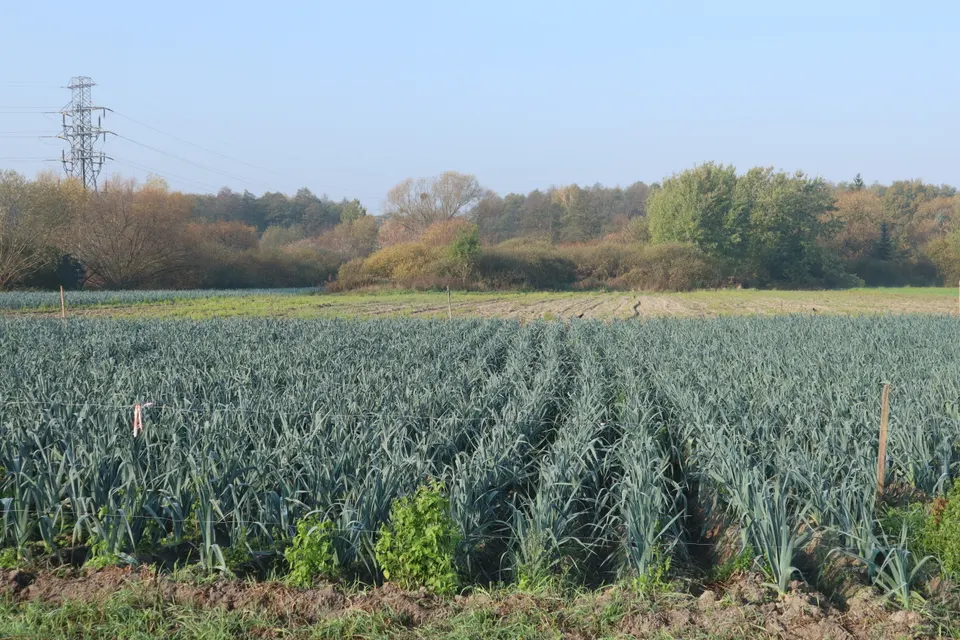
Leeks take their time, 110 days from seed to harvest, but they ask for very little in return once they’re in the ground. If you’ve grown onions or garlic, leeks are the same family playing a longer, more patient game.
Starting it early, and blanching the stem
Start seed indoors 10 weeks before your last frost; leeks are slow to get going and want a head start. Transplants go outside a few weeks before that frost date, since young leeks tolerate cool soil better than the heat later in the season. As they grow, hilling soil up around the base blanches the lower stem, producing the long white portion that’s the whole point of growing leeks instead of just buying scallions.
Thin stalks, and the allium problem for nearby beans
Thin, weak stalks usually mean the bed was too crowded or too poor in organic matter. Leeks are heavy, steady feeders over their long season. Because they’re an allium, don’t plant them where beans or peas are going in nearby: alliums inhibit the nitrogen-fixing bacteria on legume roots.
A long-season crop that shares a bed well
Leeks share the same root-crop pest confusion benefit that carrots and onions offer each other. See the full companion guide for leek. At 9 plants per square foot they’re dense enough to fit into a smaller bed footprint, but plan around their long season in the Garden Designer since they’ll occupy that space well into fall.
Companion planting guide for Leek · Find your planting dates
Typically viable in USDA zones 3-9. Not sure your zone? Look it up by ZIP code.
Mature height: 1-2 ft
Method: Start indoors: Start indoors from seed, then transplant outside. It needs a head start most zones can't give it by direct-sowing alone.
When to plant leek, by zone
Every zone leek grows in. Pick your zone in the header and it will be highlighted here. Each zone links to its full page.
| Zone | Start indoors | Sow or plant out | Harvest |
|---|---|---|---|
| 3a & 3b | Mar 21–Mar 28 | May 9–May 16 | Aug 27–Sep 3 |
| 4a & 4b | Mar 6–Mar 13 | Apr 24–May 1 | Aug 12–Aug 19 |
| 5a & 5b | Mar 1–Mar 8 | Apr 19–Apr 26 | Aug 7–Aug 14 |
| 6a & 6b | Feb 14–Feb 21 | Apr 4–Apr 11 | Jul 23–Jul 30 |
| 7a & 7b | Jan 30–Feb 6 | Mar 20–Mar 27 | Jul 8–Jul 15 |
| 8a & 8b | Jan 14–Jan 21 | Mar 4–Mar 11 | Jun 22–Jun 29 |
| 9a & 9b | Dec 7–Dec 14 | Jan 25–Feb 1 | May 15–May 22 |
Harvest dates are about 110 days after the sow or plant-out date, not after starting seeds indoors.
See exact start-indoors, direct-sow, and harvest dates for your zone →
How many Leek plants fit per square foot?
Spacing: 9 per square foot (square-foot-gardening spacing). Mature height: 1-2 ft.
Good companions for leek
- Carrot: Same allium/carrot pest-masking effect measured for onion and carrot (Uvah & Coaker 1984): a real, peer-reviewed field study, not folklore.
Full companion guide, including what to keep away from leek →
Varieties worth considering
- Lancelot: Cornell's Vegetable Varieties for Gardeners database rates it 5 stars, an early-season hybrid at 90-100 days with a mild flavor and thick interior that resists bolting, a useful trait if your spring warms up fast. (source) Buy seeds: High Mowing Organic Seeds
- American Flag: Cornell's database has it tied for the top rating among leeks, a main-season type at 130 days with a 15-18 inch snowy white shaft, longer than Lancelot's. The variety to grow if you want the classic thick, long leek rather than an early, milder one. (source) Buy seeds: True Leaf Market
- Blue Solaise: A hardy winter leek Cornell rates 4.9 stars, bred to overwinter in the ground rather than be pulled in fall. The pick if you want to be harvesting leeks in January, not just October. (source)
Why each variety is listed comes from the source shown next to it. We haven't grown these ourselves yet, so treat this as a research-backed starting point, not a personal endorsement. The buy links are separate from those sources: they go to seed suppliers that sell that exact variety, and we may earn a commission on some of them.
Where to buy leek seeds
True Leaf Market · Burpee · High Mowing Organic Seeds (each supplier's leek seeds)
The varieties we recommend above each have their own buy links, for the suppliers that sell that exact variety.
As an Amazon Associate we earn from qualifying purchases. Some links on this page also go to other retailers we may earn a commission from as an affiliate, at no extra cost to you. We only recommend products with a clear consensus of positive, independent reviews, or ones we bought and use ourselves. Each item on our gear page says which.
See it growing
Search YouTube for "growing leek" videos → (a live search, not a hand-picked video; results vary and aren't vetted by us)

Pin this for later
Growing Leek: A long-season onion relative that's mostly hands-off once established, and hardier than most gardeners expect.
Save to Pinterest