Growing Kohlrabi: A Complete Profile
By Growing Home Greens Team · July 18, 2026
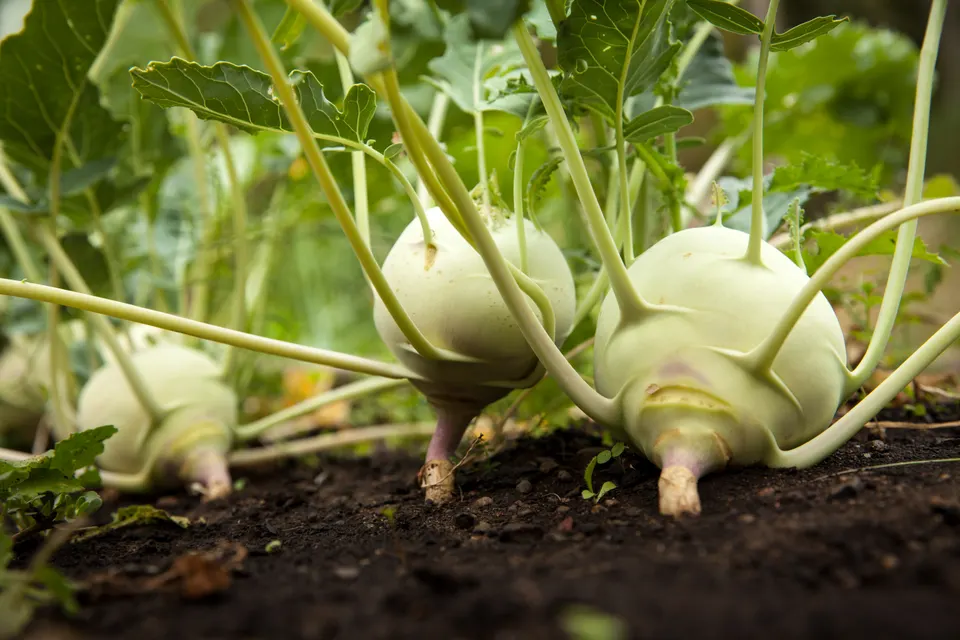
Kohlrabi looks like nothing else in the garden: a pale green or purple bulb that swells right at the soil line, with leaves shooting out of it like a small alien plant. It’s mild, crisp, and closer to a cross between broccoli stem and jicama than anything most people expect from a brassica.
Watching the bulb swell in plain view
Kohlrabi can be started indoors or direct-sown, and at 55 days it moves at a similar pace to other quick brassicas. The bulb itself forms just above the soil surface, so unlike a root crop, you’re watching it swell in plain view rather than guessing at what’s happening underground. Consistent watering keeps the texture crisp; a bulb that goes through drought and rebound stress is more likely to turn woody.
Harvest at the size the variety is meant for
Bulbs left in the ground too long, especially with the larger “giant” storage varieties, get fibrous and tough regardless of watering. Harvest at the size the variety is meant for rather than waiting for it to get bigger, a standard-season variety like Grand Duke is best picked at a few inches across, not left to bulk up indefinitely.
Compatible with beets, not with tomatoes
Kohlrabi shares compatible nutrient needs with beets and is a common bed-sharing pair. See the full companion guide for kohlrabi. Keep it away from tomatoes and beans, which are reported to stunt each other’s growth when planted too close. At 4 per square foot, it’s dense enough to fit efficiently into the Garden Designer’s grid without dominating a bed.
Companion planting guide for Kohlrabi · Find your planting dates
Typically viable in USDA zones 2-11. Not sure your zone? Look it up by ZIP code.
Mature height: 1-1.5 ft
Method: Either: Start indoors for an earlier harvest, or direct-sow outside for less fuss. Either works.
When to plant kohlrabi, by zone
Every zone kohlrabi grows in. Pick your zone in the header and it will be highlighted here. Each zone links to its full page.
| Zone | Start indoors | Sow or plant out | Harvest |
|---|---|---|---|
| 2a & 2b | Apr 15–Apr 22 | May 6–May 13 | Jun 30–Jul 7 |
| 3a & 3b | Apr 25–May 2 | May 16–May 23 | Jul 10–Jul 17 |
| 4a & 4bSpring window | Apr 10–Apr 17 | May 1–May 8 | Jun 25–Jul 2 |
| Fall window | Not usually | Jul 13–Jul 27 | Sep 6–Sep 20 |
| 5a & 5bSpring window | Apr 5–Apr 12 | Apr 26–May 3 | Jun 20–Jun 27 |
| Fall window | Not usually | Jul 28–Aug 11 | Sep 21–Oct 5 |
| 6a & 6bSpring window | Mar 21–Mar 28 | Apr 11–Apr 18 | Jun 5–Jun 12 |
| Fall window | Not usually | Aug 7–Aug 21 | Oct 1–Oct 15 |
| 7a & 7bSpring window | Mar 6–Mar 13 | Mar 27–Apr 3 | May 21–May 28 |
| Fall window | Not usually | Aug 17–Aug 31 | Oct 11–Oct 25 |
| 8a & 8bSpring window | Feb 18–Feb 25 | Mar 11–Mar 18 | May 5–May 12 |
| Fall window | Not usually | Sep 2–Sep 16 | Oct 27–Nov 10 |
| 9a & 9bSpring window | Jan 11–Jan 18 | Feb 1–Feb 8 | Mar 28–Apr 4 |
| Fall window | Not usually | Sep 27–Oct 11 | Nov 21–Dec 5 |
| 10a & 10bSpring window | Dec 26–Jan 2 | Jan 16–Jan 23 | Mar 12–Mar 19 |
| Fall window | Not usually | Oct 12–Oct 26 | Dec 6–Dec 20 |
| 11a & 11bFall window | Not usually | Oct–Feb | ~55 days after planting |
Harvest dates are about 55 days after the sow or plant-out date, not after starting seeds indoors.
Zone 2 sows before zone 3 here, which looks wrong and is not. USDA zones rank winter cold, not season length, and zone 2 is mostly interior Alaska, where hard winters come with warm summers. More on what a zone measures.
See exact start-indoors, direct-sow, and harvest dates for your zone →
How many Kohlrabi plants fit per square foot?
Spacing: 4 per square foot (square-foot-gardening spacing). Mature height: 1-1.5 ft.
Good companions for kohlrabi
- Beet: Compatible nutrient needs; common bed-sharing pair.
Full companion guide, including what to keep away from kohlrabi →
Varieties worth considering
- Grand Duke (F1): Rated 5.0 stars in Cornell Cooperative Extension's grower variety database, with reviewers noting the 4-inch bulbs stay tender and don't turn fibrous at 50 days to maturity, a reliable pick for a standard-season planting rather than a giant storage type. (source)
- Kolibri: Cornell rates it 4.7 stars, a vivid purple hybrid with crisp, nearly fiberless white flesh at 43-45 days. The variety to grow if you want the color contrast for a mixed bed, not just the standard pale green bulb. (source) Buy seeds: High Mowing Organic Seeds
- Kossack: A genuine giant storage type Cornell rates 4.5 stars, bowling-ball sized and, unlike most large kohlrabi, still tender rather than woody at that size. The exception to the harvest-small rule below, but only for this specific variety. (source)
Why each variety is listed comes from the source shown next to it. We haven't grown these ourselves yet, so treat this as a research-backed starting point, not a personal endorsement. The buy links are separate from those sources: they go to seed suppliers that sell that exact variety, and we may earn a commission on some of them.
Where to buy kohlrabi seeds
True Leaf Market · Burpee · High Mowing Organic Seeds (each supplier's kohlrabi seeds)
The varieties we recommend above each have their own buy links, for the suppliers that sell that exact variety.
As an Amazon Associate we earn from qualifying purchases. Some links on this page also go to other retailers we may earn a commission from as an affiliate, at no extra cost to you. We only recommend products with a clear consensus of positive, independent reviews, or ones we bought and use ourselves. Each item on our gear page says which.
See it growing
Search YouTube for "growing kohlrabi" videos → (a live search, not a hand-picked video; results vary and aren't vetted by us)

Pin this for later
Growing Kohlrabi: The brassica that swells into an edible bulb above ground, and why picking the right variety size matters more than with most crops.
Save to Pinterest