Growing Beets: A Complete Profile
By Growing Home Greens Team · July 18, 2026
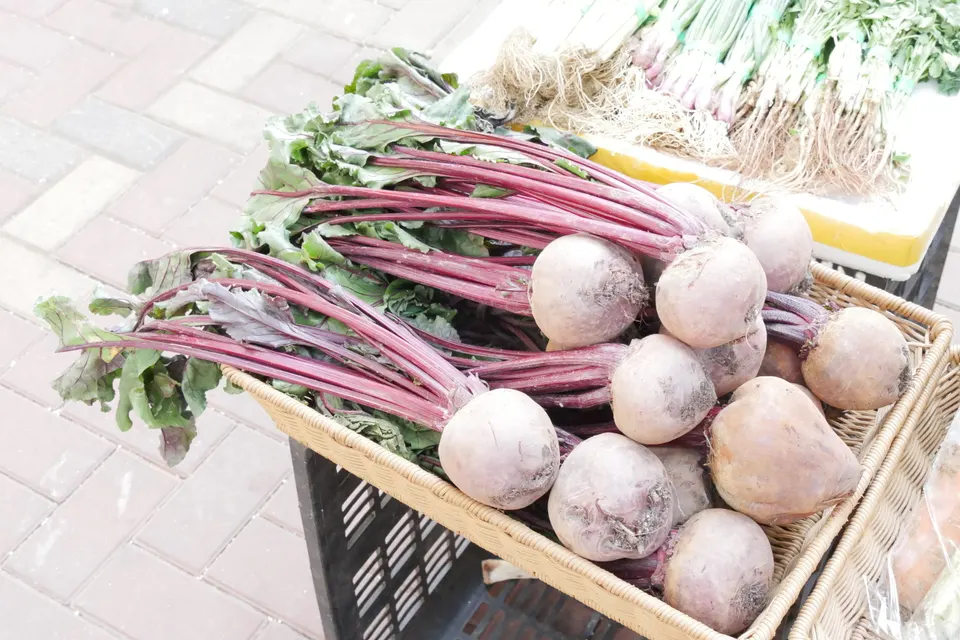
Beets give you two crops in one: the root everyone thinks of, plus edible greens that can be harvested along the way without ruining the root underneath. They’re also more tolerant of imperfect soil than carrots or other root crops, which makes them a good choice for a bed that isn’t perfectly loose and stone-free.
Sowing a cluster, not a single seed
Direct-seed about three weeks before your last frost; what beets sell as “seed” is a small dried fruit cluster, not a true seed, and it often sprouts several seedlings each, so thinning is normal and expected. At 55 days to maturity and nine plants per square foot, they take a middle amount of space and time compared to other root crops. Thinned seedlings are edible too. Don’t just discard them.
Crowding, and the leaf spot that follows humidity
Roots that stay small and woody usually trace back to crowding. Beets left unthinned compete hard with each other underground. Cercospora leaf spot, small tan spots with reddish-purple borders on the leaves, is the most common disease issue in humid conditions; resistant varieties help more than spraying once it’s established.
Forgiving of bad soil, less forgiving of beans
Onion is a documented companion, deterring some beet pests without competing heavily for space. See the full companion guide for beets. Beans are worth keeping at a distance in your bed layout in the Garden Designer, since they can stunt beet growth when planted too close together.
Companion planting guide for Beet · Find your planting dates
Typically viable in USDA zones 2-10. Not sure your zone? Look it up by ZIP code.
Mature height: 1-1.5 ft
Method: Direct sow: Direct-sow outside. It doesn't transplant well, or doesn't need the extra time indoors.
When to plant beet, by zone
Every zone beet grows in. Pick your zone in the header and it will be highlighted here. Each zone links to its full page.
| Zone | Start indoors | Sow or plant out | Harvest |
|---|---|---|---|
| 2a & 2bSpring window | Not usually | Apr 29–May 6 | Jun 23–Jun 30 |
| Fall window | Not usually | Jun 24–Jul 8 | Aug 18–Sep 1 |
| 3a & 3b | Not usually | May 9–May 16 | Jul 3–Jul 10 |
| 4a & 4bSpring window | Not usually | Apr 24–May 1 | Jun 18–Jun 25 |
| Fall window | Not usually | Jul 13–Jul 27 | Sep 6–Sep 20 |
| 5a & 5bSpring window | Not usually | Apr 19–Apr 26 | Jun 13–Jun 20 |
| Fall window | Not usually | Jul 28–Aug 11 | Sep 21–Oct 5 |
| 6a & 6bSpring window | Not usually | Apr 4–Apr 11 | May 29–Jun 5 |
| Fall window | Not usually | Aug 7–Aug 21 | Oct 1–Oct 15 |
| 7a & 7bSpring window | Not usually | Mar 20–Mar 27 | May 14–May 21 |
| Fall window | Not usually | Aug 17–Aug 31 | Oct 11–Oct 25 |
| 8a & 8bSpring window | Not usually | Mar 4–Mar 11 | Apr 28–May 5 |
| Fall window | Not usually | Sep 2–Sep 16 | Oct 27–Nov 10 |
| 9a & 9bSpring window | Not usually | Jan 25–Feb 1 | Mar 21–Mar 28 |
| Fall window | Not usually | Sep 27–Oct 11 | Nov 21–Dec 5 |
| 10a & 10bFall window | Aug–Jan | Sep–Feb | ~55 days after transplanting |
Harvest dates are about 55 days after the sow or plant-out date.
Zone 2 sows before zone 3 here, which looks wrong and is not. USDA zones rank winter cold, not season length, and zone 2 is mostly interior Alaska, where hard winters come with warm summers. More on what a zone measures.
See exact start-indoors, direct-sow, and harvest dates for your zone →
How many Beet plants fit per square foot?
Spacing: 9 per square foot (square-foot-gardening spacing). Mature height: 1-1.5 ft.
Soil & water: pH 6.2-6.5. Needs well-drained soil. Amend with lime if soil pH falls below 6.2.
Good companions for beet
- Onion: Neither competes heavily; onions deter some beet pests.
Full companion guide, including what to keep away from beet →
Varieties worth considering
- Bull's Blood: Cornell's vegetable disease-resistance trials found leaf spot (cercospora) severity on Bull's Blood was consistently lower than on all other cultivars tested across multiple growing seasons, a solid choice where cercospora leaf spot is a recurring problem. (source) Buy seeds: Botanical Interests · True Leaf Market · Burpee
- Touchstone Gold: The top performer in Cornell's own trials, remaining almost free of Cercospora symptoms across two separate growing seasons in Florida testing. Golden-orange flesh instead of red, which also means it doesn't bleed the way a red beet does when you're cooking with it. (source) Buy seeds: Botanical Interests · High Mowing Organic Seeds
- Chioggia Guardsmark: The candy-striped Italian heirloom, pink-and-white rings when sliced, at 55 days. Worth knowing this one trades some of the disease resistance above for the color: standard Chioggia types tested more susceptible to Cercospora than Bull's Blood or Touchstone Gold, so treat it as the showpiece variety, not the one to plant if leaf spot has already been a problem in your beds. (source) Buy seeds: High Mowing Organic Seeds
Why each variety is listed comes from the source shown next to it. We haven't grown these ourselves yet, so treat this as a research-backed starting point, not a personal endorsement. The buy links are separate from those sources: they go to seed suppliers that sell that exact variety, and we may earn a commission on some of them.
Where to buy beet seeds
Botanical Interests · True Leaf Market · Burpee · High Mowing Organic Seeds (each supplier's beet seeds)
The varieties we recommend above each have their own buy links, for the suppliers that sell that exact variety.
As an Amazon Associate we earn from qualifying purchases. Some links on this page also go to other retailers we may earn a commission from as an affiliate, at no extra cost to you. We only recommend products with a clear consensus of positive, independent reviews, or ones we bought and use ourselves. Each item on our gear page says which.
See it growing
Search YouTube for "growing beet" videos → (a live search, not a hand-picked video; results vary and aren't vetted by us)

Pin this for later
Growing Beet: A two-for-one crop: root and greens both edible. That's more forgiving of soil than most root vegetables.
Save to Pinterest