Growing Johnny Jump Up: A Complete Profile
By Growing Home Greens Team · August 19, 2026
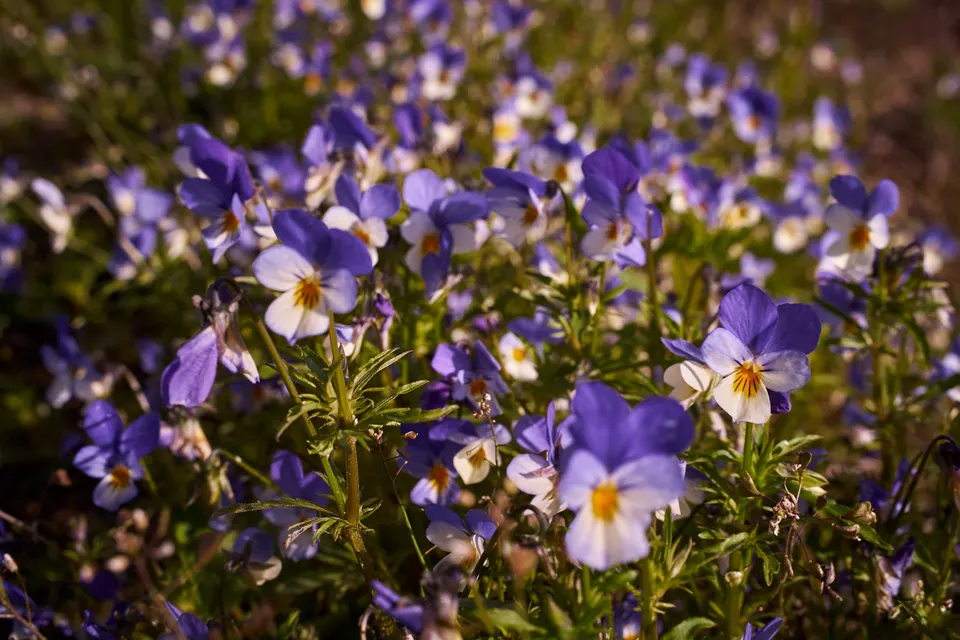
Johnny jump up is Viola tricolor, the wild species that garden pansies were bred from. It is grown much the same way and behaves differently once it is in the ground.
Smaller flowers, more of them, and it comes back
Compared with our pansy entry, Viola x wittrockiana, the flowers here are a fraction of the size and there are many more of them per plant. NC State Extension lists it as annual, perennial and short-lived herbaceous perennial all at once, which is a fair description of a plant that dies out after a season or two and freely reseeds itself in the meantime.
That self-sowing is the practical difference. A pansy is finished when it is finished. Johnny jump up turns up next spring in the path, the neighbouring square, and the gap in the paving. Most people count this as a feature. If you do not, deadhead before the seed sets.
Start it indoors, plant it out early
Sowing follows the same pattern as pansy: about ten weeks indoors before your last frost, seed an eighth of an inch deep and covered, because it needs darkness to germinate. It goes outside roughly two weeks before the last frost, being tolerant of cold that would set back a warm-season flower.
A cool-season plant that sulks in July
It flowers best at the two cool ends of the season and slows through high summer, which is why our calendar marks it heat sensitive. In mild-winter zones it is often treated as a fall-planted flower that carries through winter and finishes in late spring.
The flowers are edible
Unlike most of the flower list here, the blooms are edible and commonly used on salads and cakes. Only eat flowers you grew yourself and did not spray.
Source: NC State Extension Gardener Plant Toolbox, Viola tricolor.
Companion planting guide for Johnny Jump Up · Find your planting dates
Typically viable in USDA zones 2-9. Not sure your zone? Look it up by ZIP code.
Mature height: 3-10 in
Method: Start indoors: Start indoors from seed, then transplant outside. It needs a head start most zones can't give it by direct-sowing alone.
When to plant Johnny jump up, by zone
Every zone Johnny jump up grows in. Pick your zone in the header and it will be highlighted here. Each zone links to its full page.
| Zone | Start indoors | Sow or plant out | Bloom |
|---|---|---|---|
| 2a & 2b | Mar 11–Mar 18 | May 6–May 13 | Jul 10–Jul 17 |
| 3a & 3b | Mar 21–Mar 28 | May 16–May 23 | Jul 20–Jul 27 |
| 4a & 4b | Mar 6–Mar 13 | May 1–May 8 | Jul 5–Jul 12 |
| 5a & 5b | Mar 1–Mar 8 | Apr 26–May 3 | Jun 30–Jul 7 |
| 6a & 6b | Feb 14–Feb 21 | Apr 11–Apr 18 | Jun 15–Jun 22 |
| 7a & 7b | Jan 30–Feb 6 | Mar 27–Apr 3 | May 31–Jun 7 |
| 8a & 8b | Jan 14–Jan 21 | Mar 11–Mar 18 | May 15–May 22 |
| 9a & 9b | Dec 7–Dec 14 | Feb 1–Feb 8 | Apr 7–Apr 14 |
Bloom dates are about 65 days after the sow or plant-out date, not after starting seeds indoors.
Zone 2 sows before zone 3 here, which looks wrong and is not. USDA zones rank winter cold, not season length, and zone 2 is mostly interior Alaska, where hard winters come with warm summers. More on what a zone measures.
See exact start-indoors, direct-sow, and harvest dates for your zone →
How many Johnny Jump Up plants fit per square foot?
Spacing: 4 per square foot (square-foot-gardening spacing). Mature height: 3-10 in.
Where to buy Johnny jump up seeds
None of the seed suppliers we list carries Johnny jump up seeds right now. A local garden center or a specialty seed house is the place to look.
As an Amazon Associate we earn from qualifying purchases. Some links on this page also go to other retailers we may earn a commission from as an affiliate, at no extra cost to you. We only recommend products with a clear consensus of positive, independent reviews, or ones we bought and use ourselves. Each item on our gear page says which.
See it growing
Search YouTube for "growing Johnny jump up" videos → (a live search, not a hand-picked video; results vary and aren't vetted by us)

Pin this for later
Growing Johnny Jump Up: The wild viola behind the garden pansy: smaller flowers, far more of them, edible, and it self-sows.
Save to Pinterest