Growing Daikon Radish: A Complete Profile
By Growing Home Greens Team · August 10, 2026
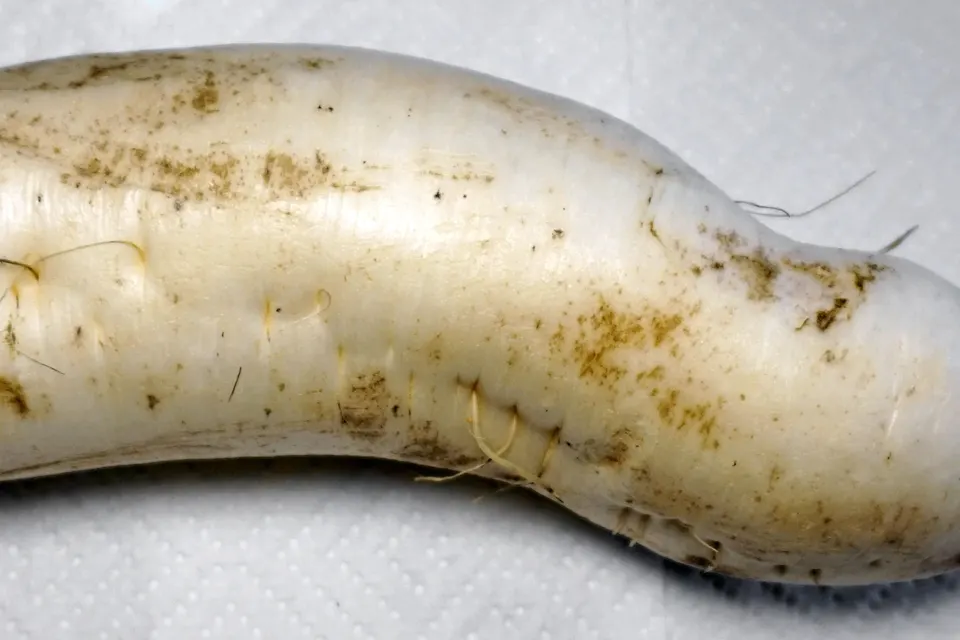
Daikon radish is a much larger, longer-rooted relative of the standard salad radish already covered on this site, different enough in growing needs to warrant its own profile rather than a variety note tacked onto the smaller root.
Deep soil, timed sowing
Direct-seed only, sowing about 10 seeds per foot, thinned to 4 to 6 inches apart in rows 18 inches apart. The root needs friable, well-drained soil worked deeply, in raised beds if possible, the same requirement as burdock and carrots, to grow long and straight rather than forked or stubby. Note the planting season carefully on whatever variety you choose; sowing at the wrong time of year is the most common cause of bolting before a usable root forms.
Harvest carefully
Fork or undermine the soil around the root rather than pulling straight up, which lifts the long root without snapping it. Store at 32°F and 95 percent relative humidity for up to 6 to 10 weeks, with tops cut 2 inches above the crown before washing and refrigerating.
Daikon radish has no well-established companion pairings, and nothing it needs to be kept away from. At 4 plants per square foot, it needs the same deep-soil planning in the Garden Designer as other long-rooted crops like burdock or parsnip.
Source: Daikon/Korean & Specialty Radishes: Key Growing Information, Johnny’s Selected Seeds.
Companion planting guide for Daikon Radish · Find your planting dates
Typically viable in USDA zones 2-11. Not sure your zone? Look it up by ZIP code.
Mature height: 1-1.5 ft
Method: Direct sow: Direct-sow outside. It doesn't transplant well, or doesn't need the extra time indoors.
When to plant daikon radish, by zone
Every zone daikon radish grows in. Pick your zone in the header and it will be highlighted here. Each zone links to its full page.
| Zone | Start indoors | Sow or plant out | Harvest |
|---|---|---|---|
| 2a & 2b | Not usually | May 20–May 27 | Jul 19–Jul 26 |
| 3a & 3b | Not usually | May 30–Jun 6 | Jul 29–Aug 5 |
| 4a & 4b | Not usually | May 15–May 22 | Jul 14–Jul 21 |
| 5a & 5b | Not usually | May 10–May 17 | Jul 9–Jul 16 |
| 6a & 6b | Not usually | Apr 25–May 2 | Jun 24–Jul 1 |
| 7a & 7b | Not usually | Apr 10–Apr 17 | Jun 9–Jun 16 |
| 8a & 8b | Not usually | Mar 25–Apr 1 | May 24–May 31 |
| 9a & 9b | Not usually | Feb 15–Feb 22 | Apr 16–Apr 23 |
| 10a & 10b | Not usually | Jan 30–Feb 6 | Mar 31–Apr 7 |
| 11a & 11b | Not usually | Jan 1–Jan 8 | Mar 2–Mar 9 |
Harvest dates are about 60 days after the sow or plant-out date.
Zone 2 sows before zone 3 here, which looks wrong and is not. USDA zones rank winter cold, not season length, and zone 2 is mostly interior Alaska, where hard winters come with warm summers. More on what a zone measures.
See exact start-indoors, direct-sow, and harvest dates for your zone →
How many Daikon Radish plants fit per square foot?
Spacing: 4 per square foot (square-foot-gardening spacing). Mature height: 1-1.5 ft.
Good companions for daikon radish
- Napa Cabbage (Chinese Cabbage): Daikon is the documented flea-beetle trap crop cited on the brassica pages (napa cabbage, komatsuna, gai lan, kalettes, flower sprouts, broccoli rabe, broccolini, sea kale, rutabaga, mizuna, tatsoi): flea beetles prefer its mustard oils and it can be sacrificed or pulled once infested. Same UMN research, credited here from daikon's own side of the pairing.
- Komatsuna: See the daikon/napa-cabbage entry: same trap-crop mechanism.
- Gai Lan (Chinese Broccoli): See the daikon/napa-cabbage entry: same trap-crop mechanism.
- Kalettes: See the daikon/napa-cabbage entry: same trap-crop mechanism.
- Flower Sprouts: See the daikon/napa-cabbage entry: same trap-crop mechanism.
- Broccoli Rabe (Raab): See the daikon/napa-cabbage entry: same trap-crop mechanism.
- Broccolini: See the daikon/napa-cabbage entry: same trap-crop mechanism.
- Sea Kale: See the daikon/napa-cabbage entry: same trap-crop mechanism.
- Rutabaga: See the daikon/napa-cabbage entry: same trap-crop mechanism.
- Mizuna: See the daikon/napa-cabbage entry: same trap-crop mechanism.
- Tatsoi: See the daikon/napa-cabbage entry: same trap-crop mechanism.
Full companion guide, including what to keep away from daikon radish →
Varieties worth considering
- 'Alpine' daikon: Johnny's Selected Seeds recommends this as a traditional Korean-style daikon with exceptional flavor, well suited for kimchi and other preserved uses that call for a genuine long daikon root. (source)
- 'Miyashige' daikon (best for: traditional fall harvest): Johnny's Selected Seeds lists this as a traditional fall-harvest daikon of the highest quality, an open-pollinated option where the hybrids above aren't wanted. (source) Buy seeds: Botanical Interests
- 'KN-Bravo' (F1) radish (best for: color): Johnny's Selected Seeds describes this as an attractive purple-rooted daikon type with sweet flavor and good eating quality, worth growing alongside a white daikon for a two-tone harvest. (source)
Why each variety is listed comes from the source shown next to it. We haven't grown these ourselves yet, so treat this as a research-backed starting point, not a personal endorsement. The buy links are separate from those sources: they go to seed suppliers that sell that exact variety, and we may earn a commission on some of them.
Where to buy daikon radish seeds
The varieties we recommend above each have their own buy links, for the suppliers that sell that exact variety.
As an Amazon Associate we earn from qualifying purchases. Some links on this page also go to other retailers we may earn a commission from as an affiliate, at no extra cost to you. We only recommend products with a clear consensus of positive, independent reviews, or ones we bought and use ourselves. Each item on our gear page says which.
See it growing
Search YouTube for "growing daikon radish" videos → (a live search, not a hand-picked video; results vary and aren't vetted by us)

Pin this for later
Growing Daikon Radish: A much larger, longer-rooted radish than the standard salad radish, needing the same deep, loose soil as carrots and burdock to grow straight.
Save to Pinterest