Growing Sea Kale: A Complete Profile
By Growing Home Greens Team · August 10, 2026
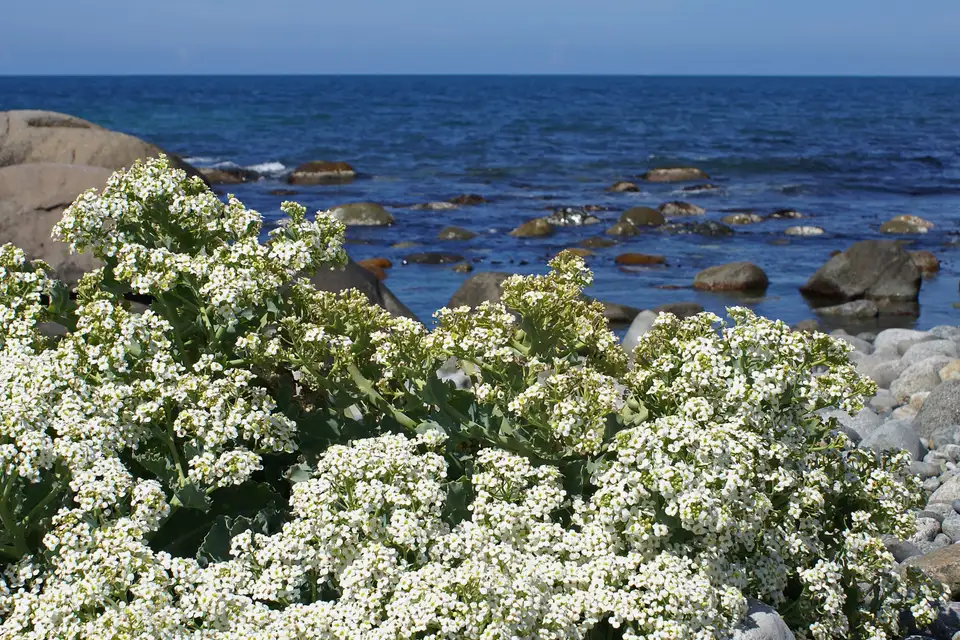
Sea kale is a Brassica-family perennial from European seashores that was a popular Victorian-era vegetable and has never quite managed a comeback since, despite being easy to grow in much of the US outside hot, humid summers.
Grown for shoots, not leaves
Unlike most brassicas here, sea kale isn’t picked for continuous leaf harvest. It’s grown mainly for its spring shoots, which are blanched pale and tender by covering the crown early in spring to exclude light entirely, the classic way it’s served. The leaves, flower florets, roots, and immature seed pods are all edible too, if less traditionally prized.
A true, long-lived perennial
Plants need to be established for 2 years before the first shoot harvest. After that, a gently-treated plant, not pushed for every last shoot and not allowed to go to seed while its reserves are low, stays productive for many years. Push it too hard and it may only last three. It’s frost-resistant, somewhat drought-tolerant, and shrugs off salt spray and wind, but it dislikes hot, humid summers more than most brassicas here, doing best around USDA zone 6.
Skip the container
Sea kale has an extensive root system that makes it a poor container plant; it wants open ground with room to establish. Named varieties are propagated by root cuttings called “thongs” to keep them true-to-type, while unimproved plants can also be grown from seed, though more slowly.
Sea kale has no well-established companion pairings, and nothing it needs to be kept away from. Give it a permanent, dedicated spot in the Garden Designer rather than folding it into an annual rotation.
Sources: Sea Kale and Other Crambes and Sea Kale (Crambe maritima) and Relatives, Cultivariable.
Companion planting guide for Sea Kale · Find your planting dates
Typically viable in USDA zones 4-8. Not sure your zone? Look it up by ZIP code.
Mature height: 1.5-2.5 ft
Method: Direct sow: Direct-sow outside. It doesn't transplant well, or doesn't need the extra time indoors.
When to plant sea kale, by zone
Every zone sea kale grows in. Pick your zone in the header and it will be highlighted here. Each zone links to its full page.
| Zone | Start indoors | Sow or plant out | Harvest |
|---|---|---|---|
| 4a & 4b | Not usually | May 1–May 8 | First real harvest in year 3 |
| 5a & 5b | Not usually | Apr 26–May 3 | First real harvest in year 3 |
| 6a & 6b | Not usually | Apr 11–Apr 18 | First real harvest in year 3 |
| 7a & 7b | Not usually | Mar 27–Apr 3 | First real harvest in year 3 |
| 8a & 8b | Not usually | Mar 11–Mar 18 | First real harvest in year 3 |
See exact start-indoors, direct-sow, and harvest dates for your zone →
How many Sea Kale plants fit per square foot?
Spacing: about 4 square feet per plant (square-foot-gardening spacing). Mature height: 1.5-2.5 ft.
Good companions for sea kale
- Radish: Radish (including the daikon form) is a documented trap crop for flea beetles, which prefer its mustard oils over other brassicas and can be sacrificed or pulled once infested: the same research cited on the radish page. A different genus (Crambe) from most brassicas here, but the same family and the same flea-beetle vulnerability.
Full companion guide, including what to keep away from sea kale →
Varieties worth considering
- Sea Kale: Cultivariable, a US specialty-crop grower, sells sea kale as the straight species rather than named cultivars, propagated mainly by root cuttings ('thongs') to keep plants true-to-type. (source)
Why each variety is listed comes from the source shown next to it. We haven't grown these ourselves yet, so treat this as a research-backed starting point, not a personal endorsement. The buy links are separate from those sources: they go to seed suppliers that sell that exact variety, and we may earn a commission on some of them.
Where to buy sea kale seeds
None of the seed suppliers we list carries sea kale seeds right now. A local garden center or a specialty seed house is the place to look.
As an Amazon Associate we earn from qualifying purchases. Some links on this page also go to other retailers we may earn a commission from as an affiliate, at no extra cost to you. We only recommend products with a clear consensus of positive, independent reviews, or ones we bought and use ourselves. Each item on our gear page says which.
See it growing
Search YouTube for "growing sea kale" videos → (a live search, not a hand-picked video; results vary and aren't vetted by us)

Pin this for later
Growing Sea Kale: A Victorian-era perennial vegetable from European seashores, grown mostly for spring shoots forced pale and tender under cover rather than for continuous leaf harvest.
Save to Pinterest