Growing Dahlia: A Complete Profile
By Growing Home Greens Team · July 18, 2026
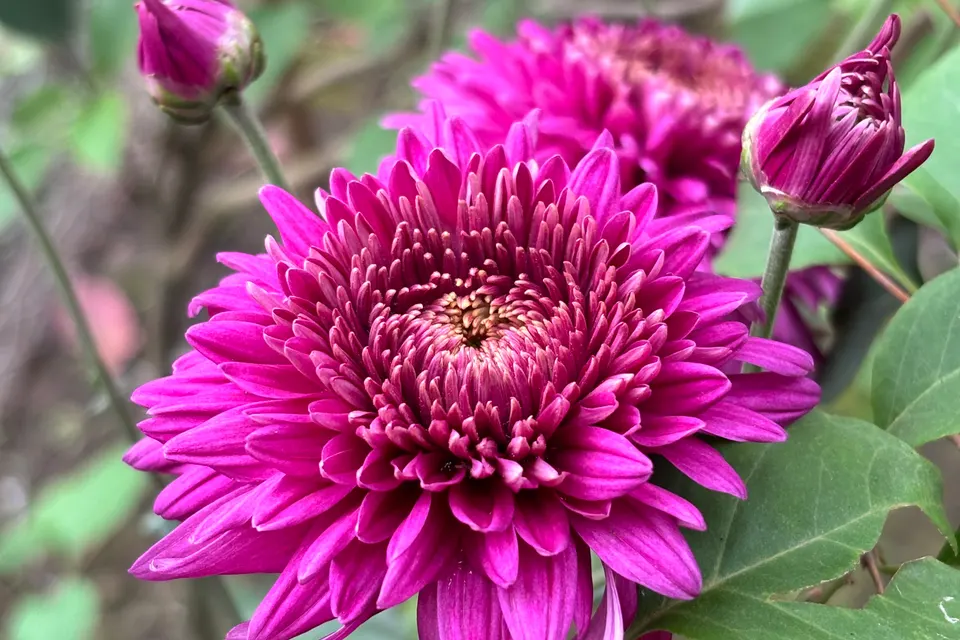
Dahlia is the one flower in this garden that doesn’t start as seed at all. It grows from a tuber, planted like a potato, which changes the whole rhythm of how it goes in the ground and comes out at season’s end. Blooms run from small pompoms to dinner-plate-sized flower heads, in nearly every color except true blue, on plants that range from 1 to 5 feet depending on type.
Planting a tuber, not a seed
Plant tubers directly in the ground about 2 weeks after your last frost, once the soil has warmed and all frost danger has passed. There’s no indoor seed-starting step to plan around. Budget a full square foot per plant for standard varieties, but dinnerplate types (the ones with dinner-plate-sized blooms) need roughly 4 square feet each, so check which type you’re planting before you commit bed space. It reaches bloom in around 90 days. Below zone 8, dahlia tubers won’t survive winter in the ground. They need to be dug up in fall and stored indoors over winter, then replanted the following spring.
Rotted tubers trace back to storage, not the digging
Tubers that rot in storage almost always trace back to digging them before the foliage has died back from frost, or storing them somewhere too warm or too damp over winter, a cool, dark, slightly humid spot works best. Weak, spindly growth from an otherwise healthy-looking tuber is often just a tuber that’s been left undivided too long; large overgrown clumps produce more foliage than bloom and benefit from being divided every couple of years.
A late-season pollinator draw worth budgeting space for
Dahlia’s large, late-summer blooms are a strong draw for pollinators at a time of year when many earlier-season flowers have faded. See the full companion guide for dahlia. Because dinnerplate varieties can need up to 4 square feet each, plan dahlia’s footprint carefully in the Garden Designer before committing bed space, rather than assuming it fits like a standard one-square-foot flower.
Companion planting guide for Dahlia · Find your planting dates
Typically viable in USDA zones 3-11. Not sure your zone? Look it up by ZIP code.
Mature height: 1-5 ft
Method: Direct sow: Direct-sow outside. It doesn't transplant well, or doesn't need the extra time indoors.
When to plant dahlia, by zone
Every zone dahlia grows in. Pick your zone in the header and it will be highlighted here. Each zone links to its full page.
| Zone | Start indoors | Sow or plant out | Bloom |
|---|---|---|---|
| 3a & 3b | Not usually | Jun 13–Jun 20 | Sep 11–Sep 18 |
| 4a & 4b | Not usually | May 29–Jun 5 | Aug 27–Sep 3 |
| 5a & 5b | Not usually | May 24–May 31 | Aug 22–Aug 29 |
| 6a & 6b | Not usually | May 9–May 16 | Aug 7–Aug 14 |
| 7a & 7b | Not usually | Apr 24–May 1 | Jul 23–Jul 30 |
| 8a & 8b | Not usually | Apr 8–Apr 15 | Jul 7–Jul 14 |
| 9a & 9b | Not usually | Mar 1–Mar 8 | May 30–Jun 6 |
| 10a & 10bSpring window | Not usually | Feb–Apr | ~90 days after direct-sowing |
| 11a & 11b | Not usually | Jan 15–Jan 22 | Apr 15–Apr 22 |
Bloom dates are about 90 days after the sow or plant-out date.
See exact start-indoors, direct-sow, and harvest dates for your zone →
How many Dahlia plants fit per square foot?
Spacing: 1 per square foot (square-foot-gardening spacing). Mature height: 1-5 ft.
Varieties worth considering
- 'Cornell' (ball type): The American Dahlia Society's beginner buying guide lists 'Cornell' among its recommended ball-type varieties for new growers, a reasonable starting point given the group's broader advice to buy proven, widely available types from a reputable grower rather than chasing an unfamiliar cultivar first. (source)
- 'Zorro' (AA giant): Also on the American Dahlia Society's recommended list, in their largest AA size class, a dark red giant. Pick this over Cornell's ball type if you want the biggest bloom on the plant rather than a tidy, uniform sphere. (source)
- 'Clearview Daniel' (ball type): A second ball-type option from the same ADS guide, a yellow to contrast with Cornell if you want more than one variety of the same reliable, beginner-friendly form. (source)
- 'Cafe au Lait' (dinnerplate) (best for: dinnerplate blooms, cut flowers): American Meadows lists 6-10 inch buttermilk blooms blushed pink and latte-brown on 36-48 inch plants, a genuine dinnerplate type needing the roughly 4 square feet this profile flags for that class, well beyond the footprint Cornell or Clearview Daniel's ball types need. A favorite for wedding bouquets specifically because of the bloom size. (source)
Why each variety is listed comes from the source shown next to it. We haven't grown these ourselves yet, so treat this as a research-backed starting point, not a personal endorsement. The buy links are separate from those sources: they go to seed suppliers that sell that exact variety, and we may earn a commission on some of them.
Where to buy dahlia bulbs
We haven't vetted bulb/tuber suppliers yet. Our seed-supplier list doesn't carry these.
As an Amazon Associate we earn from qualifying purchases. Some links on this page also go to other retailers we may earn a commission from as an affiliate, at no extra cost to you. We only recommend products with a clear consensus of positive, independent reviews, or ones we bought and use ourselves. Each item on our gear page says which.
See it growing
Search YouTube for "growing dahlia" videos → (a live search, not a hand-picked video; results vary and aren't vetted by us)

Pin this for later
Growing Dahlia: A tuber-grown showpiece flower, not a seed crop, that needs digging and storing over winter in most climates.
Save to Pinterest