Growing Chamomile (German): A Complete Profile
By Growing Home Greens Team · July 29, 2026
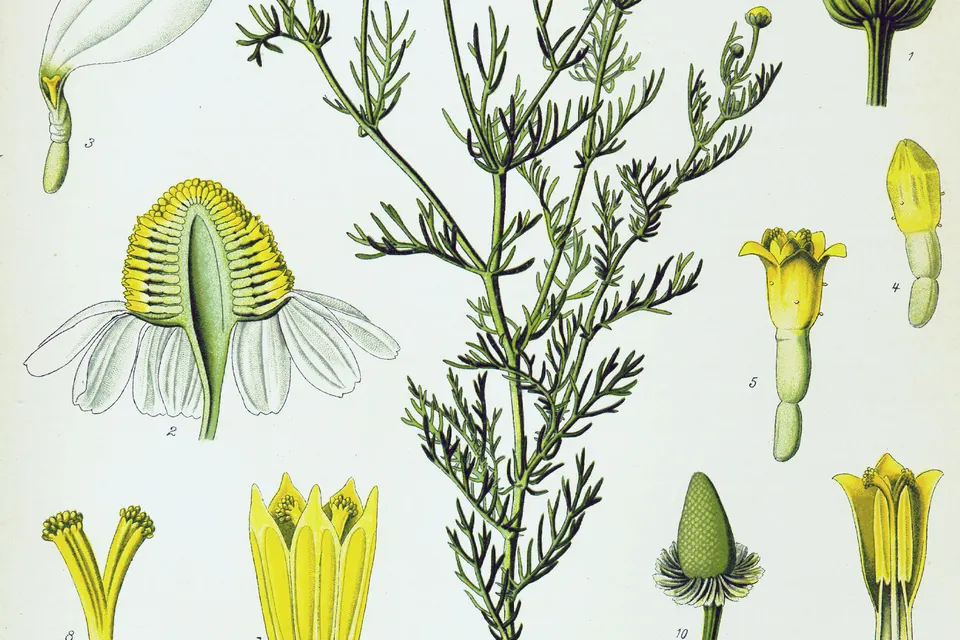
German chamomile is grown for its small, daisy-like flowers, dried for tea, and it earns extra credit in a vegetable garden for the beneficial insects its blooms attract.
Sowing it
Start indoors about 6 weeks before your last frost, or direct-sow right around that date, either way, scatter seed on the surface and leave it uncovered, since it needs light to germinate. It moves fast, reaching bloom in about 60 days, and plants in dense.
Plain seed sold as “German chamomile” is fine for a few plants of tea, but if you’re growing enough to dry and use through the winter, ‘Bodegold’ is bred for exactly that: more flowers, an upright habit that’s easier to pick from, and field trials showing it out-yielding older strains.
It’s a cool-season annual: expect it to bolt and stop flowering once summer heat sets in, so treat it as a spring (and, in mild climates, fall) crop rather than an all-summer one.
Heat is the only real limitation
Chamomile is generally easygoing, and its main limitation is simply the heat, a planting that stalls out and stops flowering in midsummer isn’t diseased, it’s just done for the season. Succession-sow a fresh batch for fall if you want a second bloom window once temperatures ease.
Pest management with a tea harvest attached
Chamomile’s traditional pairing with cabbage is thought to help mask the scent brassica pests key in on, and with onion it’s a traditional pairing said to improve flavor and growth in both. See the full companion guide for chamomile. Its blooms draw in hoverflies and parasitic wasps that prey on aphids, which is a practical reason to tuck a patch near aphid-prone crops in the Garden Designer, beyond the tea harvest itself.
Sources: German Chamomile, Montana State University Western Agricultural Research Center.
Companion planting guide for Chamomile (German) · Find your planting dates
Typically viable in USDA zones 2-10. Not sure your zone? Look it up by ZIP code.
Mature height: 1-2 ft
Method: Start indoors: Start indoors from seed, then transplant outside. It needs a head start most zones can't give it by direct-sowing alone.
When to plant chamomile (German), by zone
Every zone chamomile (German) grows in. Pick your zone in the header and it will be highlighted here. Each zone links to its full page.
| Zone | Start indoors | Sow or plant out | Harvest |
|---|---|---|---|
| 2a & 2b | Apr 8–Apr 15 | May 20–May 27 | Jul 19–Jul 26 |
| 3a & 3b | Apr 18–Apr 25 | May 30–Jun 6 | Jul 29–Aug 5 |
| 4a & 4b | Apr 3–Apr 10 | May 15–May 22 | Jul 14–Jul 21 |
| 5a & 5b | Mar 29–Apr 5 | May 10–May 17 | Jul 9–Jul 16 |
| 6a & 6b | Mar 14–Mar 21 | Apr 25–May 2 | Jun 24–Jul 1 |
| 7a & 7b | Feb 27–Mar 6 | Apr 10–Apr 17 | Jun 9–Jun 16 |
| 8a & 8b | Feb 11–Feb 18 | Mar 25–Apr 1 | May 24–May 31 |
| 9a & 9b | Jan 4–Jan 11 | Feb 15–Feb 22 | Apr 16–Apr 23 |
| 10a & 10bFall window | Aug–Jan | Oct–Mar | ~60 days after transplanting |
Harvest dates are about 60 days after the sow or plant-out date, not after starting seeds indoors.
Zone 2 sows before zone 3 here, which looks wrong and is not. USDA zones rank winter cold, not season length, and zone 2 is mostly interior Alaska, where hard winters come with warm summers. More on what a zone measures.
See exact start-indoors, direct-sow, and harvest dates for your zone →
How many Chamomile (German) plants fit per square foot?
Spacing: 4 per square foot (square-foot-gardening spacing). Mature height: 1-2 ft.
Good companions for chamomile (German)
- Cabbage: Reputed to mask the scent brassica pests key in on and improve growth nearby.
- Onion: Traditional companion pairing said to improve flavor and growth.
Full companion guide, including what to keep away from chamomile (German) →
Varieties worth considering
- 'Bodegold': A tetraploid strain bred for tea and oil production rather than looks. Montana State University's herb trials found it grew more upright than the older 'Bona' strain and produced the heaviest yields of the cultivars they tested, which matters if you're growing enough for a real harvest and not just a few flowers to look at. (source)
- 'Bona': The older strain Montana State trialed against Bodegold: flowers first each year with a more spreading habit, against Bodegold's more upright, mechanical-harvest-friendly growth. Montana's own raking trial got nearly 1,500 lb/acre of tea-grade flowers from Bona. (source)
- 'Zloty Lan': A Polish tetraploid bred for commercial production and high essential oil content (0.8-1.5%), a different breeding goal from Bodegold and Bona's tea-yield focus. Worth choosing if oil, not dried flowers, is the goal. (source)
Why each variety is listed comes from the source shown next to it. We haven't grown these ourselves yet, so treat this as a research-backed starting point, not a personal endorsement. The buy links are separate from those sources: they go to seed suppliers that sell that exact variety, and we may earn a commission on some of them.
Where to buy chamomile seeds
True Leaf Market · Burpee · High Mowing Organic Seeds (each supplier's chamomile seeds)
As an Amazon Associate we earn from qualifying purchases. Some links on this page also go to other retailers we may earn a commission from as an affiliate, at no extra cost to you. We only recommend products with a clear consensus of positive, independent reviews, or ones we bought and use ourselves. Each item on our gear page says which.
See it growing
Search YouTube for "growing chamomile (German)" videos → (a live search, not a hand-picked video; results vary and aren't vetted by us)
%3A%20A%20fast%2C%20cool-season%20herb%20that%20doubles%20as%20pest%20management%2C%20its%20blooms%20draw%20in%20the%20insects%20that%20prey%20on%20aphids.)
Pin this for later
Growing Chamomile (German): A fast, cool-season herb that doubles as pest management, its blooms draw in the insects that prey on aphids.
Save to Pinterest