Growing Brussels Sprouts: A Complete Profile
By Growing Home Greens Team · July 18, 2026
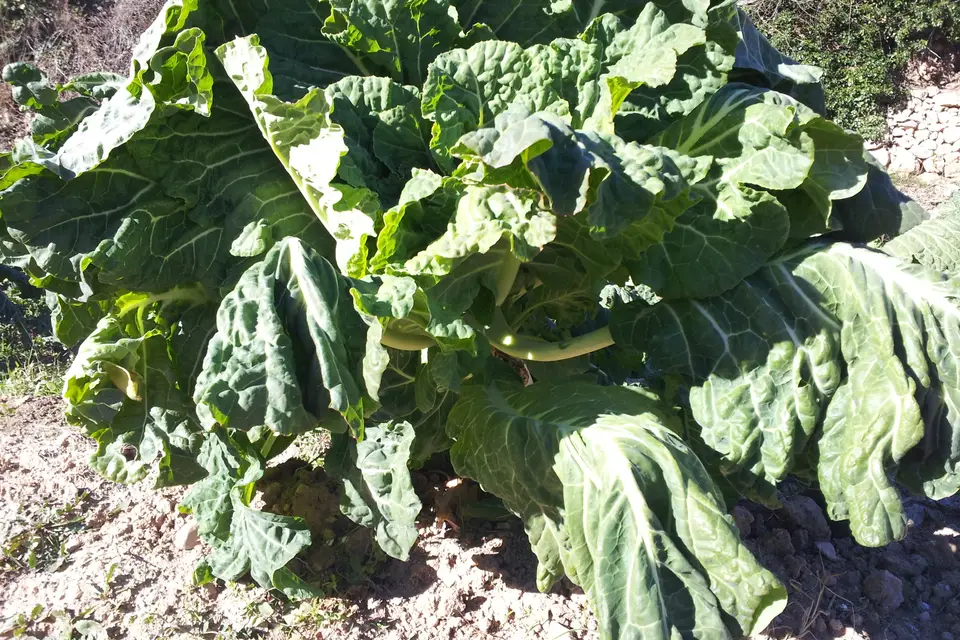
Brussels sprouts take longer to mature than almost anything else in the vegetable garden, close to a full season from seed to harvest, and they’re one of the few crops that improve with a touch of frost, which converts starches to sugars and softens the bitterness the vegetable is known for.
Starting it early for a long season ahead
Start seed indoors about six weeks before your last frost, same timing as broccoli and cauliflower, but budget for a much longer time in the ground afterward. Sprouts don’t start forming until the plant has built substantial height, and they mature from the bottom of the stalk upward over several weeks. In many climates this makes Brussels sprouts better suited to a fall harvest timed around the first frosts than a summer one.
Small sprouts trace back to nutrition or crowding
Small, loose sprouts are usually a nutrition or spacing problem. Brussels sprouts are heavy feeders and need consistent fertility through their long growing season, and crowding reduces sprout size across the whole stalk. Aphids can build up in the tight sprouts themselves, where they’re hard to rinse out; catching an infestation early, before sprouts close up, is much easier than dealing with it at harvest.
A long-season tenant worth planning around
Onions planted nearby can help confuse the cabbage moths that target Brussels sprouts, but keep it away from tomatoes, the two brassica and nightshade families tend to stunt each other in shared beds. See the full companion guide for Brussels sprouts. At one plant per square foot but occupying a bed for most of a season, the Garden Designer is useful for planning what else that square footage can hold before and after.
Companion planting guide for Brussels Sprouts · Find your planting dates
Typically viable in USDA zones 3-10. Not sure your zone? Look it up by ZIP code.
Mature height: 2-3 ft
Method: Start indoors: Start indoors from seed, then transplant outside. It needs a head start most zones can't give it by direct-sowing alone.
When to plant Brussels sprouts, by zone
Every zone Brussels sprouts grow in. Pick your zone in the header and it will be highlighted here. Each zone links to its full page.
| Zone | Start indoors | Sow or plant out | Harvest |
|---|---|---|---|
| 3a & 3b | Apr 18–Apr 25 | May 16–May 23 | Aug 19–Aug 26 |
| 4a & 4b | Apr 3–Apr 10 | May 1–May 8 | Aug 4–Aug 11 |
| 5a & 5b | Mar 29–Apr 5 | Apr 26–May 3 | Jul 30–Aug 6 |
| 6a & 6b | Mar 14–Mar 21 | Apr 11–Apr 18 | Jul 15–Jul 22 |
| 7a & 7bSpring window | Feb 27–Mar 6 | Mar 27–Apr 3 | Jun 30–Jul 7 |
| Fall window | Jun 10–Jun 24 | Jul 8–Jul 22 | Oct 11–Oct 25 |
| 8a & 8bSpring window | Feb 11–Feb 18 | Mar 11–Mar 18 | Jun 14–Jun 21 |
| Fall window | Jun 26–Jul 10 | Jul 24–Aug 7 | Oct 27–Nov 10 |
| 9a & 9bSpring window | Jan 4–Jan 11 | Feb 1–Feb 8 | May 7–May 14 |
| Fall window | Jul 21–Aug 4 | Aug 18–Sep 1 | Nov 21–Dec 5 |
| 10a & 10bFall window | Jul–Sep | Sep–Nov | ~95 days after transplanting |
Harvest dates are about 95 days after the sow or plant-out date, not after starting seeds indoors.
See exact start-indoors, direct-sow, and harvest dates for your zone →
How many Brussels Sprouts plants fit per square foot?
Spacing: 1 per square foot (square-foot-gardening spacing). Mature height: 2-3 ft.
Soil & water: pH 6.2-6.5. Needs well-drained soil. Amend with lime if soil pH falls below 6.2.
Good companions for Brussels sprouts
- Onion: Onion scent is reputed to confuse cabbage moths that target brassicas. The research behind this is real but garlic-specific (field trials intercropping garlic with cabbage reduced diamondback moth damage): onion hasn't been tested the same way, so treat the onion version as a reasonable extrapolation, not a directly measured result.
Full companion guide, including what to keep away from Brussels sprouts →
Varieties worth considering
- Diablo, Divino, and Nautic: A University of New Hampshire Extension variety trial (2013-2021, published 2022) found these three cultivars had the highest yields, most uniform sprouts, and best resistance to Alternaria leaf spot among the varieties tested. (source) Buy seeds: High Mowing Organic Seeds
- Jade Cross (F1): Harris Seeds lists this at a compact 85 days and 28 inches tall, notably earlier and shorter than the trial-tested varieties above, with sprouts less prone to wind damage on the shorter stalk. Useful if an early harvest or a windy site is the bigger constraint than raw yield. (source)
- Long Island Improved: A standard garden variety since the 1800s, open-pollinated so you can save your own seed, unlike the F1 hybrids above. At 100 days and a semi-dwarf 48 inches tall, it also fits a smaller garden better than some full-size types. (source) Buy seeds: Botanical Interests · Burpee
Why each variety is listed comes from the source shown next to it. We haven't grown these ourselves yet, so treat this as a research-backed starting point, not a personal endorsement. The buy links are separate from those sources: they go to seed suppliers that sell that exact variety, and we may earn a commission on some of them.
Where to buy Brussels sprout seeds
Botanical Interests · Burpee · High Mowing Organic Seeds (each supplier's Brussels sprout seeds)
The varieties we recommend above each have their own buy links, for the suppliers that sell that exact variety.
As an Amazon Associate we earn from qualifying purchases. Some links on this page also go to other retailers we may earn a commission from as an affiliate, at no extra cost to you. We only recommend products with a clear consensus of positive, independent reviews, or ones we bought and use ourselves. Each item on our gear page says which.
See it growing
Search YouTube for "growing Brussels sprouts" videos → (a live search, not a hand-picked video; results vary and aren't vetted by us)

Pin this for later
Growing Brussels Sprouts: The slowest brassica in the garden, nearly a full season to mature, and better-tasting after a frost, not despite one.
Save to Pinterest