Growing Asparagus: A Complete Profile
By Growing Home Greens Team · July 29, 2026
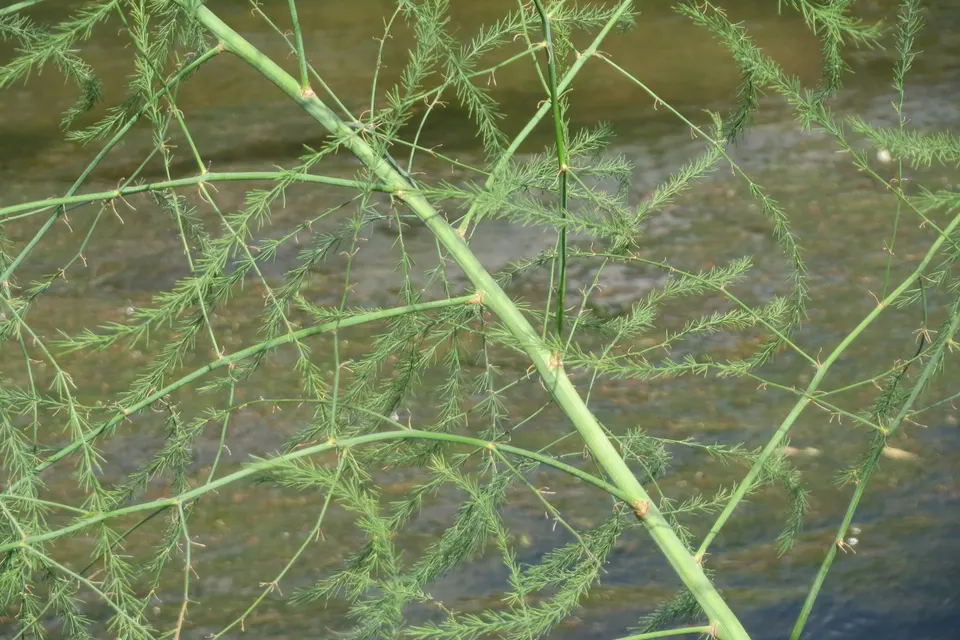
Asparagus asks for more patience than almost anything else in a vegetable garden. It’s planted from a crown, not a seed, and the bed it goes into is meant to stay put for a decade or more rather than getting reworked each season.
Planting the bed
Plant crowns in a trench 6 to 8 inches deep, about 2 weeks before your last frost, covering them 2 to 3 inches initially and backfilling gradually as spears emerge. Since the bed is a decade-plus commitment, it’s worth being deliberate about which crowns go into it. ‘Millennium’ is the variety most current extension guidance leads with, for its yield and cold hardiness across a range of soils.
There’s no harvest at all in year one, the plant needs that first season entirely to establish roots. Year two allows a light harvest, and full harvest starts in year three, after which a well-maintained bed can keep producing for 8 to 15 years or more. Give it a permanent spot rather than rotating it in with annual crops.
Impatience is the main mistake
The main mistake is impatience. Cutting spears in year one or harvesting too heavily in year two weakens the crown before it’s built up enough energy reserves to sustain years of future harvests. Thin, spindly spears in an established bed usually mean the planting is overcrowded or underfed; asparagus is a heavy feeder over its long life and benefits from a yearly top-dressing of compost.
A permanent bed of its own from the start
Asparagus has no well-established companion pairings, and nothing it needs to be kept away from. Because it’s a true perennial fixture rather than a seasonal crop, plan its spot in the Garden Designer as a permanent bed of its own from the start.
Sources: Growing asparagus in home gardens, University of Minnesota Extension.
Companion planting guide for Asparagus · Find your planting dates
Typically viable in USDA zones 3-9. Not sure your zone? Look it up by ZIP code.
Mature height: 4-5 ft
Method: Direct sow: Direct-sow outside. It doesn't transplant well, or doesn't need the extra time indoors.
When to plant asparagus, by zone
Every zone asparagus grows in. Pick your zone in the header and it will be highlighted here. Each zone links to its full page.
| Zone | Start indoors | Sow or plant out | Harvest |
|---|---|---|---|
| 3a & 3b | Not usually | May 16–May 23 | First real harvest in year 3 |
| 4a & 4b | Not usually | May 1–May 8 | First real harvest in year 3 |
| 5a & 5b | Not usually | Apr 26–May 3 | First real harvest in year 3 |
| 6a & 6b | Not usually | Apr 11–Apr 18 | First real harvest in year 3 |
| 7a & 7b | Not usually | Mar 27–Apr 3 | First real harvest in year 3 |
| 8a & 8b | Not usually | Mar 11–Mar 18 | First real harvest in year 3 |
| 9a & 9b | Not usually | Feb 1–Feb 8 | First real harvest in year 3 |
See exact start-indoors, direct-sow, and harvest dates for your zone →
How many Asparagus plants fit per square foot?
Spacing: about 2 square feet per plant (square-foot-gardening spacing). Mature height: 4-5 ft.
Soil & water: pH 6.2-6.8. Needs well-drained soil. Amend with lime if soil pH falls below 6.2.
Good companions for asparagus
- Tomato: Asparagus roots contain asparagusic acid, shown in lab studies to be nematicidal against root-knot nematode, a real threat to tomato. The classic pairing has real chemistry behind it, though the studies test the extract's effect on the nematode directly rather than measuring an outcome from interplanting the two in a shared bed.
Full companion guide, including what to keep away from asparagus →
Varieties worth considering
- 'Millennium': An all-male hybrid bred at the University of Guelph that has replaced 'Jersey Knight' as the variety most extension programs point to now. University of Minnesota trials found it out-yielded the Jersey series by a wide margin and rated it cold-hardy and adaptable to a range of soils, useful since a bed planted today is still supposed to be producing in fifteen years. (source)
- 'Jersey Knight': UMN Extension notes the Jersey series is popular and very high-yielding, though it can be damaged at -30°F without enough snow cover. Still widely grown even though Millennium has become the newer default, and still a reasonable pick where it's readily available. (source)
- 'Purple Passion': An open-pollinated purple variety UMN lists alongside the hybrids. A different color from the green types above, though open-pollinated asparagus generally yields less uniformly than an all-male hybrid like Millennium. (source)
Why each variety is listed comes from the source shown next to it. We haven't grown these ourselves yet, so treat this as a research-backed starting point, not a personal endorsement. The buy links are separate from those sources: they go to seed suppliers that sell that exact variety, and we may earn a commission on some of them.
Where to buy asparagus seeds
True Leaf Market · Burpee (each supplier's asparagus seeds)
As an Amazon Associate we earn from qualifying purchases. Some links on this page also go to other retailers we may earn a commission from as an affiliate, at no extra cost to you. We only recommend products with a clear consensus of positive, independent reviews, or ones we bought and use ourselves. Each item on our gear page says which.
See it growing
Search YouTube for "growing asparagus" videos → (a live search, not a hand-picked video; results vary and aren't vetted by us)

Pin this for later
Growing Asparagus: A two-year wait before the first cutting, and a bed that can keep producing for over a decade once it gets there.
Save to Pinterest