Quaking Aspen
Populus tremuloides, also called Trembling aspen
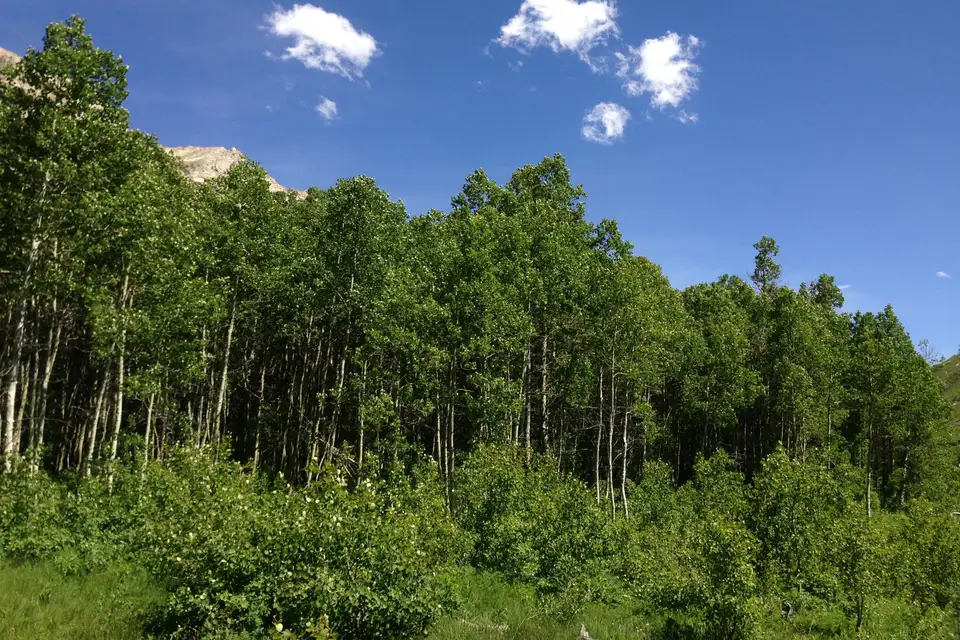
- Hardiness
- USDA zones 2-6
- Mature size
- 40 to 50 feet tall and 20 to 30 feet wide
- Native to
- The northern part of North America
- Sun
- Full sun; does not tolerate shade.
- Soil
- Moist, well-drained soil. Tolerates clay, alkaline, wet and dry sites, and is moderately drought tolerant.
- Growth
- Fast for the first 10 to 20 years, then slows. Individual trees live about 50 years; a clonal grove can last hundreds.
Before you plant one
- Suckers freely from its roots, so one tree tends to become a grove.
- Highly susceptible to ice storm damage.
- Doesn't transplant well.
- Needs cool summers: it does not tolerate summer heat, humidity or pollution.
Growing quaking aspen
Grown for its smooth, pale bark, bright yellow fall color, and leaves that tremble in the slightest breeze on their flattened stalks. Plant it in full sun in moist, rich, well-drained soil, and only where summers stay cool. In North Carolina, NC State notes, it grows wild in just one small mountain area with a zone 6 climate. The Morton Arboretum notes a cultivar, Prairie Gold ('NE Arb'), that handles Midwest heat, drought and humidity better.
Common problems
Short-lived and prone to problems when stressed or poorly sited: dieback, leaf spots, rusts, powdery mildew and cankers, plus caterpillars, borers, aphids and scale.
Questions people ask
What zones can I grow quaking aspen in?
USDA hardiness zones 2-6.
How big does quaking aspen get?
40 to 50 feet tall and 20 to 30 feet wide at maturity. Fast for the first 10 to 20 years, then slows. Individual trees live about 50 years; a clonal grove can last hundreds.