Growing Tulips: A Complete Profile
By Growing Home Greens Team · July 18, 2026
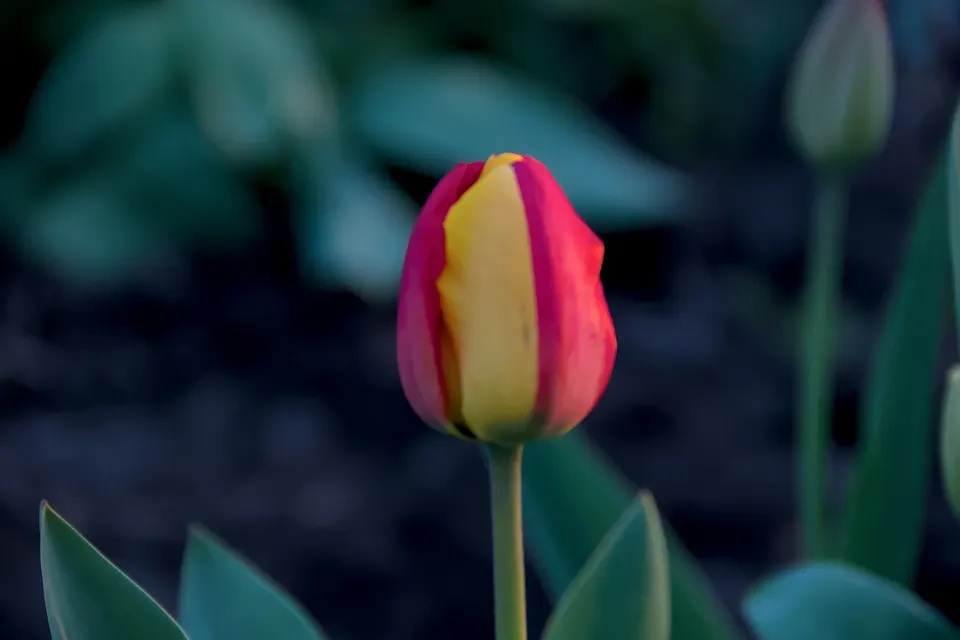
Tulips are planted in fall and bloom the following spring, which means the payoff for this year’s work doesn’t show up until next year: one upright, cup-shaped bloom per 12- to 24-inch stem, in almost any color except true blue. Even then, most hybrid tulips put on their best show once and fade in vigor after that. Treating them as a bulb you might replant rather than a permanent perennial saves a lot of disappointment.
Pre-chilling in warm zones, planting straight in cold ones
Plant bulbs pointy end up in fall, timed to your zone (see the planting calendar for exact months, since this shifts by several weeks between zone 3 and zone 8). Cold-winter zones plant straight into the ground; zone 8 gardeners need to pre-chill bulbs in the refrigerator for 10-14 weeks before planting, since the ground never gets cold enough on its own. After bloom, resist cutting back the foliage until it yellows and dies back on its own. That’s the plant recharging the bulb for next year, and cutting it early is the single biggest reason tulips fail to return.
Fewer flowers each year is normal decline, not a mistake
Fewer flowers or smaller blooms each year is normal decline for most hybrid tulips, not a growing mistake. Treat them as a multi-year bulb at best, or replant fresh bulbs annually if you want a consistently full display. Bulbs that rot in the ground usually sat in soil that didn’t drain well over winter; tulips want dry dormancy as much as they want cold. Squirrels and other rodents are also a serious threat to freshly planted bulbs. Darwin Hybrids and species tulips generally hold up better against neglect and marginal soil than tulips hold up against a determined squirrel.
Gone before the summer crops need the space
Tulips bloom early enough to finish before summer crops need the space, so they pair well with plants that fill in later. See the full companion guide for tulips for what works well planted around them. Because bulbs need a defined, undisturbed spot from fall through late spring, plan their placement in the Garden Designer around whatever will occupy that same bed once the tulips finish for the season.
Companion planting guide for Tulip · Find your planting dates
Typically viable in USDA zones 3-8. Not sure your zone? Look it up by ZIP code.
Mature height: 1-1.5 ft
Method: Direct sow: Direct-sow outside. It doesn't transplant well, or doesn't need the extra time indoors.
When to plant tulip, by zone
Every zone tulip grows in. Pick your zone in the header and it will be highlighted here. Each zone links to its full page.
| Zone | Start indoors | Sow or plant out | Bloom |
|---|---|---|---|
| 3a & 3bFall window | Not usually | Sep–Oct | ~180 days after direct-sowing |
| 4a & 4bFall window | Not usually | Sep–Oct | ~180 days after direct-sowing |
| 5a & 5bFall window | Not usually | Oct | ~180 days after direct-sowing |
| 6a & 6bFall window | Not usually | Oct–Nov | ~180 days after direct-sowing |
| 7a & 7bFall window | Not usually | Oct–Nov | ~180 days after direct-sowing |
| 8a & 8bFall window | Aug | Nov | ~180 days after transplanting |
Bloom dates are about 180 days after the sow or plant-out date.
See exact start-indoors, direct-sow, and harvest dates for your zone →
How many Tulip plants fit per square foot?
Spacing: 7 per square foot (square-foot-gardening spacing). Mature height: 1-1.5 ft.
Varieties worth considering
- Darwin Hybrid and Fosteriana types: Iowa State University Extension notes Darwin Hybrids are generally the longest-blooming hybrid tulip and Fosterianas also perennialize well, the better bet if you want tulips to return for more than one spring instead of treating them as a one-shot display. (source)
- Tulipa clusiana 'Lady Jane': One of Iowa State's species (botanical) tulips, which the extension page calls generally the longest-lived tulips of any type, some naturalizing under favorable conditions. Worth trying if even Darwin Hybrids haven't returned reliably for you. (source)
- Tulipa tarda: Another species tulip on Iowa State's list, in the same longest-lived category as Lady Jane. A smaller, more naturalizing type rather than the tall single-bloom look of a hybrid tulip. (source)
Why each variety is listed comes from the source shown next to it. We haven't grown these ourselves yet, so treat this as a research-backed starting point, not a personal endorsement. The buy links are separate from those sources: they go to seed suppliers that sell that exact variety, and we may earn a commission on some of them.
Where to buy tulip bulbs
We haven't vetted bulb/tuber suppliers yet. Our seed-supplier list doesn't carry these.
As an Amazon Associate we earn from qualifying purchases. Some links on this page also go to other retailers we may earn a commission from as an affiliate, at no extra cost to you. We only recommend products with a clear consensus of positive, independent reviews, or ones we bought and use ourselves. Each item on our gear page says which.
See it growing
Search YouTube for "growing tulip" videos → (a live search, not a hand-picked video; results vary and aren't vetted by us)

Pin this for later
Growing Tulip: A fall-planted bulb that trades a full year of patience for a few weeks of the most reliable spring color in the garden.
Save to Pinterest