Growing Sweet William: A Complete Profile
By Growing Home Greens Team · August 10, 2026
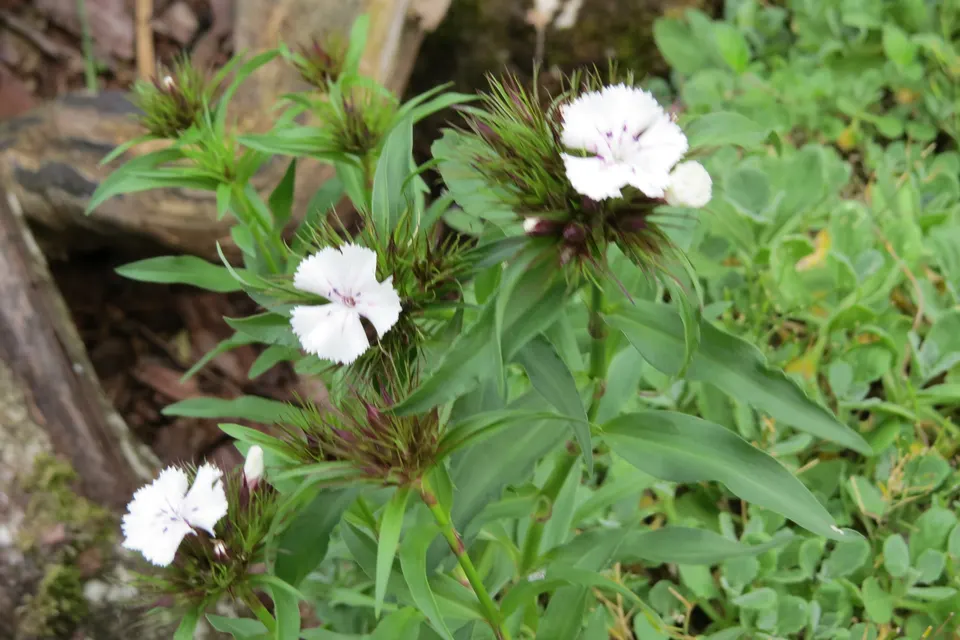
Sweet William is a cottage-garden staple, grown for dense clusters of small, fragrant flowers that often come bicolor, a ring of contrasting color around each petal’s edge. NC State Extension puts it at 1 to 2 feet tall and 6 inches to a foot wide, in pink, purple, red, white and variegated forms, hardy across zones 3a to 9b.
Biennial, perennial, or annual
NC State Extension describes sweet William as a biennial or short-lived perennial that is often grown as an annual. All three descriptions are accurate, which is why the seed packets disagree with each other.
Left alone, a spring sowing makes leaves the first year and flowers the second, then usually declines. Sown early enough under the right conditions, or grown from a series bred to skip the cold requirement, it flowers the same year. If you want bloom this season, either start early indoors or buy a first-year-flowering series such as Amazon. If you are happy to wait, sow in summer for flowers the following spring.
It also self-sows readily. A patch left to set seed tends to persist as a shifting colony rather than as the same individual plants, which is a reasonable way to keep it going and a nuisance if you wanted that space for something else.
Cool temperatures matter more than timing
Transplanting is the recommended method: start seed 6 to 8 weeks before your last frost, pressing it lightly into the growing medium rather than burying it. Direct-seeding in early spring, while light frosts are still possible, also works. Germination takes 7 to 14 days at 65-72°F. Space plants 6 inches apart, or 4 inches if you are growing for long straight stems.
The detail that matters most: keep young plants at 50-55°F while they develop. Anything warmer, especially overnight temperatures above 65°F, produces weak, leggy growth instead of the compact, well-branched plants sweet William is grown for.
Sun, soil, and drainage
Full sun, meaning 6 hours or more, gives the best flowering, though NC State lists partial shade at 2 to 6 hours as acceptable. In hot-summer climates the afternoon shade is worth having.
Soil matters more than most cottage annuals. Sweet William wants loam with plenty of organic matter, a neutral to slightly alkaline pH somewhere in the 6.0 to 8.0 range, and above all good drainage. It is susceptible to crown rot in ground that stays wet, so a heavy clay bed that puddles after rain is the one situation worth amending before planting rather than after.
What goes wrong
Crown rot is the main killer, and it is a drainage problem rather than a disease you treat. Rust also shows up on the foliage. Both are helped by the same two things: soil that drains and enough space between plants for air to move through them.
Slugs and snails chew the foliage, and NC State notes they are worse on plants grown in shade, which is one more argument for the sunnier spot.
Cutting for a vase
Harvest when 10 to 20% of the flowers in a cluster have opened, which gives the longest vase life as the rest of the cluster continues opening after the cut. Transplants are typically ready 20 to 25 days after sowing, with full flowering following 6 to 8 weeks after the initial sow date.
Pollinators, pets, and placement
The flowers are worked by bees and by moths and butterflies, and NC State lists them as a hummingbird draw too, so a border of it earns its space beyond the look.
One thing worth knowing if you have animals: sweet William is rated a low-severity poison, with triterpenoid saponins as the active compound, causing minor skin irritation or vomiting if eaten, and it is listed as toxic to dogs, cats and horses. That is the same category as a good many ornamental garden plants and is not a reason to avoid it, but it is worth siting away from a dog that grazes.
Sweet William has no well-established companion pairings, and nothing it needs to be kept away from. At 4 plants per square foot, it’s dense enough to work as a border filler in the Garden Designer without needing dedicated space.
Sources: Dianthus barbatus, NC State Extension Gardener Plant Toolbox; Amazon Series Dianthus for the Farmer Florist, Mississippi State University Extension; Dianthus (Sweet William/Carnation): Key Growing Information, Johnny’s Selected Seeds.
Companion planting guide for Sweet William · Find your planting dates
Typically viable in USDA zones 3-9. Not sure your zone? Look it up by ZIP code.
Mature height: 1-2 ft
Method: Start indoors: Start indoors from seed, then transplant outside. It needs a head start most zones can't give it by direct-sowing alone.
When to plant sweet William, by zone
Every zone sweet William grows in. Pick your zone in the header and it will be highlighted here. Each zone links to its full page.
| Zone | Start indoors | Sow or plant out | Bloom |
|---|---|---|---|
| 3a & 3b | Apr 11–Apr 18 | May 23–May 30 | Jul 22–Jul 29 |
| 4a & 4b | Mar 27–Apr 3 | May 8–May 15 | Jul 7–Jul 14 |
| 5a & 5b | Mar 22–Mar 29 | May 3–May 10 | Jul 2–Jul 9 |
| 6a & 6b | Mar 7–Mar 14 | Apr 18–Apr 25 | Jun 17–Jun 24 |
| 7a & 7b | Feb 20–Feb 27 | Apr 3–Apr 10 | Jun 2–Jun 9 |
| 8a & 8b | Feb 4–Feb 11 | Mar 18–Mar 25 | May 17–May 24 |
| 9a & 9b | Dec 28–Jan 4 | Feb 8–Feb 15 | Apr 9–Apr 16 |
Bloom dates are about 60 days after the sow or plant-out date, not after starting seeds indoors.
See exact start-indoors, direct-sow, and harvest dates for your zone →
How many Sweet William plants fit per square foot?
Spacing: 4 per square foot (square-foot-gardening spacing). Mature height: 1-2 ft.
Varieties worth considering
- Amazon series ('Rose Magic', 'Neon Purple', 'Neon Cherry', 'Neon Duo') (best for: cut flowers): Mississippi State University Extension recommends this series to cut-flower growers for stems up to 36 inches, thick enough to hold the large heads, and notes it flowers the first year without needing a cold period. It also flowers well in summer heat, which most sweet William does not. Seed to a cut stem runs 115 to 125 days, longer than the 60 days our calendar counts from transplant to first bloom. (source)
- Straight-species sweet William (Dianthus barbatus) (best for: borders and self-seeding): Johnny's Selected Seeds sells the species in a range of named color mixes and single strains; the growing requirements are consistent across them, so the species itself covers what matters for care. The better choice if you want it to seed itself around rather than to cut it. (source)
Why each variety is listed comes from the source shown next to it. We haven't grown these ourselves yet, so treat this as a research-backed starting point, not a personal endorsement. The buy links are separate from those sources: they go to seed suppliers that sell that exact variety, and we may earn a commission on some of them.
Where to buy sweet William seeds
Botanical Interests · True Leaf Market · High Mowing Organic Seeds (each supplier's sweet William seeds)
As an Amazon Associate we earn from qualifying purchases. Some links on this page also go to other retailers we may earn a commission from as an affiliate, at no extra cost to you. We only recommend products with a clear consensus of positive, independent reviews, or ones we bought and use ourselves. Each item on our gear page says which.
See it growing
Search YouTube for "growing sweet William" videos → (a live search, not a hand-picked video; results vary and aren't vetted by us)

Pin this for later
Growing Sweet William: A cottage-garden classic grown for clusters of fragrant, often bicolor flowers. Some strains bloom the first year and some wait until the second, so check the packet, and a cool start keeps the plants compact.
Save to Pinterest