Growing Sunchokes (Jerusalem Artichokes): A Complete Profile
By Growing Home Greens Team · August 10, 2026
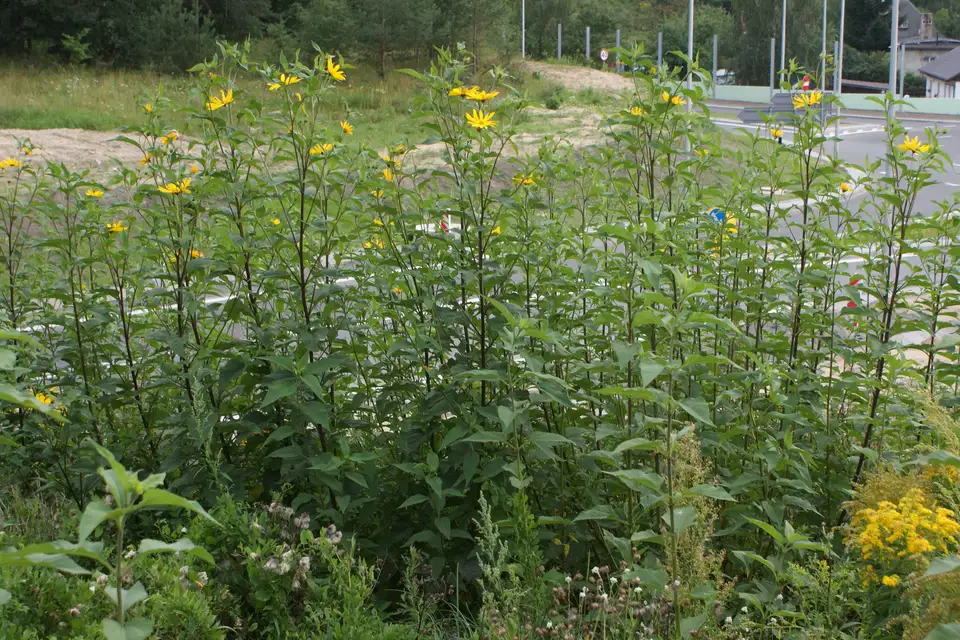
Sunchokes, also called Jerusalem artichokes despite having no connection to Jerusalem or to the globe artichoke, are a perennial sunflower relative grown for their knobby, nutty-flavored tubers rather than their flowers.
Planted like a potato, dug like one too
Plant whole tubers or budded pieces about 3 to 6 inches deep as early in spring as the soil can be worked, spaced roughly 1 to 2 feet apart in rows 3 to 4 feet apart. It tolerates most soil types and needs little fuss once it’s up, growing into a dense, coarse-leaved stand 6 to 10 feet tall that usually benefits from staking against wind. Cheerful small yellow, sunflower-like blooms show up from late summer into fall.
Give it a permanent bed, not a rotation slot
Sunchoke spreads by rhizome and reseeds itself, and any tuber piece left behind in the soil sprouts the next year. Once it’s established in a spot, it’s difficult to remove completely, so plan for it as a permanent bed rather than something to work into an annual rotation. At harvest, dig thoroughly and expect volunteer plants to keep showing up for a season or two afterward regardless.
A same-year harvest that keeps giving
Unlike most other perennial vegetables here, sunchoke produces a harvestable crop the same fall it’s planted rather than making you wait a year or more. Cut back the tall foliage, then dig the tubers with a garden fork or potato digger about two weeks after the flowers fade, typically after the first frost. Fresh tubers store at cold, humid conditions for a few months, but their thin skin bruises and dries out easily, so they’re best dug as needed through fall and into winter rather than pulled all at once.
Sunchoke has no well-established companion pairings, and nothing it needs to be kept away from. Give it its own square footage in the Garden Designer well away from anything you don’t want it to eventually crowd out.
Sources: Artichoke, Jerusalem, Oregon State University Extension; Growth, Harvest, and Serving of Jerusalem Artichoke (Sunchoke), The Ohio State University Extension; Helianthus tuberosus, NC State Extension Gardener Plant Toolbox.
Companion planting guide for Sunchoke (Jerusalem Artichoke) · Find your planting dates
Typically viable in USDA zones 3-9. Not sure your zone? Look it up by ZIP code.
Mature height: 6-10 ft
Method: Direct sow: Direct-sow outside. It doesn't transplant well, or doesn't need the extra time indoors.
When to plant sunchoke (Jerusalem artichoke), by zone
Every zone sunchoke (Jerusalem artichoke) grows in. Pick your zone in the header and it will be highlighted here. Each zone links to its full page.
| Zone | Start indoors | Sow or plant out | Harvest |
|---|---|---|---|
| 3a & 3b | Not usually | May 16–May 23 | First real harvest the season after planting |
| 4a & 4b | Not usually | May 1–May 8 | First real harvest the season after planting |
| 5a & 5b | Not usually | Apr 26–May 3 | First real harvest the season after planting |
| 6a & 6b | Not usually | Apr 11–Apr 18 | First real harvest the season after planting |
| 7a & 7b | Not usually | Mar 27–Apr 3 | First real harvest the season after planting |
| 8a & 8b | Not usually | Mar 11–Mar 18 | First real harvest the season after planting |
| 9a & 9b | Not usually | Feb 1–Feb 8 | First real harvest the season after planting |
See exact start-indoors, direct-sow, and harvest dates for your zone →
How many Sunchoke (Jerusalem Artichoke) plants fit per square foot?
Spacing: about 4 square feet per plant (square-foot-gardening spacing). Mature height: 6-10 ft.
Varieties worth considering
- 'Stampede': Listed among the standard Jerusalem artichoke varieties for the Pacific Northwest by Oregon State University's Extension vegetable guide, and separately described elsewhere as an extra-early, knobby type. (source)
Why each variety is listed comes from the source shown next to it. We haven't grown these ourselves yet, so treat this as a research-backed starting point, not a personal endorsement. The buy links are separate from those sources: they go to seed suppliers that sell that exact variety, and we may earn a commission on some of them.
Where to buy sunchoke seeds
None of the seed suppliers we list carries sunchoke seeds right now. A local garden center or a specialty seed house is the place to look.
As an Amazon Associate we earn from qualifying purchases. Some links on this page also go to other retailers we may earn a commission from as an affiliate, at no extra cost to you. We only recommend products with a clear consensus of positive, independent reviews, or ones we bought and use ourselves. Each item on our gear page says which.
See it growing
Search YouTube for "growing sunchoke (Jerusalem artichoke)" videos → (a live search, not a hand-picked video; results vary and aren't vetted by us)
%3A%20A%20perennial%20sunflower%20relative%20grown%20for%20its%20tubers%2C%20planted%20like%20a%20seed%20potato%20and%20dug%20like%20one%20too%2C%20best%20given%20a%20bed%20of%20its%20own%20since%20any%20leftover%20tuber%20sprouts%20the%20following%20year.)
Pin this for later
Growing Sunchoke (Jerusalem Artichoke): A perennial sunflower relative grown for its tubers, planted like a seed potato and dug like one too, best given a bed of its own since any leftover tuber sprouts the following year.
Save to Pinterest