Growing Stevia: A Complete Profile
By Growing Home Greens Team · July 29, 2026
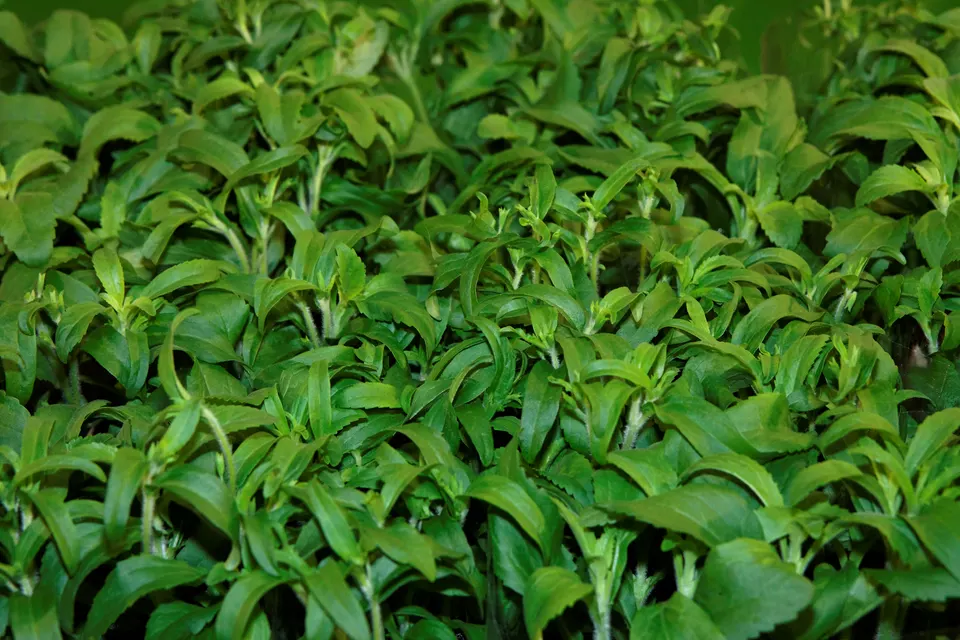
Stevia is grown for its intensely sweet leaves, used fresh or dried as a natural sugar substitute, and it’s a tender perennial that only survives winter outdoors in zones 10 and 11.
Buy the plant, not the seed
Stevia seed has poor viability and germinates slowly and unevenly, and even seed that does germinate produces plants with unpredictable sweetness, since individual stevia plants vary a lot in glycoside content and aftertaste. That’s why most gardeners start with a nursery transplant or a rooted stem cutting taken from a plant already known to taste good, instead of a seed packet. Set plants out about a week after your last frost, and expect about 90 days to a full harvest of leaves. Outside zones 10 and 11, treat it as a warm-season annual rather than expecting it to survive winter outdoors.
Getting a sweet harvest, not a bitter one
Bitter-tasting leaves are usually a harvest-timing issue rather than a bad plant. Leaves are sweetest picked in the morning, before the heat of the day, and just before the plant flowers; sweetness drops once it goes to bloom. If you want to keep a plant going past one season in a colder zone, bring it indoors as a houseplant over winter rather than trying to overwinter it outside.
A compact spare square, not a dedicated bed
Stevia has no well-established companion pairings, and nothing it needs to be kept away from. As a compact herb, it fits easily into a spare square in the Garden Designer without competing for much space.
Sources: Stevia, University of Kentucky Center for Crop Diversification.
Companion planting guide for Stevia · Find your planting dates
Typically viable in USDA zones 3-11. Not sure your zone? Look it up by ZIP code.
Mature height: 1.5-2.5 ft
Method: Buy as a start: Buy as a nursery start and transplant outside. It's slow or unreliable from seed, so most gardeners skip seed-starting it entirely.
When to plant stevia, by zone
Every zone stevia grows in. Pick your zone in the header and it will be highlighted here. Each zone links to its full page.
| Zone | Start indoors | Sow or plant out | Harvest |
|---|---|---|---|
| 3a & 3b | Buy as a start | Jun 6–Jun 13 | Sep 4–Sep 11 |
| 4a & 4b | Buy as a start | May 22–May 29 | Aug 20–Aug 27 |
| 5a & 5b | Buy as a start | May 17–May 24 | Aug 15–Aug 22 |
| 6a & 6b | Buy as a start | May 2–May 9 | Jul 31–Aug 7 |
| 7a & 7b | Buy as a start | Apr 17–Apr 24 | Jul 16–Jul 23 |
| 8a & 8b | Buy as a start | Apr 1–Apr 8 | Jun 30–Jul 7 |
| 9a & 9b | Buy as a start | Feb 22–Mar 1 | May 23–May 30 |
| 10a & 10bSpring window | Buy as a start | Feb–Apr | ~90 days after transplanting |
| Fall window | Buy as a start | Oct–Nov | ~90 days after transplanting |
| 11a & 11b | Buy as a start | Jan 8–Jan 15 | Apr 8–Apr 15 |
Harvest dates are about 90 days after the sow or plant-out date.
See exact start-indoors, direct-sow, and harvest dates for your zone →
How many Stevia plants fit per square foot?
Spacing: 1 per square foot (square-foot-gardening spacing). Mature height: 1.5-2.5 ft.
Varieties worth considering
- A cutting-grown plant from a known sweet mother plant, not a seed packet: Stevia grown from seed is a gamble. University of Kentucky's Center for Crop Diversification notes that sweetness and bitterness vary considerably from one seed-grown plant to the next, and that growers should pick mother plants with high sweetness and no aftertaste specifically to propagate by cuttings. Buy a plant, or take a cutting from a plant you've already tasted. (source)
Why each variety is listed comes from the source shown next to it. We haven't grown these ourselves yet, so treat this as a research-backed starting point, not a personal endorsement. The buy links are separate from those sources: they go to seed suppliers that sell that exact variety, and we may earn a commission on some of them.
Where to buy stevia starts
Stevia is almost always bought as a nursery start rather than seeded. Check a local nursery or garden center; we haven't vetted online start/plant suppliers yet.
As an Amazon Associate we earn from qualifying purchases. Some links on this page also go to other retailers we may earn a commission from as an affiliate, at no extra cost to you. We only recommend products with a clear consensus of positive, independent reviews, or ones we bought and use ourselves. Each item on our gear page says which.
See it growing
Search YouTube for "growing stevia" videos → (a live search, not a hand-picked video; results vary and aren't vetted by us)

Pin this for later
Growing Stevia: A naturally sweet-leaved herb best started from a cutting rather than seed, since stevia seed rarely germinates well.
Save to Pinterest