Growing Saffron Crocus: A Complete Profile
By Growing Home Greens Team · August 10, 2026
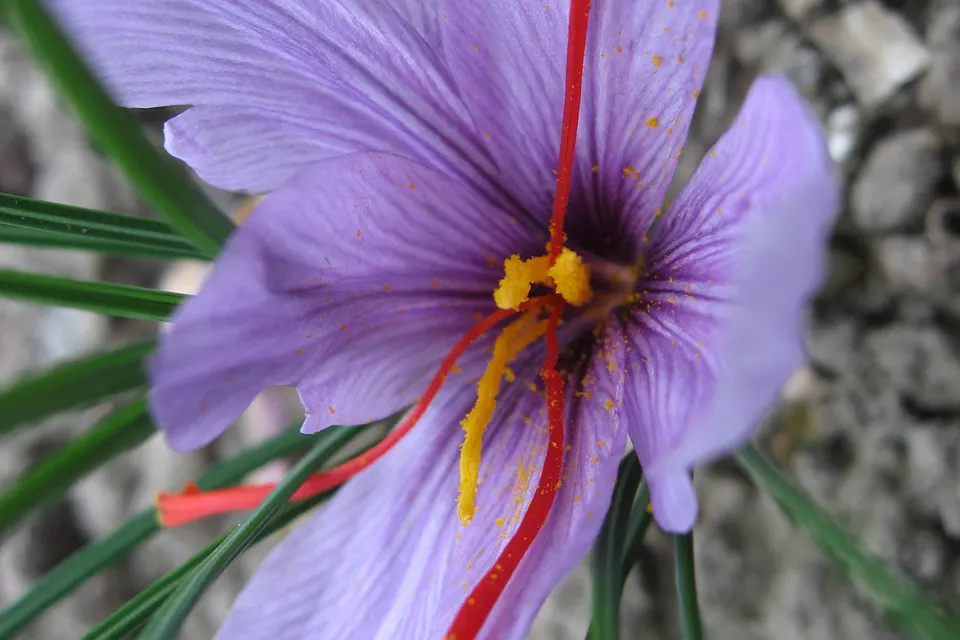
Saffron crocus is the genuine source of culinary saffron, the world’s most expensive spice by weight, grown here from fall-planted corms rather than seed.
Plant corms right away
Plant corms as soon as possible after they arrive, ideally within a week, so they can begin rooting before freezing weather sets in. If holding them briefly, keep them dry and cool, 40-50°F; storing too long causes the corms to sprout and become unviable. Plant 3 to 4 inches deep and 3 to 4 inches apart, flat side down. Don’t overwater; saturated soil causes the corms to rot, and mulching isn’t recommended.
A genuine latitude constraint
Saffron crocus is sensitive to photoperiod and reliably grows only between latitudes 30 and 50 degrees. It’s worth checking where that band falls before planting somewhere far outside it. Within that range, it’s perennial in zones 5-8 and known to perennialize in zone 4.
A patient first year
Foliage develops 4 to 8 weeks after planting, and flowers may appear that same fall, though corms don’t always bloom their first season; the first real harvest sometimes doesn’t come until the following fall, a full year after planting. Foliage dies back in summer heat, then both foliage and flowers return in fall.
Harvesting the spice
Each corm produces 2 to 4 flowers, and each flower yields just 3 stigmas, the actual saffron threads. Pick whole flowers just before they fully open, then separate the orange-red stigmas from the fresh flowers and air-dry them warm and dark, 80-95°F, away from light. Store the dried saffron in an airtight, opaque container.
Saffron crocus has no well-established companion pairings, and nothing it needs to be kept away from. At 9 plants per square foot, it’s an unusual, high-value addition to the Garden Designer, best planned as a dedicated patch rather than mixed into a rotating vegetable bed since corms stay put and multiply for years.
Source: Saffron Crocus: Key Growing Information, Johnny’s Selected Seeds.
Companion planting guide for Saffron Crocus · Find your planting dates
Typically viable in USDA zones 4-8. Not sure your zone? Look it up by ZIP code.
Mature height: 4-10 in
Method: Direct sow: Direct-sow outside. It doesn't transplant well, or doesn't need the extra time indoors.
When to plant saffron crocus, by zone
Every zone saffron crocus grows in. Pick your zone in the header and it will be highlighted here. Each zone links to its full page.
| Zone | Start indoors | Sow or plant out | Bloom |
|---|---|---|---|
| 4a & 4bSummer window | Not usually | Aug–Sep | About a year after planting |
| 5a & 5bSummer window | Not usually | Aug–Sep | About a year after planting |
| 6a & 6bSummer window | Not usually | Aug–Sep | About a year after planting |
| 7a & 7bSummer window | Not usually | Aug–Sep | About a year after planting |
| 8a & 8bSummer window | Not usually | Aug–Sep | About a year after planting |
See exact start-indoors, direct-sow, and harvest dates for your zone →
How many Saffron Crocus plants fit per square foot?
Spacing: 9 per square foot (square-foot-gardening spacing). Mature height: 4-10 in.
Varieties worth considering
- Straight-species saffron crocus (Crocus sativus): Johnny's Selected Seeds sells this species plain, since saffron crocus is a single sterile clone propagated entirely by corms; there is no named-cultivar market to draw from. (source)
Why each variety is listed comes from the source shown next to it. We haven't grown these ourselves yet, so treat this as a research-backed starting point, not a personal endorsement. The buy links are separate from those sources: they go to seed suppliers that sell that exact variety, and we may earn a commission on some of them.
Where to buy saffron crocus seeds
None of the seed suppliers we list carries saffron crocus seeds right now. A local garden center or a specialty seed house is the place to look.
As an Amazon Associate we earn from qualifying purchases. Some links on this page also go to other retailers we may earn a commission from as an affiliate, at no extra cost to you. We only recommend products with a clear consensus of positive, independent reviews, or ones we bought and use ourselves. Each item on our gear page says which.
See it growing
Search YouTube for "growing saffron crocus" videos → (a live search, not a hand-picked video; results vary and aren't vetted by us)

Pin this for later
Growing Saffron Crocus: The genuine source of culinary saffron, the world's most expensive spice by weight, grown from fall-planted corms rather than seed.
Save to Pinterest