Growing Rue: A Complete Profile
By Growing Home Greens Team · August 10, 2026
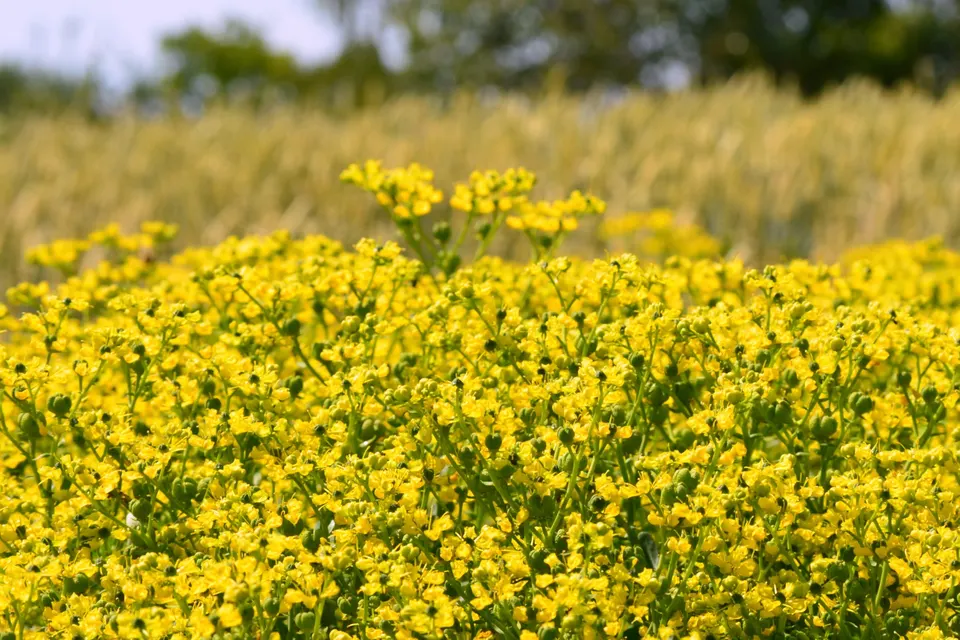
Rue is a blue-gray, woody-based perennial with a long history as a medicinal herb, though it’s grown today mostly for its striking foliage color and as a larval host for swallowtail butterflies rather than for the kitchen. The leaves are toxic in any real quantity and can irritate skin in sunlight, so it’s a plant to handle with gloves, not eat.
Starting it
Start seed indoors about 7 weeks before your last frost, sown 1/4 to 3/8 inch deep and kept at 60-70°F, then transplant outdoors once seedlings are several inches tall. Direct-seeding works too, sown at the same depth, 6 to 12 seeds per foot in rows 18 inches apart, then thinned to final spacing. Germination takes 10 to 14 days. Space plants 12 to 24 inches apart, tighter in northern zones and wider in southern ones; mature plants reach 24 to 36 inches tall.
A caution worth taking seriously
Rue’s sap can cause phytophotodermatitis, a skin reaction that shows up after contact combined with sun exposure, similar to the reaction some people get from citrus peel or parsnip tops. Wear gloves when handling it, especially when pruning or harvesting on a sunny day, and never consume it without professional guidance; it’s toxic in quantity and historically used to induce miscarriage, which makes it a plant to keep away from anyone who might be pregnant.
Grown for looks, not the table
Prune annually in early spring to keep growth compact, and harvest, if at all, before the plant flowers. It self-sows readily once established and can also be propagated by stem cuttings or root division in spring.
Rue has no well-established companion pairings, and nothing it needs to be kept away from. As a long-lived perennial with striking blue-gray foliage, it works well as a structural accent in the Garden Designer, sited somewhere out of reach of pets, kids, or anyone likely to brush against it in shorts.
Source: Rue: Key Growing Information, Johnny’s Selected Seeds.
Companion planting guide for Rue · Find your planting dates
Typically viable in USDA zones 4-9. Not sure your zone? Look it up by ZIP code.
Mature height: 2-3 ft
Method: Start indoors: Start indoors from seed, then transplant outside. It needs a head start most zones can't give it by direct-sowing alone.
When to plant rue, by zone
Every zone rue grows in. Pick your zone in the header and it will be highlighted here. Each zone links to its full page.
| Zone | Start indoors | Sow or plant out | Harvest |
|---|---|---|---|
| 4a & 4b | Mar 27–Apr 3 | May 22–May 29 | Aug 20–Aug 27 |
| 5a & 5b | Mar 22–Mar 29 | May 17–May 24 | Aug 15–Aug 22 |
| 6a & 6b | Mar 7–Mar 14 | May 2–May 9 | Jul 31–Aug 7 |
| 7a & 7b | Feb 20–Feb 27 | Apr 17–Apr 24 | Jul 16–Jul 23 |
| 8a & 8b | Feb 4–Feb 11 | Apr 1–Apr 8 | Jun 30–Jul 7 |
| 9a & 9b | Dec 28–Jan 4 | Feb 22–Mar 1 | May 23–May 30 |
Harvest dates are about 90 days after the sow or plant-out date, not after starting seeds indoors.
See exact start-indoors, direct-sow, and harvest dates for your zone →
How many Rue plants fit per square foot?
Spacing: 1 per square foot (square-foot-gardening spacing). Mature height: 2-3 ft.
Varieties worth considering
- Straight-species rue (Ruta graveolens): Johnny's Selected Seeds sells it as the plain species; there's no real named-cultivar market beyond it and the occasional blue-leaved 'Jackman's Blue' selection sold by specialty nurseries as an ornamental. The species itself is what most gardens grow. (source)
Why each variety is listed comes from the source shown next to it. We haven't grown these ourselves yet, so treat this as a research-backed starting point, not a personal endorsement. The buy links are separate from those sources: they go to seed suppliers that sell that exact variety, and we may earn a commission on some of them.
Where to buy rue seeds
True Leaf Market (each supplier's rue seeds)
As an Amazon Associate we earn from qualifying purchases. Some links on this page also go to other retailers we may earn a commission from as an affiliate, at no extra cost to you. We only recommend products with a clear consensus of positive, independent reviews, or ones we bought and use ourselves. Each item on our gear page says which.
See it growing
Search YouTube for "growing rue" videos → (a live search, not a hand-picked video; results vary and aren't vetted by us)

Pin this for later
Growing Rue: A blue-gray, historically medicinal perennial grown for its looks and history more than any kitchen use, with a genuine caution: handle it with gloves and never eat it without professional guidance.
Save to Pinterest