Growing Root Chervil: A Complete Profile
By Growing Home Greens Team · August 10, 2026
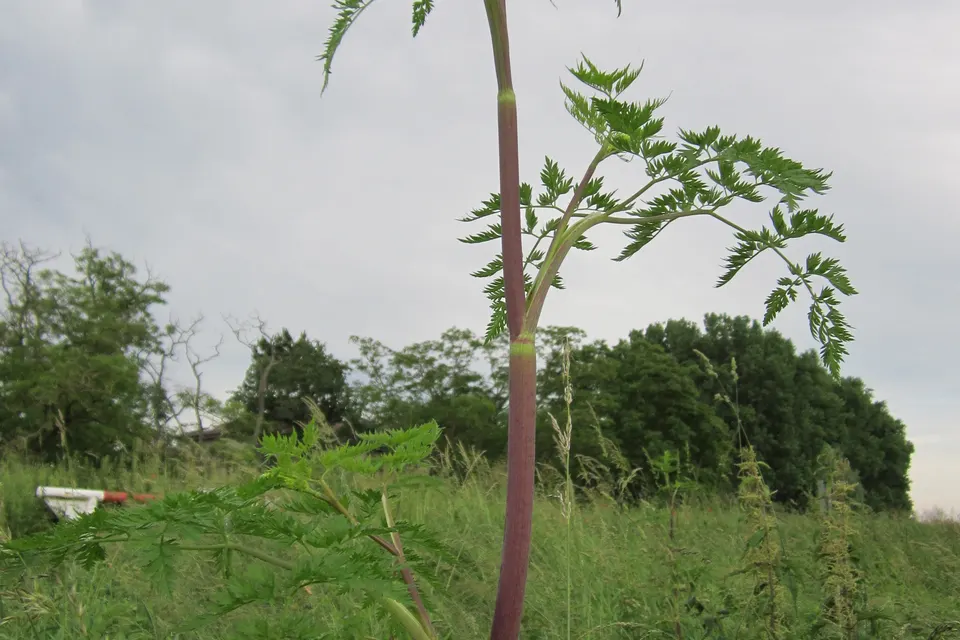
Root chervil, also called turnip-rooted chervil, is a minor French root vegetable in the carrot and parsnip family, with a single taproot and a flavor somewhere between carrot, parsnip, and chestnut.
A crop that needs cold, twice
Unlike most root crops here, root chervil is a true biennial: it makes its root the first year and flowers the second, and cold is baked into its life cycle at two separate points. The seed needs cold stratification to germinate reliably, and the harvested root itself needs to be frosted in the field, or refrigerated for about a month afterward, before its flavor really develops.
Sow it in winter, not off the last frost date
The simplest approach is sowing in a protected bed in early winter and leaving it alone until it sprouts on its own in spring, rather than timing it off the last frost the way most vegetables here are timed. An alternative is fridge-stratifying seed yourself and sowing in early summer. Either way, expect uneven results: germination is unreliable, often only 50% even from fresh seed, and old seed loses viability fast, so buy new seed each season rather than relying on what’s left in the packet from a couple of years back.
Cool and moist, not hot and dry
Root chervil prefers cool temperatures and consistently moist soil; if the ground dries out, plants either go dormant or bolt to seed, and either way the root doesn’t develop well. It’s hardy to about USDA zone 5.
Root chervil has no well-established companion pairings, and nothing it needs to be kept away from. In the Garden Designer, treat it like a winter-sown crop with a long timeline rather than a typical spring-planted root vegetable.
Source: Root Chervil (Chaerophyllum bulbosum), Cultivariable.
Companion planting guide for Root Chervil · Find your planting dates
Typically viable in USDA zones 5-8. Not sure your zone? Look it up by ZIP code.
Mature height: 0.5-1 ft
Method: Direct sow: Direct-sow outside. It doesn't transplant well, or doesn't need the extra time indoors.
When to plant root chervil, by zone
Every zone root chervil grows in. Pick your zone in the header and it will be highlighted here. Each zone links to its full page.
| Zone | Start indoors | Sow or plant out | Harvest |
|---|---|---|---|
| 5a & 5b | Not usually | Feb 15–Feb 22 | Jul 15–Jul 22 |
| 6a & 6b | Not usually | Jan 31–Feb 7 | Jun 30–Jul 7 |
| 7a & 7b | Not usually | Jan 16–Jan 23 | Jun 15–Jun 22 |
| 8a & 8b | Not usually | Dec 31–Jan 7 | May 30–Jun 6 |
Harvest dates are about 150 days after the sow or plant-out date.
See exact start-indoors, direct-sow, and harvest dates for your zone →
How many Root Chervil plants fit per square foot?
Spacing: 9 per square foot (square-foot-gardening spacing). Mature height: 0.5-1 ft.
Varieties worth considering
- Root Chervil: Cultivariable sells the straight species; root chervil doesn't have a commercial history of named cultivars the way carrots or parsnips do. (source)
Why each variety is listed comes from the source shown next to it. We haven't grown these ourselves yet, so treat this as a research-backed starting point, not a personal endorsement. The buy links are separate from those sources: they go to seed suppliers that sell that exact variety, and we may earn a commission on some of them.
Where to buy root chervil seeds
None of the seed suppliers we list carries root chervil seeds right now. A local garden center or a specialty seed house is the place to look.
As an Amazon Associate we earn from qualifying purchases. Some links on this page also go to other retailers we may earn a commission from as an affiliate, at no extra cost to you. We only recommend products with a clear consensus of positive, independent reviews, or ones we bought and use ourselves. Each item on our gear page says which.
See it growing
Search YouTube for "growing root chervil" videos → (a live search, not a hand-picked video; results vary and aren't vetted by us)

Pin this for later
Growing Root Chervil: A minor French root vegetable in the carrot and parsnip family that needs cold: to germinate, and again after harvest, to develop its best flavor.
Save to Pinterest