Growing Raspberries: A Complete Profile
By Growing Home Greens Team · August 6, 2026
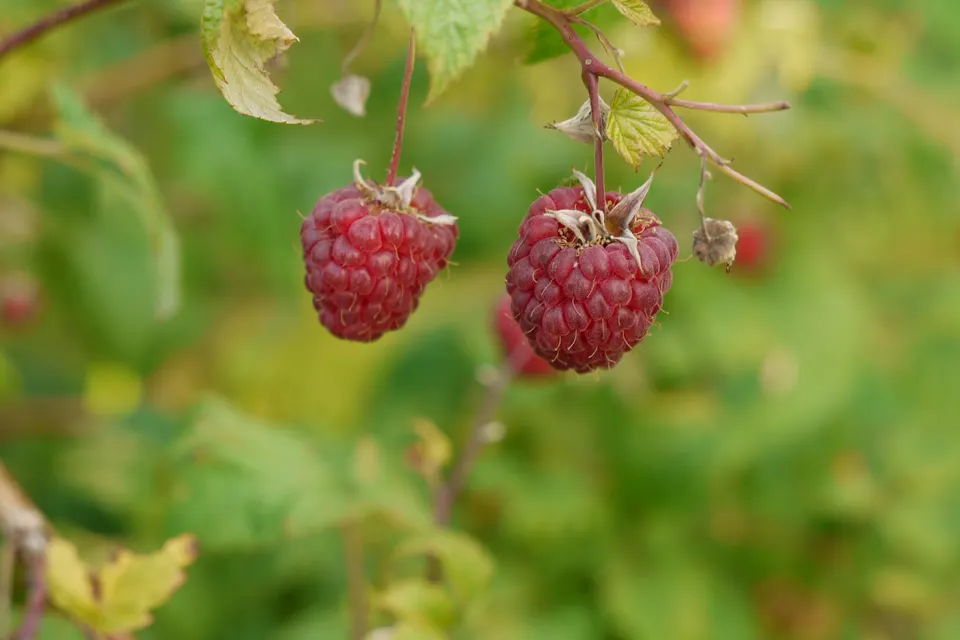
Raspberries are the best value fruit in a garden: cheap to buy as bare-root canes, hardy to zone 3, and producing fruit that costs an absurd amount in a shop and goes mouldy on the way home.
They also travel. That’s the part nobody mentions.
Summer-bearing or everbearing, and why it decides your pruning
A raspberry plant is permanent; its canes are not. Each cane lives two years. It grows one year (a primocane), fruits the next (a floricane), then dies.
Summer-bearing types fruit on floricanes, so this year’s new growth is next year’s crop. You cut out the canes that just fruited, right after harvest, and tie in the new ones. Cut the wrong ones and you have removed next summer’s raspberries.
Everbearing types fruit on primocanes, at the top of canes grown that same season, in late summer. This is the easy option: in winter you can cut the entire patch to ground level and it still crops the following autumn. No cane identification required.
If you’re new to cane fruit, plant everbearing. The pruning question is the main reason raspberry patches fail, and everbearing removes it entirely.
The suckers
Red raspberries spread by underground suckers, and they don’t respect your bed edging. Left alone, a tidy row becomes a thicket four feet wide, then comes up in the path, then in the next bed.
Plan for it. Either give them a bed with a physical root barrier, or accept that once a year you walk round the patch with a spade and cut down through the soil at the boundary. Black and purple types don’t do this, which is a strong argument for them in a small garden.
What goes wrong
Canes flop and the fruit is on the ground. They reach 5-6 feet. They need wire, a fence, or posts. This isn’t optional.
Fewer, smaller berries each year. Usually overcrowding: too many canes competing. Thin to about four to six strong canes per foot of row.
Sudden collapse of healthy-looking canes. Often verticillium wilt, which lives in soil that previously grew potatoes, tomatoes, peppers or aubergines. Don’t plant raspberries into a bed that recently grew nightshades. Since the canes will be there for a decade, this is worth checking before planting rather than after.
The patch declines after several years. Virus, carried by aphids, accumulates. Buy certified virus-free stock, and expect to replant somewhere fresh after ten years or so.
Where to put it
Full sun, along a fence or with a wire run, and out of the way of anything you want to keep tidy. In the Garden Designer it’s trellised and tall, so it belongs on the north edge where it won’t shade the rest of the bed.
Sources: Growing raspberries in the home garden, University of Minnesota Extension; Home Garden Raspberries and Blackberries, University of Georgia Extension.
Companion planting guide for Raspberry · Find your planting dates
Typically viable in USDA zones 3-8. Not sure your zone? Look it up by ZIP code.
Mature height: 5-6 ft
Method: Buy as a start: Buy as a nursery start and transplant outside. It's slow or unreliable from seed, so most gardeners skip seed-starting it entirely.
When to plant raspberry, by zone
Every zone raspberry grows in. Pick your zone in the header and it will be highlighted here. Each zone links to its full page.
| Zone | Start indoors | Sow or plant out | Harvest |
|---|---|---|---|
| 3a & 3b | Buy as a start | May 2–May 9 | First real harvest the season after planting |
| 4a & 4b | Buy as a start | Apr 17–Apr 24 | First real harvest the season after planting |
| 5a & 5b | Buy as a start | Apr 12–Apr 19 | First real harvest the season after planting |
| 6a & 6b | Buy as a start | Mar 28–Apr 4 | First real harvest the season after planting |
| 7a & 7b | Buy as a start | Mar 13–Mar 20 | First real harvest the season after planting |
| 8a & 8b | Buy as a start | Feb 25–Mar 4 | First real harvest the season after planting |
See exact start-indoors, direct-sow, and harvest dates for your zone →
How many Raspberry plants fit per square foot?
Spacing: about 4 square feet per plant (square-foot-gardening spacing). Mature height: 5-6 ft.
Varieties worth considering
- Summer-bearing (floricane): One heavy crop in early summer, on canes that grew last year. Traditionally the better flavour. The catch is that you must be able to tell this year's canes from last year's when you prune, because cutting the wrong ones means no fruit at all. (source)
- Everbearing (primocane): Fruits in late summer and autumn on canes grown the same season. Easier to manage, because you can mow the whole patch to the ground in winter and still get a crop. Start here if you have not grown cane fruit before. (source)
- Black and purple types: Different species from the red ones, with a more aromatic fruit. They do not sucker the way reds do, which makes them easier to contain, but they are less cold-hardy and more prone to virus. (source)
Why each variety is listed comes from the source shown next to it. We haven't grown these ourselves yet, so treat this as a research-backed starting point, not a personal endorsement. The buy links are separate from those sources: they go to seed suppliers that sell that exact variety, and we may earn a commission on some of them.
Where to buy raspberry starts
Raspberry is almost always bought as a nursery start rather than seeded. Check a local nursery or garden center; we haven't vetted online start/plant suppliers yet.
As an Amazon Associate we earn from qualifying purchases. Some links on this page also go to other retailers we may earn a commission from as an affiliate, at no extra cost to you. We only recommend products with a clear consensus of positive, independent reviews, or ones we bought and use ourselves. Each item on our gear page says which.
See it growing
Search YouTube for "growing raspberry" videos → (a live search, not a hand-picked video; results vary and aren't vetted by us)

Pin this for later
Growing Raspberry: Summer-bearing or everbearing decides when you prune, and pruning the wrong canes is why most raspberry patches stop producing. Plus the wandering-sucker problem.
Save to Pinterest