Growing Radicchio: A Complete Profile
By Growing Home Greens Team · July 24, 2026
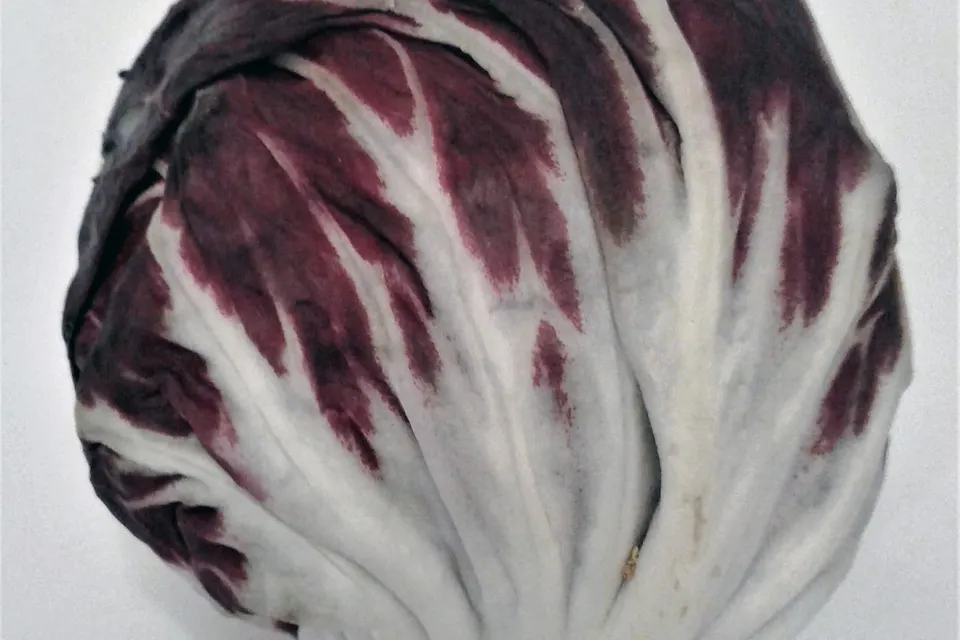
Radicchio is a chicory grown for a tight, wine-red head with white ribs and a bitterness that people either build meals around or quietly compost. Grilled or roasted, the bitterness turns sweet. Raw in a salad in July, it can be close to inedible.
Which of those you get is mostly about when you grew it, not which variety you bought.
Sowing it
Start indoors three to four weeks before transplanting, or direct-sow, covering the seed lightly at about an eighth of an inch. Space transplants around eight inches apart.
The timing is the whole crop. Radicchio heads up properly in shortening, cooling days, which makes a late-summer sowing for autumn harvest far more reliable than a spring one. A spring sowing runs into lengthening days and rising heat exactly when it should be forming a head, and you get a loose rosette that bolts.
Well-hardened transplants take cold seriously well, down to around 20°F, so an autumn planting will carry into early winter in most zones.
The two shapes worth knowing: Chioggia types are the round, dense, cabbage-like heads most people picture. Treviso types are tall and upright, with elongated maroon heads and white ribs, and they’re the ones that look spectacular halved and grilled.
What goes wrong
It never forms a head. Timing, nearly always. Too much heat and too much daylight while it was trying to head. Move the sowing later so heading happens as the days shorten, or grow a variety bred to tolerate it.
It bolts. Same cause, further along. A hot spell during a spring crop sends it straight to flower. Leonardo and Indigo are both selected against this and it’s the main reason to pay for an F1.
The base rots. Bottom rot, made worse by planting too deep. Set transplants shallow, with the base sitting slightly proud of the soil line, and don’t mulch tight against the crown.
It’s unbearably bitter. Partly the variety, mostly the weather. Heat drives bitterness up. A head that matured in cool autumn weather is a different vegetable from one that struggled through August. Cutting it and letting it sit in cold water for an hour takes some of the edge off, and cooking takes most of it.
Where to put it
Full sun, decent soil, treated like a hardier and more temperamental lettuce. It goes well in the slot a summer crop has just vacated: pull the beans in August, put radicchio in, cut it in October.
Some growers cut the head off an unheaded plant in autumn and leave the root, which resprouts a small tight second head. It’s a gamble and it works often enough to be worth trying on the plants that disappointed you.
Sources: Radicchio key growing information, Indigo, Leonardo and Fiero, Johnny’s Selected Seeds; Radicchio: Specialty Crop, UC Small Farms Network.
Companion planting guide for Radicchio · Find your planting dates
Typically viable in USDA zones 2-10. Not sure your zone? Look it up by ZIP code.
Mature height: 0.5-1.5 ft
Method: Either: Start indoors for an earlier harvest, or direct-sow outside for less fuss. Either works.
When to plant radicchio, by zone
Every zone radicchio grows in. Pick your zone in the header and it will be highlighted here. Each zone links to its full page.
| Zone | Start indoors | Sow or plant out | Harvest |
|---|---|---|---|
| 2a & 2b | Apr 22–Apr 29 | May 20–May 27 | Aug 3–Aug 10 |
| 3a & 3b | May 2–May 9 | May 30–Jun 6 | Aug 13–Aug 20 |
| 4a & 4b | Apr 17–Apr 24 | May 15–May 22 | Jul 29–Aug 5 |
| 5a & 5b | Apr 12–Apr 19 | May 10–May 17 | Jul 24–Jul 31 |
| 6a & 6b | Mar 28–Apr 4 | Apr 25–May 2 | Jul 9–Jul 16 |
| 7a & 7b | Mar 13–Mar 20 | Apr 10–Apr 17 | Jun 24–Jul 1 |
| 8a & 8b | Feb 25–Mar 4 | Mar 25–Apr 1 | Jun 8–Jun 15 |
| 9a & 9b | Jan 18–Jan 25 | Feb 15–Feb 22 | May 1–May 8 |
| 10a & 10b | Jan 2–Jan 9 | Jan 30–Feb 6 | Apr 15–Apr 22 |
Harvest dates are about 75 days after the sow or plant-out date, not after starting seeds indoors.
Zone 2 sows before zone 3 here, which looks wrong and is not. USDA zones rank winter cold, not season length, and zone 2 is mostly interior Alaska, where hard winters come with warm summers. More on what a zone measures.
See exact start-indoors, direct-sow, and harvest dates for your zone →
How many Radicchio plants fit per square foot?
Spacing: 2 per square foot (square-foot-gardening spacing). Mature height: 0.5-1.5 ft.
Varieties worth considering
- Indigo (F1): The one to start with. Johnny's calls it the most reliable radicchio across both their hot- and cool-weather trials: sure-heading, tolerant of tipburn, resistant to bottom rot, 4-5 inch burgundy heads. Works in spring, summer and fall, which is unusual for this crop. (source)
- Leonardo (F1): A Chioggia type with dense 4-5 inch heads and high bolt tolerance. Pick this one if your spring turns hot quickly, which is what usually ruins a spring sowing. (source) Buy seeds: High Mowing Organic Seeds
- Fiero (F1): Upright, elongated 7-8.5 inch maroon heads with white ribs, in the taller Treviso-style profile rather than Indigo and Leonardo's round Chioggia shape. Johnny's calls it impressively early at about 66 days with sure heading, best for a fall crop. (source) Buy seeds: High Mowing Organic Seeds
- Giorgione (Castelfranco type) (best for: milder flavor, fall color): Johnny's describes pear-shaped heads with speckling that intensifies in fall, balancing classic chicory bitterness with sweetness rather than leaning fully bitter like Indigo or Leonardo. A different look and flavor profile from the solid-red Chioggia types above, ready in about 50 days. (source)
- Palla Rossa Mavrik (best for: classic look, storage): Botanical Interests lists round, deep-red heads with very white ribs at 80-95 days, the classic Chioggia look sold under a different name than Indigo or Leonardo. A reasonable substitute for either if you want the traditional round red head from open-pollinated seed rather than a hybrid. (source) Buy seeds: Botanical Interests
Why each variety is listed comes from the source shown next to it. We haven't grown these ourselves yet, so treat this as a research-backed starting point, not a personal endorsement. The buy links are separate from those sources: they go to seed suppliers that sell that exact variety, and we may earn a commission on some of them.
Where to buy radicchio seeds
Botanical Interests · True Leaf Market · Burpee · High Mowing Organic Seeds (each supplier's radicchio seeds)
The varieties we recommend above each have their own buy links, for the suppliers that sell that exact variety.
As an Amazon Associate we earn from qualifying purchases. Some links on this page also go to other retailers we may earn a commission from as an affiliate, at no extra cost to you. We only recommend products with a clear consensus of positive, independent reviews, or ones we bought and use ourselves. Each item on our gear page says which.
See it growing
Search YouTube for "growing radicchio" videos → (a live search, not a hand-picked video; results vary and aren't vetted by us)

Pin this for later
Growing Radicchio: Radicchio heads up in cooling autumn days and refuses to in midsummer heat. Timing, the bolt-resistant varieties, and why yours went bitter.
Save to Pinterest