Growing Plum: A Complete Profile
By Growing Home Greens Team · August 11, 2026
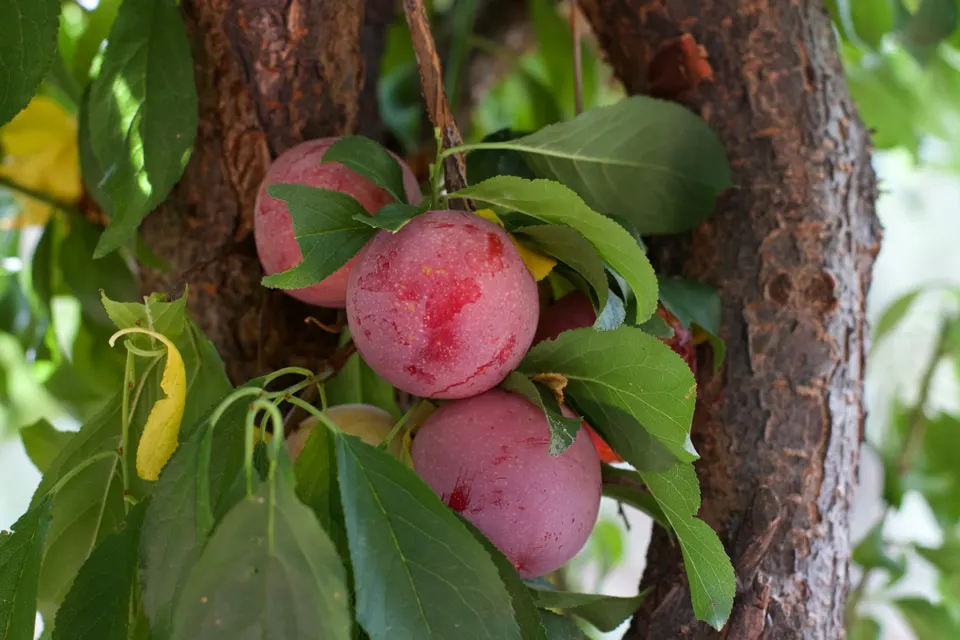
European plum (Prunus domestica), the species most home orchards grow, is generally self-fertile, meaning a single tree sets a full crop alone. That’s a real advantage over apple and pear, which is worth knowing before assuming every fruit tree needs a pollination partner. Japanese plum is a separate species, usually needing a cross-pollinator, and isn’t what this profile covers.
One tree is enough
Unlike apple or pear, a single European plum tree reliably produces fruit on its own. A second variety nearby still tends to improve fruit size and yield, but it isn’t required the way it is for most apple and pear varieties, which makes plum a reasonable pick where space allows only one fruit tree.
Less particular about soil
Plum tolerates a wider range of soil drainage than peach or apricot, both of which decline quickly in wet or heavy soil. It still shares the stone-fruit family’s vulnerability to spring frost during bloom, so site selection to avoid frost pockets matters as much here as it does for peach and apricot.
Chill hours run moderate to high
European plum generally needs 700-1100 chill hours, on the higher end among common fruit trees, which makes it a better fit for cold-winter climates than for mild ones.
Plum has no well-established companion pairings, and nothing it needs to be kept away from. See the rootstock and dwarfing article for how tree size varies by rootstock choice.
Source: European Plum (Prunus domestica), University of Minnesota UFOR Nursery & Lab.
Companion planting guide for Plum · Find your planting dates
Typically viable in USDA zones 4-8. Not sure your zone? Look it up by ZIP code.
Mature height: 15-18 ft
Method: Buy as a start: Buy as a nursery start and transplant outside. It's slow or unreliable from seed, so most gardeners skip seed-starting it entirely.
When to plant plum, by zone
Every zone plum grows in. Pick your zone in the header and it will be highlighted here. Each zone links to its full page.
| Zone | Start indoors | Sow or plant out | Harvest |
|---|---|---|---|
| 4a & 4b | Buy as a start | May 1–May 8 | First real harvest in year 5 |
| 5a & 5b | Buy as a start | Apr 26–May 3 | First real harvest in year 5 |
| 6a & 6b | Buy as a start | Apr 11–Apr 18 | First real harvest in year 5 |
| 7a & 7b | Buy as a start | Mar 27–Apr 3 | First real harvest in year 5 |
| 8a & 8b | Buy as a start | Mar 11–Mar 18 | First real harvest in year 5 |
See exact start-indoors, direct-sow, and harvest dates for your zone →
How many Plum plants fit per square foot?
Spacing: about 50 square feet per plant (square-foot-gardening spacing). Mature height: 15-18 ft.
Varieties worth considering
- 'Stanley' plum (best for: reliable self-fertile crop): Widely cited as one of the most popular and reliably self-fertile European plum varieties in the US, consistently producing fruit without a second variety nearby, useful where yard space only allows for one tree. (source)
- 'Starking® Delicious™' plum (best for: dessert use, disease resistance): Stark Bro's Nursery describes this as a Stark exclusive since 1951, large deep-red dessert plums good fresh or cooked into preserves, bearing young and reliably with good resistance to bacterial spot. (source)
Why each variety is listed comes from the source shown next to it. We haven't grown these ourselves yet, so treat this as a research-backed starting point, not a personal endorsement. The buy links are separate from those sources: they go to seed suppliers that sell that exact variety, and we may earn a commission on some of them.
Where to buy plum starts
Plum is almost always bought as a nursery start rather than seeded. Check a local nursery or garden center; we haven't vetted online start/plant suppliers yet.
As an Amazon Associate we earn from qualifying purchases. Some links on this page also go to other retailers we may earn a commission from as an affiliate, at no extra cost to you. We only recommend products with a clear consensus of positive, independent reviews, or ones we bought and use ourselves. Each item on our gear page says which.
See it growing
Search YouTube for "growing plum" videos → (a live search, not a hand-picked video; results vary and aren't vetted by us)

Pin this for later
Growing Plum: European plum, the type most home orchards grow, is self-fertile and less fussy about soil than peach or apricot, though it shares their vulnerability to spring frost.
Save to Pinterest