Growing Petunias: A Complete Profile
By Growing Home Greens Team · July 18, 2026
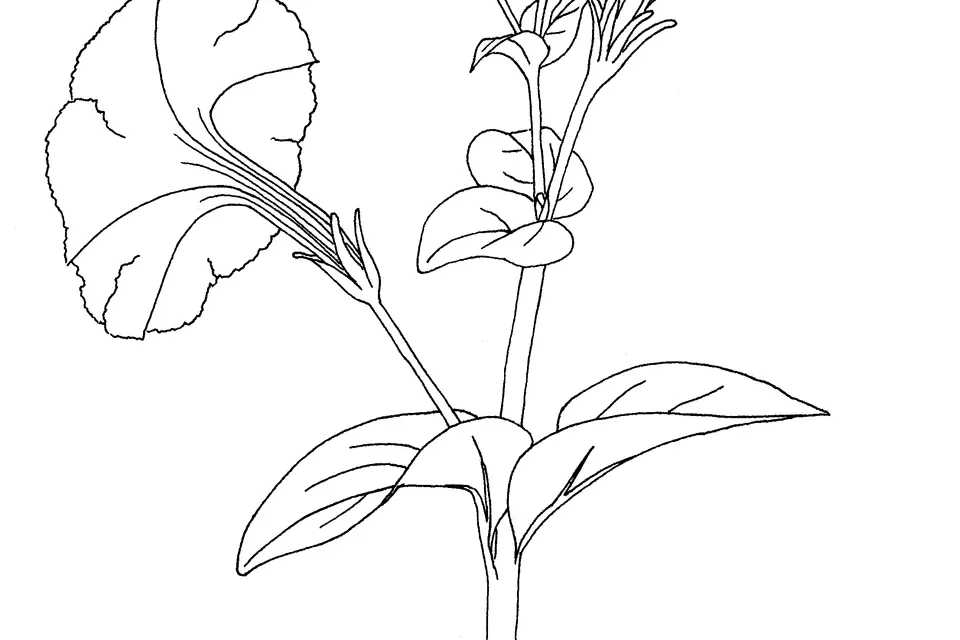
Petunias take the longest lead time of any flower on this list. Seed goes in about 9 weeks before last frost, and it needs light to germinate, so it’s surface-sown rather than buried. That long runway is the price for having sizable, blooming plants ready to set out once the weather turns: a trailing or mounding 6- to 12-inch plant covered in trumpet-shaped flowers across a wide color range.
Surface-sown seed and a long runway
Sow petunia seed on the surface of the mix and don’t cover it. Light is required to germinate. Transplants go out about 2 weeks after last frost, and at one plant per square foot and roughly 70 days to maturity, it behaves like a mid-sized bedding plant. Its low, spreading habit makes it best suited to edges and borders rather than the middle of a bed, where taller vegetables would just shade it out.
A midseason trim, not a sign of trouble
Leggy, sparse petunias partway through the season are normal rather than a sign of trouble, a hard midseason trim (“Chelsea chop” style) encourages fresh, bushier growth and a second flush of bloom. Petunias that never fill in usually didn’t get enough light to germinate in the first place, since the seed needs to stay uncovered and near the surface.
A frame for the bed, not a companion pick
Growing petunias beside vegetables has no documented benefit for them. Its low, spreading habit is best used as a border or edging planting in the Garden Designer, framing a bed rather than competing with taller crops for space.
Companion planting guide for Petunia · Find your planting dates
Typically viable in USDA zones 2-11. Not sure your zone? Look it up by ZIP code.
Mature height: 0.5-1 ft
Method: Start indoors: Start indoors from seed, then transplant outside. It needs a head start most zones can't give it by direct-sowing alone.
When to plant petunia, by zone
Every zone petunia grows in. Pick your zone in the header and it will be highlighted here. Each zone links to its full page.
| Zone | Start indoors | Sow or plant out | Bloom |
|---|---|---|---|
| 2a & 2b | Mar 18–Mar 25 | Jun 3–Jun 10 | Aug 12–Aug 19 |
| 3a & 3b | Mar 28–Apr 4 | Jun 13–Jun 20 | Aug 22–Aug 29 |
| 4a & 4b | Mar 13–Mar 20 | May 29–Jun 5 | Aug 7–Aug 14 |
| 5a & 5b | Mar 8–Mar 15 | May 24–May 31 | Aug 2–Aug 9 |
| 6a & 6b | Feb 21–Feb 28 | May 9–May 16 | Jul 18–Jul 25 |
| 7a & 7b | Feb 6–Feb 13 | Apr 24–May 1 | Jul 3–Jul 10 |
| 8a & 8b | Jan 21–Jan 28 | Apr 8–Apr 15 | Jun 17–Jun 24 |
| 9a & 9b | Dec 14–Dec 21 | Mar 1–Mar 8 | May 10–May 17 |
| 10a & 10bFall window | Jul–Jan | Sep–Mar | ~70 days after transplanting |
| 11a & 11b | Oct 30–Nov 6 | Jan 15–Jan 22 | Mar 26–Apr 2 |
Bloom dates are about 70 days after the sow or plant-out date, not after starting seeds indoors.
Zone 2 sows before zone 3 here, which looks wrong and is not. USDA zones rank winter cold, not season length, and zone 2 is mostly interior Alaska, where hard winters come with warm summers. More on what a zone measures.
See exact start-indoors, direct-sow, and harvest dates for your zone →
How many Petunia plants fit per square foot?
Spacing: 1 per square foot (square-foot-gardening spacing). Mature height: 0.5-1 ft.
Varieties worth considering
- Wave series (including Easy Wave and Shock Wave): Iowa State University Extension groups these under 'spreading' petunias, distinct from upright grandiflora or multiflora types, the right category to look for if you want the low, sprawling edging habit rather than an upright bedding plant. (source)
- Grandiflora types (Dreams, Ultra, Storm series): Iowa State's largest-flowered category, up to 5 inches across on single or double blooms, but the page notes these flower less heavily than other types and hold up poorly in rain, getting straggly by late summer. Choose for the bloom size, not for low maintenance. (source)
- Multiflora types (Celebrity, Carpet, Hurrah series): Smaller flowers than grandiflora but far more of them, and per Iowa State more compact and more weather-resistant, better suited to a mass planting than an individual specimen. The safer choice if petunias in a bed (not a container) need to survive real rain. (source)
Why each variety is listed comes from the source shown next to it. We haven't grown these ourselves yet, so treat this as a research-backed starting point, not a personal endorsement. The buy links are separate from those sources: they go to seed suppliers that sell that exact variety, and we may earn a commission on some of them.
Where to buy petunia seeds
Botanical Interests · True Leaf Market · Burpee (each supplier's petunia seeds)
As an Amazon Associate we earn from qualifying purchases. Some links on this page also go to other retailers we may earn a commission from as an affiliate, at no extra cost to you. We only recommend products with a clear consensus of positive, independent reviews, or ones we bought and use ourselves. Each item on our gear page says which.
See it growing
Search YouTube for "growing petunia" videos → (a live search, not a hand-picked video; results vary and aren't vetted by us)

Pin this for later
Growing Petunia: A low, spreading border flower started indoors nine weeks ahead of frost, grown for edging appeal, not for any documented vegetable pairing.
Save to Pinterest