Growing Peanuts: A Complete Profile
By Growing Home Greens Team · July 24, 2026
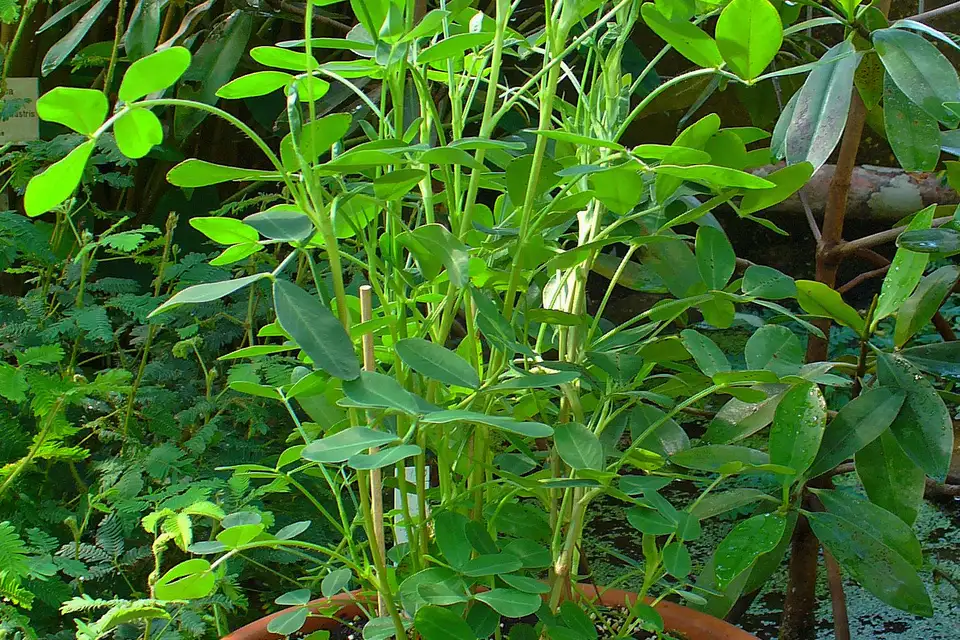
Peanuts are the strangest thing in most vegetable gardens. They flower above ground, self-pollinate, and then the fertilised flower sends a stalk called a peg downward, which pushes into the soil and forms the pod underground. Nothing else in the bed does this, and it explains most of what peanuts need from you.
They’re also a legume, not a nut, and their roots fix nitrogen the same way beans do.
The thing to know before you plan around them
Peanuts are allelopathic. NC State’s Extension Gardener Plant Toolbox puts it plainly: the plant “suppresses the growth of other plant species by releasing toxic substances.”
That reframes the usual companion-planting question. People arrive looking for what to plant next to peanuts, and the honest answer is: not much, and not close. Give them their own block and a bit of clearance rather than tucking them between other crops. The nitrogen they fix benefits whatever follows them in that bed next season, which is where the value shows up, not in a neighbouring row this season.
Onions are also often listed as a poor neighbour, on the traditional grounds that alliums are kept away from legumes generally. That one is folklore rather than measured. The allelopathy is not.
Sowing and growing
Direct-sow about a week after your last frost, two inches deep, once the soil is warm. Peanuts are not frost-hardy at either end and want a long, warm season: NC State gives 120 to 150 days to maturity, and our calendar uses 130.
Soil matters more here than for most crops, and for an unusual reason. The peg has to be able to push into the ground. Heavy clay that crusts over will stop it, and you’ll get a healthy-looking plant that produces almost nothing. What you want is light, sandy, well-drained soil, loosened and kept loose. If your soil is heavy, this is a crop for a raised bed or a container with a lot of grit in the mix.
Space them at about 6-9 inches in the row. Hill soil loosely around the base once flowering starts, the way you would with potatoes, to give the pegs somewhere easy to go.
Don’t over-fertilise with nitrogen. They make their own, and a rich bed gives you an enormous leafy plant and a disappointing harvest.
Harvesting
Lift the whole plant when the leaves start to yellow, usually well into autumn, and shake the soil off. The pods come up attached. Cure them by hanging the whole plant somewhere dry and airy for a couple of weeks before shelling, or they’ll taste green.
Dig one plant up first to check rather than committing the whole row. Pods that are still pale and soft need longer.
A note on the seeds
Peanut allergy is one of the more serious food allergies there is, and the allergens are in the seed. If anyone in the household reacts to peanuts, growing, curing and shelling them at home is not a small exposure. That’s a decision to make before you sow, not at harvest.
Sources: Arachis hypogaea and Virginia Peanut, NC State Extension Gardener Plant Toolbox; Peanut, Clemson Home & Garden Information Center.
Companion planting guide for Peanut · Find your planting dates
Typically viable in USDA zones 7-11. Not sure your zone? Look it up by ZIP code.
Mature height: 1-1.5 ft
Method: Direct sow: Direct-sow outside. It doesn't transplant well, or doesn't need the extra time indoors.
When to plant peanut, by zone
Every zone peanut grows in. Pick your zone in the header and it will be highlighted here. Each zone links to its full page.
| Zone | Start indoors | Sow or plant out | Harvest |
|---|---|---|---|
| 7a & 7b | Not usually | Apr 17–Apr 24 | Aug 25–Sep 1 |
| 8a & 8b | Not usually | Apr 1–Apr 8 | Aug 9–Aug 16 |
| 9a & 9b | Not usually | Feb 22–Mar 1 | Jul 2–Jul 9 |
| 10a & 10bSpring window | Not usually | Mar–Apr | ~130 days after direct-sowing |
| 11a & 11b | Not usually | Jan 8–Jan 15 | May 18–May 25 |
Harvest dates are about 130 days after the sow or plant-out date.
See exact start-indoors, direct-sow, and harvest dates for your zone →
How many Peanut plants fit per square foot?
Spacing: 1 per square foot (square-foot-gardening spacing). Mature height: 1-1.5 ft.
Varieties worth considering
- Virginia type: The large-podded ones, sometimes sold as ballpark peanuts. NC State's toolbox and most home-garden guides point here first: best all-rounder for both boiling and roasting, and the pods are big enough to be worth shelling. (source)
- Valencia type: Three or more seeds per pod, bright red skins, noticeably sweet. The one to grow if boiled peanuts are the goal. Also the shortest-season of the four types, which matters if your summer is marginal. (source)
- Spanish type: Small kernels, reddish-brown skins, higher oil content. Grown commercially for confectionery. Worth it if you want to make peanut butter, less so if you want to eat them whole. (source)
- Runner type ('Georgia-06G') (best for: commercial-style yields, disease resistance): UGA Cooperative Extension describes Georgia-06G, the state's most-planted variety, as averaging 140 days to maturity with strong resistance to tomato spotted wilt virus and high yields. This is the type behind most peanut butter and commercial snack peanuts in the US, a 4th type alongside the Virginia, Valencia and Spanish types above. (source)
Why each variety is listed comes from the source shown next to it. We haven't grown these ourselves yet, so treat this as a research-backed starting point, not a personal endorsement. The buy links are separate from those sources: they go to seed suppliers that sell that exact variety, and we may earn a commission on some of them.
Where to buy peanut seeds
Burpee (each supplier's peanut seeds)
As an Amazon Associate we earn from qualifying purchases. Some links on this page also go to other retailers we may earn a commission from as an affiliate, at no extra cost to you. We only recommend products with a clear consensus of positive, independent reviews, or ones we bought and use ourselves. Each item on our gear page says which.
See it growing
Search YouTube for "growing peanut" videos → (a live search, not a hand-picked video; results vary and aren't vetted by us)

Pin this for later
Growing Peanut: Peanuts flower above ground and fruit below it, need 120 days of warmth and sandy soil, and suppress the plants around them. What that means for where you put them.
Save to Pinterest