Growing Peach: A Complete Profile
By Growing Home Greens Team · August 11, 2026
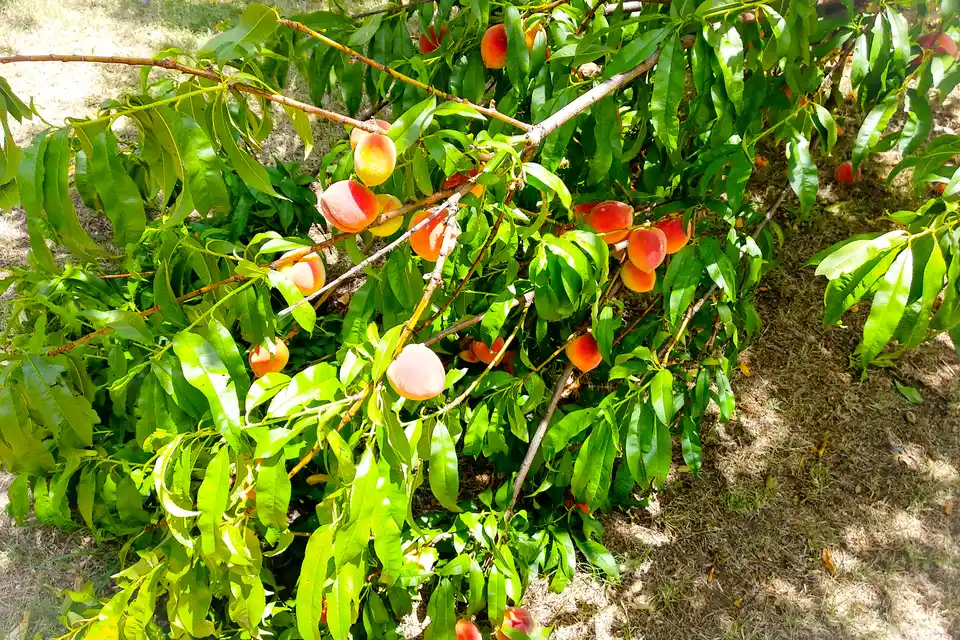
Peach is one of the easier fruit trees to get a crop from: most varieties are self-fruitful, so a single tree sets fruit alone without a second variety nearby. The tradeoff is timing. Peach blooms earlier than most fruit trees, which puts the flowers directly in the path of late spring frosts.
Site selection matters more than variety here
Avoid low spots where cold air pools, and avoid south- or west-facing walls that push bloom even earlier into frost season. Elevated ground with good air drainage loses less of the crop to a late freeze than a low, sheltered-looking spot that traps cold air overnight.
No dwarfing rootstock, unlike apple
Peach doesn’t have a widely available dwarfing rootstock well-suited to most US climates, so it stays close to its natural size, roughly 15 feet tall and wide, regardless of rootstock choice. Annual pruning to an open-center shape and real fruit thinning matter more for peach than for most other fruit trees, since an unthinned tree overbears and can break its own branches under the weight.
Chill hours span a wide range
Peach varieties range from roughly 200 to over 1000 chill hours depending on cultivar, one of the widest spans of any fruit tree. A high-chill variety in a mild-winter climate blooms sparsely; a low-chill variety in a cold-winter climate can break dormancy during a January warm spell and then lose the whole bloom to the next freeze. Match the variety’s chill rating to the local average, not just the hardiness zone.
Peach has no well-established companion pairings, and nothing it needs to be kept away from. See the chill hours article for why chill hours decide more for peach than for most crops.
Source: How to Grow Peaches in Your Garden, Utah State University Extension.
Companion planting guide for Peach · Find your planting dates
Typically viable in USDA zones 5-9. Not sure your zone? Look it up by ZIP code.
Mature height: 12-15 ft
Method: Buy as a start: Buy as a nursery start and transplant outside. It's slow or unreliable from seed, so most gardeners skip seed-starting it entirely.
When to plant peach, by zone
Every zone peach grows in. Pick your zone in the header and it will be highlighted here. Each zone links to its full page.
| Zone | Start indoors | Sow or plant out | Harvest |
|---|---|---|---|
| 5a & 5b | Buy as a start | Apr 26–May 3 | First real harvest in year 4 |
| 6a & 6b | Buy as a start | Apr 11–Apr 18 | First real harvest in year 4 |
| 7a & 7b | Buy as a start | Mar 27–Apr 3 | First real harvest in year 4 |
| 8a & 8b | Buy as a start | Mar 11–Mar 18 | First real harvest in year 4 |
| 9a & 9b | Buy as a start | Feb 1–Feb 8 | First real harvest in year 4 |
See exact start-indoors, direct-sow, and harvest dates for your zone →
How many Peach plants fit per square foot?
Spacing: about 50 square feet per plant (square-foot-gardening spacing). Mature height: 12-15 ft.
Varieties worth considering
- 'Redhaven' peach (best for: reliability, canning): Utah State University Extension lists Redhaven as a 950-chill-hour freestone variety, one of the most consistently recommended cultivars for home orchards, with a well-documented, dependable track record. (source)
- 'Elberta' peach (best for: classic all-purpose flavor): Stark Bro's Nursery calls Elberta America's favorite peach, a Georgia heirloom dating to 1870, still considered the standard home-orchard peach 150 years later. Large, golden-skinned freestone fruit good fresh, baked, or canned. (source)
Why each variety is listed comes from the source shown next to it. We haven't grown these ourselves yet, so treat this as a research-backed starting point, not a personal endorsement. The buy links are separate from those sources: they go to seed suppliers that sell that exact variety, and we may earn a commission on some of them.
Where to buy peach starts
Peach is almost always bought as a nursery start rather than seeded. Check a local nursery or garden center; we haven't vetted online start/plant suppliers yet.
As an Amazon Associate we earn from qualifying purchases. Some links on this page also go to other retailers we may earn a commission from as an affiliate, at no extra cost to you. We only recommend products with a clear consensus of positive, independent reviews, or ones we bought and use ourselves. Each item on our gear page says which.
See it growing
Search YouTube for "growing peach" videos → (a live search, not a hand-picked video; results vary and aren't vetted by us)

Pin this for later
Growing Peach: Self-fruitful and faster to bear than apple or pear, but peach blooms early and has no widely available dwarfing rootstock, so it stays close to full size.
Save to Pinterest